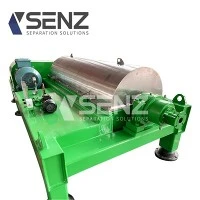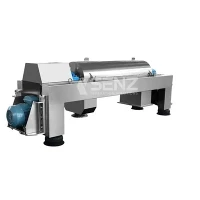

As a supplier of coal tar decanter centrifuges, I've been getting a lot of questions lately about the control system in these machines. So, I thought I'd take some time to break down what the control system does and why it's so important.
What's a Coal Tar Decanter Centrifuge?
Before we dive into the control system, let's quickly go over what a coal tar decanter centrifuge is. It's a piece of equipment used to separate coal tar into different components. Coal tar is a thick, black liquid that's a by - product of coal processing. It contains a bunch of different substances like pitch, oils, and water. The centrifuge uses centrifugal force to separate these components based on their density.
The Role of the Control System
The control system in a coal tar decanter centrifuge is like the brain of the machine. It's responsible for making sure everything runs smoothly and efficiently. Here are some of the key functions:
1. Speed Regulation
One of the most important functions of the control system is to regulate the speed of the centrifuge. The separation process in a coal tar decanter centrifuge depends on the right amount of centrifugal force. If the speed is too low, the separation won't be effective. The different components in the coal tar won't separate properly, and you'll end up with a mixture that still has a lot of impurities.
On the other hand, if the speed is too high, it can cause problems like excessive wear and tear on the machine. The control system monitors the speed constantly and adjusts it as needed. For example, if the incoming coal tar has a higher density or a different composition, the control system can increase the speed to ensure better separation.
2. Feed Rate Control
The control system also manages the feed rate of the coal tar into the centrifuge. It's crucial to maintain a consistent feed rate because if too much coal tar is fed into the centrifuge at once, it can overload the machine. This can lead to poor separation and even damage to the centrifuge.
The control system uses sensors to measure the amount of coal tar being fed and adjusts the feed rate accordingly. It can slow down the feed if the centrifuge is getting overwhelmed or speed it up if the separation process is going smoothly and there's room for more input.
3. Temperature Monitoring
Temperature plays a big role in the separation process of coal tar. Different components in coal tar have different melting points and viscosities, and these properties can change with temperature. The control system monitors the temperature inside the centrifuge and makes sure it stays within the optimal range.


If the temperature is too low, the coal tar can become too thick, making it difficult to separate the components. If the temperature is too high, it can cause some of the volatile components in the coal tar to evaporate, which is not desirable. The control system can activate heating or cooling mechanisms to maintain the right temperature.
4. Alarm and Safety Functions
Safety is a top priority in any industrial equipment, and the control system in a coal tar decanter centrifuge is no exception. It has built - in alarm systems that can detect abnormal conditions. For example, if there's a sudden drop in speed, an increase in temperature beyond the safe limit, or a blockage in the feed system, the control system will trigger an alarm.
This allows operators to take immediate action to prevent further damage to the centrifuge. In some cases, the control system can even shut down the machine automatically to avoid dangerous situations.
Benefits of a Good Control System
A well - designed control system in a coal tar decanter centrifuge offers several benefits. First of all, it improves the efficiency of the separation process. By regulating the speed, feed rate, and temperature, it ensures that the coal tar is separated into its components as effectively as possible. This means higher - quality products and less waste.
Secondly, it enhances the reliability of the centrifuge. With constant monitoring and safety features, the machine is less likely to break down. This reduces downtime and maintenance costs in the long run.
Finally, it makes the operation of the centrifuge easier for the operators. They don't have to constantly adjust the settings manually. The control system takes care of all the technical details, allowing the operators to focus on other aspects of the production process.
Other Types of Centrifuges
We also offer other types of centrifuges that might be of interest to you. For example, we have Small Decanter Centrifuge. These are great for smaller - scale operations or for testing purposes. They have the same high - quality control systems as our coal tar decanter centrifuges, but they're more compact.
Another option is the Fruit Pulp Decanter Centrifuge. This centrifuge is designed to separate fruit pulp from juice. It uses a similar control system to ensure efficient separation and high - quality output.
And if you're in the brewing industry, our Beer Yeast Centrifuge Separator might be the right choice for you. It can effectively separate yeast from beer, improving the clarity and quality of the final product.
Contact Us for Purchase
If you're in the market for a coal tar decanter centrifuge or any of our other centrifuge products, we'd love to hear from you. Our control systems are designed to provide the best performance and reliability, and we can customize the machines to meet your specific needs. Whether you're a small - scale operation or a large industrial facility, we have the right solution for you. Don't hesitate to reach out and start a conversation about your requirements.
References
- Perry, R. H., & Green, D. W. (1997). Perry's Chemical Engineers' Handbook. McGraw - Hill.
- Separation Processes by C. J. King, 2nd Edition, McGraw - Hill.