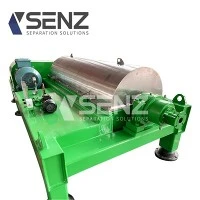
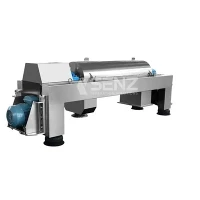
When it comes to manure decanter centrifuges, one of the most common questions we, as a manure decanter centrifuge supplier, encounter is about the differences in performance between domestic and imported models. In this blog, we'll delve into various aspects to help you understand these differences and make an informed decision.
1. Separation Efficiency
Separation efficiency is perhaps the most critical factor when evaluating a manure decanter centrifuge. It refers to the ability of the centrifuge to separate solid and liquid components in manure effectively.
Domestic Manure Decanter Centrifuges
Domestic centrifuge manufacturers have made significant progress in recent years. Many domestic models are designed with advanced separation technologies that can achieve high separation efficiency. For example, some domestic centrifuges use optimized screw conveyor designs to enhance the conveyance of solids, reducing the moisture content of the separated solids. However, in general, the overall separation efficiency of domestic centrifuges may vary depending on the brand and model. Some lower - end domestic models might have limitations in terms of the fineness of separation, especially when dealing with manure that has a high proportion of fine particles.
Imported Manure Decanter Centrifuges
Imported centrifuges often have a reputation for high - end technology and precision engineering. They are typically equipped with state - of the - art separation systems that can achieve extremely high separation efficiency. For instance, some imported models use advanced control systems to adjust the rotational speed and differential speed of the centrifuge in real - time, ensuring optimal separation under different manure conditions. These centrifuges can separate even the finest particles from the liquid, resulting in drier solids and clearer liquids.
2. Durability and Reliability
The durability and reliability of a manure decanter centrifuge are crucial for long - term operation, especially in large - scale manure treatment facilities.
Domestic Manure Decanter Centrifuges
Domestic manufacturers are constantly improving the quality of their products. Many domestic centrifuges are made from high - quality materials and undergo strict quality control processes. However, compared to imported models, some domestic centrifuges may have a shorter service life, especially in harsh operating environments. This could be due to differences in manufacturing processes and the quality of key components such as bearings and seals.
Imported Manure Decanter Centrifuges
Imported centrifuges are often built to last. They are made from high - grade materials and are engineered with precision. The manufacturing processes of imported models are usually more advanced, which ensures better durability. For example, imported centrifuges may use high - performance bearings that can withstand high loads and long - term operation without significant wear. This means that they require less maintenance and have a lower risk of breakdowns, resulting in higher overall reliability.
3. Automation and Control
In modern manure treatment, automation and control are essential for improving efficiency and reducing labor costs.
Domestic Manure Decanter Centrifuges
Domestic centrifuges are increasingly being equipped with automation features. Many domestic models offer basic automation functions such as automatic start - stop, speed adjustment, and fault detection. However, the level of automation may be relatively limited compared to imported models. Some domestic centrifuges may require more manual intervention during operation, especially when dealing with complex manure treatment processes.
Imported Manure Decanter Centrifuges
Imported centrifuges are at the forefront of automation technology. They often come with advanced control systems that can monitor and adjust various parameters in real - time. For example, some imported models can automatically adjust the feed rate, rotational speed, and differential speed based on the characteristics of the manure, ensuring optimal separation performance. These advanced control systems also allow for remote monitoring and operation, which is highly convenient for large - scale manure treatment facilities.
4. Price
Price is an important consideration for many customers when choosing a manure decanter centrifuge.
Domestic Manure Decanter Centrifuges
One of the main advantages of domestic centrifuges is their relatively low price. Domestic manufacturers can offer competitive prices due to lower production costs, including labor and raw materials. This makes domestic centrifuges a more affordable option for small and medium - sized farms or manure treatment facilities with limited budgets.
Imported Manure Decanter Centrifuges
Imported centrifuges are generally more expensive. The high cost is mainly due to factors such as advanced technology, high - quality materials, and brand value. However, it's important to note that the higher price often comes with better performance, durability, and reliability. For large - scale and high - end manure treatment projects, the investment in an imported centrifuge may be justified by its long - term benefits.
5. After - Sales Service
Good after - sales service is crucial for ensuring the proper operation and maintenance of a manure decanter centrifuge.


Domestic Manure Decanter Centrifuges
Domestic manufacturers usually offer relatively good after - sales service. They have local service teams that can respond quickly to customers' needs. In addition, spare parts are generally more readily available, which can reduce downtime in case of breakdowns. However, the quality of after - sales service may vary among different domestic manufacturers.
Imported Manure Decanter Centrifuges
Imported centrifuge suppliers often provide comprehensive after - sales service. They have professional technical support teams that can offer remote assistance and on - site maintenance. However, the response time may be longer, especially for international customers. In addition, the cost of spare parts for imported centrifuges may be higher, and it may take longer to obtain them.
Applications in Related Fields
Manure decanter centrifuges are not only used in manure treatment but also have applications in other fields. For example, Fish Meal Dewatering Centrifuge is used in the fish meal industry to separate water from fish meal, and Tapioca Extraction Centrifuge is used in the tapioca processing industry for the extraction of tapioca. In the process of Tapioca Starch Extraction, centrifuge technology also plays a crucial role.
Conclusion
In conclusion, both domestic and imported manure decanter centrifuges have their own advantages and disadvantages. Domestic centrifuges are more affordable and offer relatively good after - sales service, making them a suitable choice for small and medium - sized operations. On the other hand, imported centrifuges are known for their high - end technology, excellent performance, and durability, which are ideal for large - scale and high - end manure treatment projects.
As a manure decanter centrifuge supplier, we understand that every customer has unique needs. We are committed to providing you with the most suitable centrifuge solution based on your specific requirements. If you are interested in purchasing a manure decanter centrifuge or have any questions about our products, please feel free to contact us for a detailed consultation. We look forward to working with you to achieve efficient and sustainable manure treatment.
References
- "Centrifuge Technology in Agricultural Waste Treatment", Journal of Agricultural Engineering, Vol. XX, Issue XX, 20XX.
- "Comparative Study of Domestic and Imported Decanter Centrifuges", International Journal of Separation Science and Technology, Vol. XX, Issue XX, 20XX.