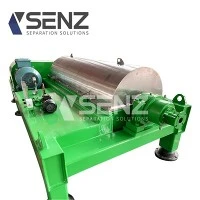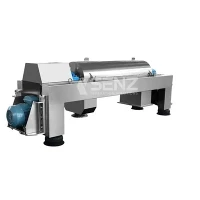

Hey there! As a supplier of mining decanter centrifuges, I'm super stoked to share with you the integration steps for these bad - boys into a mining process. Let's dive right in!
Step 1: Understanding the Mining Process
First things first, you gotta have a solid grasp of the specific mining process you're working with. Different mines have different requirements based on the type of ore they're extracting, the location, and the scale of operations. For instance, a gold mine might have different needs compared to a coal mine. You need to know what kind of materials are being processed, the flow rate of the slurry, and the desired end - product quality. This understanding will help you determine if a mining decanter centrifuge is the right fit and what specifications it should have.
Step 2: Assessing the Centrifuge Requirements
Once you understand the mining process, it's time to figure out the requirements for the centrifuge. Consider factors like the capacity of the centrifuge. You don't want a centrifuge that's too small and can't keep up with the slurry flow, or one that's too large and ends up being a waste of resources. The separation efficiency is also crucial. You want a centrifuge that can effectively separate the solids from the liquid in the slurry. Other things to think about are the speed of the centrifuge, the bowl diameter, and the length of the centrifuge. These parameters can greatly affect the performance of the centrifuge in your mining process.
Step 3: Selecting the Right Centrifuge
Based on the requirements you've assessed, it's time to pick the right mining decanter centrifuge. There are various models available in the market, and you want to choose one that meets your specific needs. At our company, we offer a wide range of centrifuges with different capacities and features. We can help you select the best one for your mining operation. For example, if you need a centrifuge for a high - volume operation, we have models with large capacities. And if you're dealing with a more complex separation task, we have centrifuges with advanced separation technologies.
Step 4: Site Preparation
Before installing the centrifuge, you need to prepare the site. The area where the centrifuge will be placed should be level and stable. It should also have enough space for the centrifuge and any associated equipment, like pumps and pipes. You need to ensure that there is proper ventilation in the area to prevent the build - up of fumes and dust. Additionally, you should have access to a reliable power source and water supply. If the site is in a remote location, you might need to make special arrangements for these utilities.


Step 5: Installation
Once the site is ready, it's time to install the centrifuge. This is a critical step, and it's best to have a professional do it. The centrifuge needs to be installed correctly to ensure its proper functioning and safety. The installation process involves connecting the centrifuge to the slurry feed system, the discharge system, and the power supply. The pipes and connections need to be properly sealed to prevent leaks. After the installation, a thorough inspection should be carried out to make sure everything is in place.
Step 6: Commissioning and Testing
After the installation, the centrifuge needs to be commissioned and tested. Commissioning involves starting up the centrifuge and checking all its functions. You need to make sure that the centrifuge is running smoothly, the speed is correct, and the separation is working as expected. Testing involves running the centrifuge with the actual slurry from the mining process. You can collect samples of the separated solids and liquid and analyze them to determine the separation efficiency. If there are any issues during the commissioning and testing phase, they need to be addressed immediately.
Step 7: Operator Training
Even the best centrifuge won't work well if the operators don't know how to use it properly. That's why operator training is so important. We provide comprehensive training for our customers' operators. The training covers everything from the basic operation of the centrifuge to troubleshooting common problems. Operators learn how to start and stop the centrifuge, how to adjust the settings for different types of slurry, and how to maintain the centrifuge. By having well - trained operators, you can ensure the efficient and safe operation of the centrifuge in your mining process.
Step 8: Maintenance and Monitoring
Once the centrifuge is up and running, regular maintenance and monitoring are essential. Maintenance includes tasks like cleaning the centrifuge, replacing worn - out parts, and lubricating the moving components. You should have a maintenance schedule in place to ensure that these tasks are carried out on time. Monitoring involves keeping an eye on the performance of the centrifuge. You can use sensors and monitoring systems to track parameters like the speed, the temperature, and the separation efficiency. If any issues are detected, you can take corrective action before they become major problems.
Additional Applications and Related Products
Our mining decanter centrifuges have a wide range of applications, and we also offer some related products. For example, if you're in the brewing industry, you might be interested in our Beer Yeast Centrifuge Separator. It's designed to separate yeast from beer efficiently. And if you're dealing with black diesel oil, our Black Diesel Oil Centrifuge can help you purify the oil. Also, for water treatment applications, our centrifuge can be used for Water Treatment Sludge Dewatering.
Conclusion and Call to Action
Integrating a mining decanter centrifuge into a mining process is a multi - step process, but with the right approach, it can greatly improve the efficiency and productivity of your mining operation. If you're interested in learning more about our mining decanter centrifuges or have any questions about the integration process, don't hesitate to reach out. We're here to help you find the best solution for your mining needs. Whether you're a small - scale miner or a large - scale operation, we have the expertise and the products to support you. So, let's start a conversation and see how we can work together to take your mining process to the next level.
References
- Smith, J. (2018). Centrifuge Technology in Mining. Mining Journal.
- Johnson, A. (2019). Best Practices for Centrifuge Integration in Mining. Industrial Mining Review.