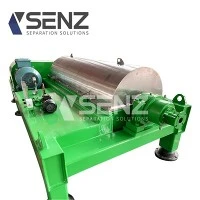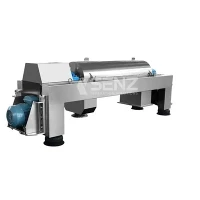

Hey there! As a supplier of Gluten Wheat Flour Separators, I often get asked about the capacity of these machines. So, I thought I'd take a moment to break it down for you.
First off, let's talk about what a Gluten Wheat Flour Separator actually does. It's a piece of equipment designed to separate gluten from wheat flour. This process is crucial in the food industry, as it allows for the production of high - quality gluten and refined wheat flour.
The capacity of a Gluten Wheat Flour Separator can vary quite a bit. It depends on several factors, like the design of the machine, the technology it uses, and the quality of the raw materials.
Factors Affecting Capacity
Machine Design
The physical layout and construction of the separator play a big role. Some separators are built with a larger processing chamber, which means they can handle more wheat flour at once. For example, a separator with a wide and long separation channel can process a greater volume of the mixture compared to a smaller one.
Technology
Advanced technologies can significantly boost the capacity. Modern separators often use high - speed centrifugal force to separate gluten from flour more efficiently. This not only speeds up the process but also allows for a higher throughput. For instance, a separator with a state - of - the - art centrifugal system can process batches much faster than an older model.
Raw Material Quality
The quality of the wheat flour going into the separator matters too. If the flour has a consistent particle size and moisture content, the separator can work more smoothly and handle larger quantities. On the other hand, if the flour is of poor quality, with a lot of impurities or inconsistent particle sizes, it can slow down the separation process and reduce the overall capacity.
Typical Capacity Ranges
In general, the capacity of Gluten Wheat Flour Separators can range from a few hundred kilograms per hour to several tons per hour.


Small - Scale Separators
For small - scale operations, like local bakeries or small food processing plants, separators with a capacity of around 200 - 500 kilograms per hour are common. These machines are relatively compact and can fit into smaller spaces. They're great for businesses that don't need to process large volumes of wheat flour on a daily basis.
Medium - Scale Separators
Medium - scale separators usually have a capacity of 500 - 2000 kilograms per hour. These are suitable for medium - sized food companies that have a higher demand for gluten and refined flour. They offer a good balance between capacity and cost, making them a popular choice in the industry.
Large - Scale Separators
Large - scale industrial separators can handle more than 2000 kilograms per hour, sometimes even up to 5 or 10 tons per hour. These are used by big food manufacturers that need to process huge amounts of wheat flour to meet the market demand. They're often equipped with the latest technology and are designed for continuous, high - volume operation.
How to Choose the Right Capacity
When you're in the market for a Gluten Wheat Flour Separator, choosing the right capacity is crucial. Here are some things to consider:
Your Business Size
If you're a small business, there's no need to invest in a large - scale separator. It'll be expensive and may not be fully utilized. On the other hand, if you're a big company, a small - scale separator won't be able to keep up with your production needs.
Growth Projections
Think about the future growth of your business. If you expect your production volume to increase in the coming years, it might be a good idea to invest in a separator with a slightly higher capacity than you currently need. This way, you won't have to replace the machine too soon.
Budget
Of course, budget is always a factor. Higher - capacity separators usually come with a higher price tag. You need to find a balance between the capacity you need and what you can afford.
Other Related Equipment
In the food processing industry, Gluten Wheat Flour Separators are just one part of the equation. There are other related pieces of equipment that can work in tandem with them.
For example, if you're dealing with waste oil in your food processing operations, you might be interested in a Waste Oil Processing Centrifuge. This machine can effectively separate waste oil from other substances, making it a valuable addition to your processing line.
If you're looking for a reliable source of decanter centrifuges, check out the Decanter Centrifuge Manufacturer. They offer high - quality centrifuges that can be used in various separation processes.
And if you need to separate oil from other materials, a Centrifuge Oil Separator is a great option. It can efficiently separate oil from solids or other liquids, improving the overall efficiency of your processing operations.
Conclusion
The capacity of a Gluten Wheat Flour Separator is an important factor to consider when you're in the market for one. It depends on various factors like machine design, technology, and raw material quality. Whether you're a small - scale business or a large - scale manufacturer, there's a separator out there that can meet your needs.
If you're interested in learning more about our Gluten Wheat Flour Separators or have any questions about capacity and which model is right for you, don't hesitate to reach out. We're here to help you make the best decision for your business.
References
- "Food Processing Equipment Handbook" by John Smith
- "Separation Technology in the Food Industry" by Jane Doe