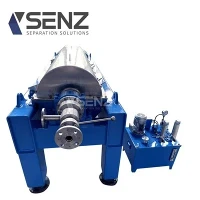

Hey there! As a supplier of Decanter Machines, I often get asked about how to improve the separation effect of these nifty pieces of equipment. In this blog, I'm gonna share some practical tips and insights that can help you get the most out of your Decanter Machine.
First off, let's understand what a Decanter Machine does. It's a type of centrifuge that separates solid and liquid components from a mixture. This is super useful in a bunch of industries, like wastewater treatment, mining, and even in laboratories. You can check out more about Wastewater Centrifuge, Laboratory Centrifuge, and Mining Decanter Centrifuge on our website.
1. Proper Feed Preparation
One of the key factors that can significantly impact the separation effect is the way you prepare the feed. The feed is the mixture that goes into the Decanter Machine. If the feed has a high concentration of solids or if the solids are too large, it can cause problems.


- Particle Size: Make sure the particles in the feed are within the recommended size range. If the particles are too big, they might not separate properly. You can use a pre - screening process to remove large particles before feeding the mixture into the Decanter Machine.
- Consistency: The consistency of the feed should be as uniform as possible. A fluctuating feed consistency can lead to uneven separation. You can use a mixing tank to ensure that the feed is well - mixed before it enters the Decanter.
2. Optimize Operating Parameters
The operating parameters of the Decanter Machine play a crucial role in the separation process. Here are some important ones to consider:
- Speed: The rotational speed of the Decanter Machine affects the centrifugal force. A higher speed generally results in better separation, but it also has its limits. If the speed is too high, it can cause excessive wear and tear on the machine and might even lead to the formation of a fine mist, which can reduce the separation efficiency. You need to find the optimal speed for your specific application.
- Differential Speed: The differential speed is the difference between the speed of the bowl and the speed of the screw conveyor. This parameter controls the rate at which the solids are discharged from the machine. A proper differential speed ensures that the solids are removed efficiently without causing blockages.
- Flow Rate: The flow rate of the feed into the Decanter Machine should be carefully controlled. If the flow rate is too high, the machine might not have enough time to separate the components properly. On the other hand, if the flow rate is too low, it can lead to inefficient use of the machine.
3. Regular Maintenance
Just like any other piece of equipment, a Decanter Machine needs regular maintenance to perform at its best.
- Cleaning: Regularly clean the Decanter Machine to remove any built - up solids or debris. This helps to maintain the efficiency of the separation process. You can use a suitable cleaning solution and follow the manufacturer's guidelines for cleaning.
- Inspection: Conduct regular inspections of the machine to check for any signs of wear and tear. Replace any worn - out parts promptly to prevent further damage. Pay special attention to the seals, bearings, and the screw conveyor.
- Lubrication: Proper lubrication of the moving parts is essential for the smooth operation of the Decanter Machine. Use the recommended lubricants and follow the lubrication schedule provided by the manufacturer.
4. Choose the Right Decanter Machine
Not all Decanter Machines are created equal. The type of Decanter Machine you choose should be based on your specific application requirements.
- Size: Consider the size of the Decanter Machine in relation to your production volume. A machine that is too small might not be able to handle the required flow rate, while a machine that is too large can be a waste of resources.
- Material Compatibility: Make sure the Decanter Machine is made of materials that are compatible with the feed mixture. For example, if the feed contains corrosive substances, you need a machine with corrosion - resistant materials.
- Features: Look for Decanter Machines with advanced features that can improve the separation effect. Some machines have adjustable parameters, which allow you to fine - tune the separation process according to your needs.
5. Monitor and Analyze the Separation Results
It's important to monitor and analyze the separation results regularly. This can help you identify any issues and make necessary adjustments.
- Sample Testing: Take samples of the separated solids and liquids and test them to determine the quality of the separation. You can measure parameters such as the moisture content of the solids and the clarity of the liquids.
- Data Logging: Use data logging systems to record the operating parameters of the Decanter Machine and the separation results. This data can be analyzed to identify trends and optimize the machine's performance.
6. Operator Training
Last but not least, proper operator training is essential for achieving the best separation effect.
- Knowledge of the Machine: Operators should have a good understanding of how the Decanter Machine works, including its operating principles, controls, and maintenance requirements.
- Safety Procedures: Training should also cover safety procedures to ensure that the operators can work safely with the machine.
- Problem - Solving Skills: Operators should be trained to identify and solve common problems that might occur during the separation process.
In conclusion, improving the separation effect of a Decanter Machine requires a combination of proper feed preparation, optimized operating parameters, regular maintenance, choosing the right machine, monitoring the results, and operator training. By following these tips, you can enhance the efficiency and effectiveness of your Decanter Machine.
If you're interested in learning more about our Decanter Machines or have any questions about improving the separation effect, feel free to reach out to us. We're here to help you make the most of your investment in a Decanter Machine.
References
- "Centrifuge Technology Handbook", various industry experts
- Manufacturer's manuals for Decanter Machines