



Disc Centrifuge
Why Choose Us
Advanced Equipment
We own various kinds of inspection and testing facilities with value over USD10 million. 18 testing tables, high speed dynamic balancing machine, ultrasonic flaw detection machines.etc.
Advanced testing equipment
We are equipped with complete testing, inspection, analysis control system, advanced testing machines and stimulative working condition test table and automatic control testing system,which guarantees our new product research, processing validation and quality.
Global Market
Now there are over 180 series or decanter centrifuges and disc separators used home and abroad. Including U.S.A, Canada, Australia, Russia, Brazil, Singapore and so on totally 70 countries.
Accept ODM/OEM service
You can discuss your purchasing needs with our customer service center. We also welcome OEM and ODM orders.
Disc centrifuge are essential pieces of laboratory equipment utilized for separating particles from a solution based on their size, shape, density, and viscosity. The effectiveness of this separation process is contingent on the rotor speed. Nowadays, laboratory centrifuges are among the most widely used tools in both research and clinical settings. They are prevalent in various types of laboratories, with a particularly high usage rate in chemistry, biochemistry, and molecular biology labs.These versatile instruments find application in tasks such as the separation, purification, and isolation of organelles, cells, and cellular components. Additionally, they are invaluable for dealing with complex mixtures of nucleic acids, proteins, and viruses, facilitating further detailed analysis.


Product Categories
Latest Products


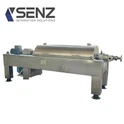


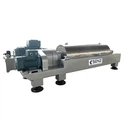
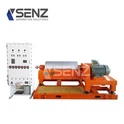
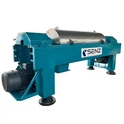
Benefits of Disc Centrifuge
High Efficiency
Its high rotational speed and large sedimentation area allow for rapid and efficient separation of components, even in complex mixtures.
Continuous Operation
Unlike batch centrifuges, it operates continuously, allowing for higher throughput and more consistent product quality.
Easy to Operate and Maintain
The machines have a simple design with few moving parts, which makes them easy to operate and maintain. They have a long service life and require minimal maintenance, reducing downtime and operational costs.
Low Cost and Repeatedly
They are cost-effective and can be used repeatedly, making them a valuable investment for many industries. The tubes used in the centrifuge can be easily cleaned and reused, reducing the cost of consumables.
Compact Design
The machine's compact design saves valuable floor space in production facilities and allows for easy integration into existing process lines.
Energy Efficiency
This centrifuge type consumes less energy compared to other separation methods, making them an environmentally friendly and cost-effective option.
Types of Disc Centrifuge
Disc Separator Centrifuge
Disc stack centrifuge is a kind of vertical centrifuge. As a high-efficiency, high-output, high-automation and high-speed precision separation equipment, it can be divided into solid-liquid two-phase and solid-liquid-liquid three-phase separation. As a two-phase separation disc centrifuge, it can separate most solid particles and liquids. As a three-phase disc centrifuge, it can separate liquid phases of different densities and separate solids at the same time.
Milk Separator Machine
Shenzhou dairy separator has such features as large capacity, good deoiling performance, high efficiency and lower energy consumption. The advanced inlet and outlet design guarantees soft treatment during the whole separation process, preventing destructive air from entering and ensuring product quality.
Biology and Medicine
Disc Centrifuge are widely used in biology and medicine to separate blood components, separate proteins, purify DNA, and separate organelles. For example, solids from liquids, liquids from liquids, and gases from liquids. They are used to separate red blood cells from plasma and white blood cells from plasma for analysis.
Petroleum Industry
In environmental technology, Disc Centrifuge are used to analyze and separate soil, water, and air samples, helping to detect and identify pollutants, contaminants, and other substances.
Industry.
Geology
In industry, Disc Centrifuge are used in various manufacturing processes, such as the production of plastics, textiles, and pharmaceuticals, and they help separate and purify different components of minerals and ore samples, which helps in mineral exploration and ore processing.Disc Centrifuge are used in geology to separate heavy minerals and ore samples from lighter ones.
Components of Disc Centrifuge
Motor
The motor is the powerful central component of the centrifuge that creates the spin.
Rotor assembly
A drive shaft and a rotor comprise the rotor assembly. The drive shaft provides support for the rotor components. The rotor head is attached to the motor, which bears the containers to house the tubes containing the sample to be centrifuged. It converts electrical energy to mechanical energy. Two rotors with different diameters can have the same rotational speed. Varying radii and angular momentum results in a difference in the acceleration of such rotors.
Containers
Several types of containers, such as test tubes, blood bags, cuvettes, centrifuge tubes, etc., are held in the rotors such that the sample rotates along as the rotor rotates.
Control Panel
It serves the purpose of controlling different parameters such as temperature, rotational speed (rcf or rpm), etc.
Latch
When a tube breaks, or there are other issues with the centrifuge while running, the latch keeps the lid closed.
Lid: The centrifuge will only spin if the lid is closed and locked to prevent mishaps.
How to Choose Disc Centrifuge


Rotor Flexibility
Labs should also consider the versatility and flexibility of the centrifuge and its rotors. Every lab knows that the work and workflow can change daily or weekly, so having equipment that adapts to the work is critical for productivity. Therefore, consider the rotors, which support the sample tubes during operation, that the centrifuge is compatible with.
Safety Features
You should thoughtfully consider safety with every piece of equipment in a lab, including the centrifuge. Centrifuges are relatively safe equipment, but with the intense speed and RPMs it uses for sample separation, accidents can happen and become safety concerns.Getting a centrifuge with some of the latest safety features to prevent any spillage is wise, such as an electronically locking lid or sealed rotors. This kind of centrifuge may cost more, but safety is always worth the investment.
Temperature Range
Lastly, labs should consider whether they need a centrifuge to keep samples cool for their separations. Most centrifuges operate at room temperature, but some offer refrigeration technology.Consider whether your lab needs a centrifuge that keeps samples cool and the temperature range the centrifuge has to achieve. Centrifuges with more refined temperature control may cost more, but they can make the job easier and more efficient, boosting productivity in the lab.
RCF & RPM
As the primary function of a centrifuge is separating a sample through centrifugal force, labs should first consider the machine's relative centrifugal force (RCF) and revolutions per minute (RPM). While these two metrics mostly explain the same information—how fast the centrifuge can spin—RCF is a better and more accurate measurement for a centrifuge.The RCF and RPM that best fits a lab will mostly depend on the application and the work that the lab will conduct with the centrifuge. Every lab has a speed requirement—or floor—for their centrifuge, so the first thing labs should consider when choosing a centrifuge is whether it can produce the necessary RCF.
Disc Centrifuge Installation
Storage Before Installation
The centrifuge system is often delivered to the customer site before the plant is ready to utilize it. In such cases, the proper storage of the centrifuge is necessary. We recommend the following steps for storage before installation.The system should be stored indoors to protect from rain, dust, and other contaminants. The user may store the equipment outdoor if it is in a weatherproof crate with a vapor barrier lining.
Placement
The centrifuge system placement in the plant should allow for easy access for the initial installation and the centrifuge extraction for future service or replacement. Therefore a clear pathway to the centrifuge skid should be provisioned during installation.
Clearances
The service of centrifuge components requires adequate space around the centrifuge to enable the removal and reinstallation of such components. In this section, we highlight the critical clearances that need consideration.
Overhead
The disc stack centrifuge has a vertical orientation. The centrifuge bowl extraction occurs through the top of the centrifuge. A mechanical assist device such as a hoist or a crane is the preferred extraction mode.Therefore, overhead clearance is critical for the regular service of a disc stack centrifuge. The centrifuge manual specifies the required clearance for specific centrifuge models.
Side Access
The main drive motor on a disc stack centrifuge has a horizontal orientation. Therefore adequate clearance behind the motor is essential for the extraction for the repair or replacement of the centrifuge motor. See reference horizontal clearance diagram above.
Foundation & Anchoring
All industrial centrifuges have heavy bowls that rotate at high operating speeds. This rotation causes the centrifuge to vibrate. A rigid foundation for the centrifuge system is therefore highly recommended to negate the effects of this vibration.
Elevated Platform Installation
In some cases, the centrifuge installation is on elevated platforms. This type of installation could allow the centrifuge effluent to gravity feed downstream equipment located below the centrifuge. As mentioned above, the centrifuge's inherent vibration should be carefully observed during elevated platform installation.
Calibration
After other maintenance tasks, the centrifuge is started up for calibrating. Calibration can be performed by running water through the centrifuge in order to check the discharge amount to ensure it is functioning properly, which includes checking for leaks.
Speed checks and fixes
Centrifuge speeds should be routinely checked if they are in constant use. The check should be performed with a reliable photoelectric or strobe tachometer that meets the standards of the College of American Pathologist inspection guidelines.
Temperature checks
Measured and programmed temperature should be within 2 degrees Celsius in most cases. However, some centrifuges in some applications have different requirements. Refrigerated centrifuge temperature should be checked at least on a monthly basis for most standardized conditions.
Repairs, rebuilds, refurbishes, and reconditioning
Part of proper maintenance is knowing when to salvage components and machines in its entirety. Sometimes a repair is needed, where in other cases a refurbish is preferable. Rebuilds and reconditioning of parts can fix other problems. This is why it is important to have a tech who is knowledgeable about your centrifuge and what is required from it in your industry. An experienced tech can advise you of the best path forward.
Key Points Disc Centrifuge Market Size Projection in 2024
Technological Advancements
Continuous innovation and improved functionalities in Disc Centrifuge products are crucial drivers of market growth. Companies are investing in cutting-edge technologies to enhance product performance, reliability, and user experience. These advancements not only attract new customers but also retain existing ones by meeting evolving demands.
Increasing Consumer Demand
There is a growing preference for Disc Centrifuge solutions among consumers, fueled by their effectiveness, efficiency, and convenience. As more individuals and businesses recognize the benefits of Disc Centrifuge, the market is expected to see a substantial rise in demand, contributing to overall growth.
Expanding Applications
The adoption of Disc Centrifuge across various industries, including healthcare, finance, and manufacturing, is broadening the market's scope. Each sector leverages Disc Centrifuge solutions to optimize operations, reduce costs, and improve service delivery, which in turn drives market expansion.
Strategic Partnerships
Collaborations and alliances are essential for enhancing market reach and capabilities. Strategic partnerships enable companies to combine expertise, share resources, and access new markets more effectively, fostering growth and innovation within the Disc Centrifuge market.
Our Factory
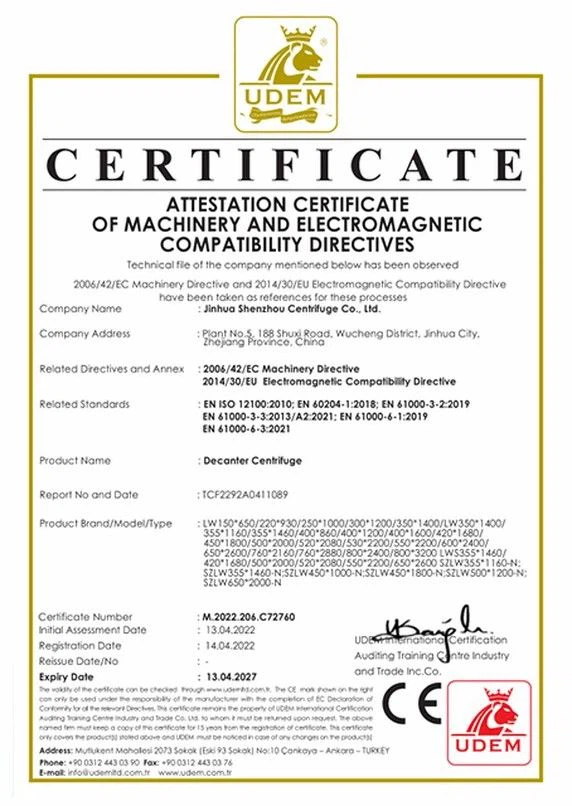
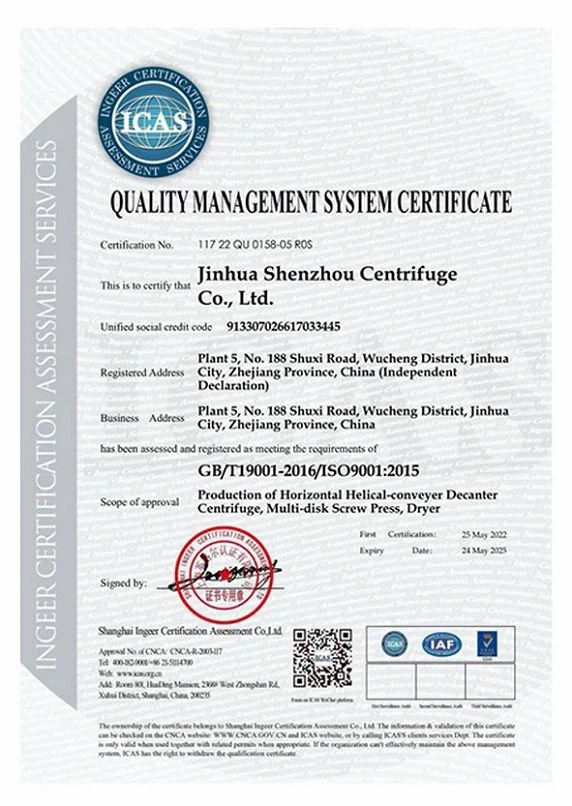
Shenzhou Machinery is a subsidiary of Shenzhou Group.Which was established in 1980, conveying an area of 80000M2 ,there are 2500 staffs and employee in our company.200 of them are technicians and engineers.It has obtained the approvals and certifications of both CE and ISO.Some of our machines gained the new technology invent patent.We are on of the world's leading manufacturers of decanter centrifuge,disc centrifuge,tubular centrifuge,separation systems and drying equipment.Now there are over 180 series or decanter centrifuges and disc separators used home and abroad.Including U.S.A , Canada ,Australia,Russia ,Brazil,Singapore and so on totally 70 countries.We own various kinds of inspection and testing facilities with value over USD10 million .18 testing tables,high speed dynamic balancing machine,ultrasonic flaw detection machines.etc.
Certifications
FAQ
Jinhua Shenzhou Centrifuge Co., Ltd. is one of the most professional disc centrifuge manufacturers and suppliers in China, featured by quality products and competitive price. Please rest assured to wholesale cheap disc centrifuge for sale here from our factory. Contact us for customized service.
