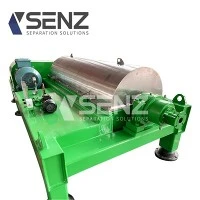

What is the vibration level of a manure decanter centrifuge during operation?
As a supplier of manure decanter centrifuges, I often encounter inquiries from customers regarding the vibration level of these machines during operation. Understanding the vibration characteristics of a manure decanter centrifuge is crucial for ensuring its efficient and safe performance. In this blog post, I will delve into the factors that influence the vibration level of a manure decanter centrifuge, the acceptable vibration limits, and how to monitor and control vibration to maintain optimal operation.
Factors Influencing Vibration Level
Several factors can contribute to the vibration of a manure decanter centrifuge during operation. These factors can be broadly categorized into mechanical, operational, and environmental factors.
Mechanical factors include the design and construction of the centrifuge. The balance of the rotating components, such as the bowl and the screw conveyor, is a critical factor. Any imbalance in these components can lead to excessive vibration. The quality of the bearings and the alignment of the shafts also play a significant role. Worn-out bearings or misaligned shafts can cause vibrations that can affect the performance and lifespan of the centrifuge.
Operational factors are related to how the centrifuge is used. The feed rate and the consistency of the manure being processed can impact the vibration level. If the feed rate is too high or the manure has a high solids content, it can cause uneven loading on the centrifuge, leading to increased vibration. Additionally, the speed at which the centrifuge operates can also affect the vibration. Higher speeds generally result in more significant vibrations, but they are also necessary for efficient separation.
Environmental factors can also influence the vibration of the centrifuge. The installation location and the foundation on which the centrifuge is placed are important. A stable and level foundation is essential to minimize vibration. If the centrifuge is installed on an uneven or weak surface, it can cause vibrations to be transmitted to the surrounding environment. Temperature and humidity can also affect the performance of the centrifuge and potentially increase vibration.
Acceptable Vibration Limits
To ensure the safe and efficient operation of a manure decanter centrifuge, it is important to establish acceptable vibration limits. These limits are typically specified by the manufacturer based on the design and performance of the centrifuge. The vibration limits are usually expressed in terms of acceleration or displacement.
Acceleration is a measure of how quickly the vibration changes over time. It is commonly measured in units of meters per second squared (m/s²). Displacement, on the other hand, is a measure of the distance the vibrating object moves from its rest position. It is typically measured in millimeters (mm).
The acceptable vibration limits for a manure decanter centrifuge can vary depending on the size and type of the centrifuge. Generally, the vibration level should be kept within a certain range to prevent damage to the centrifuge and to ensure its reliable operation. Excessive vibration can lead to premature wear and tear of the components, reduced efficiency, and even safety hazards.
Monitoring and Controlling Vibration
Monitoring the vibration level of a manure decanter centrifuge is an important part of its maintenance. There are several methods available for monitoring vibration, including the use of vibration sensors and analyzers. These devices can measure the vibration level in real-time and provide data that can be used to detect any abnormal vibrations.
Regular vibration monitoring can help identify potential problems before they become serious. By analyzing the vibration data, it is possible to determine the cause of the vibration and take appropriate corrective actions. For example, if the vibration is due to an imbalance in the rotating components, the centrifuge can be balanced to reduce the vibration.
Controlling the vibration of a manure decanter centrifuge involves taking steps to minimize the factors that contribute to vibration. This can include ensuring proper installation and alignment of the centrifuge, maintaining the rotating components in good condition, and controlling the feed rate and consistency of the manure. Additionally, the use of vibration dampening materials and techniques can help reduce the transmission of vibration to the surrounding environment.

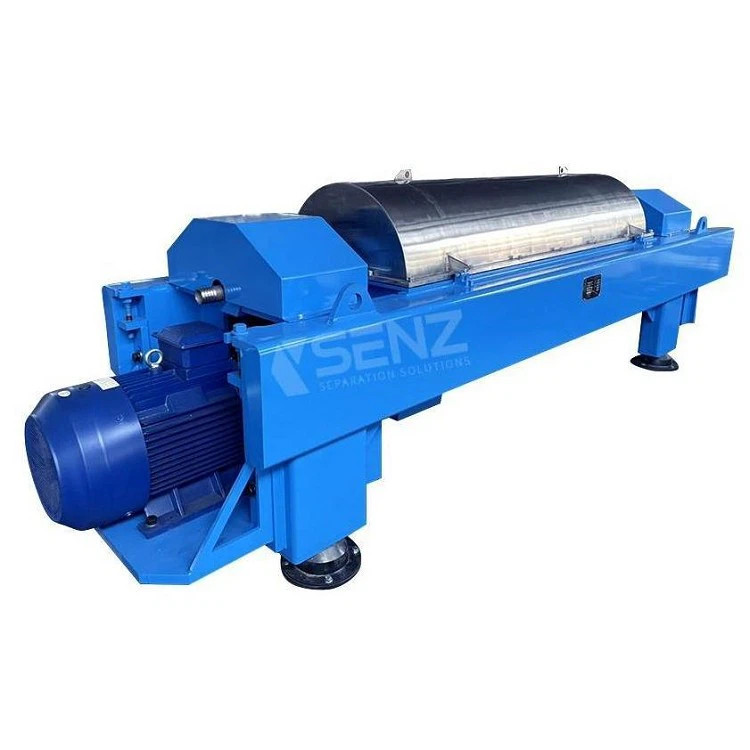
Importance of Vibration Control
Controlling the vibration level of a manure decanter centrifuge is essential for several reasons. Firstly, it helps to ensure the safe operation of the centrifuge. Excessive vibration can cause the centrifuge to become unstable, which can lead to accidents and injuries. Secondly, it helps to extend the lifespan of the centrifuge. By reducing the wear and tear on the components, the centrifuge can operate more efficiently and require less maintenance. Finally, it helps to improve the quality of the separation process. A centrifuge that operates with minimal vibration is more likely to provide consistent and reliable separation results.
Related Applications
Our manure decanter centrifuges are not only suitable for manure processing but also have a wide range of other applications. For example, our Soya Milk Decanter Centrifuge is designed to separate the solids from soya milk, ensuring a high-quality product. Our Sand & Gravel Washing Water Treatment centrifuge is used to treat the wastewater generated during the sand and gravel washing process, reducing environmental pollution. Additionally, our Paper Pulp Wastewater Treatment centrifuge is effective in treating the wastewater from the paper pulp industry, helping to meet environmental standards.
Conclusion
In conclusion, understanding the vibration level of a manure decanter centrifuge during operation is crucial for its efficient and safe performance. By considering the factors that influence vibration, establishing acceptable vibration limits, and implementing effective monitoring and control measures, it is possible to ensure that the centrifuge operates smoothly and reliably. Our company is committed to providing high-quality manure decanter centrifuges and related solutions. If you are interested in our products or have any questions, please feel free to contact us for a purchase negotiation.
References
- Smith, J. (2018). Centrifuge Technology: Principles and Applications. New York: Elsevier.
- Jones, A. (2019). Vibration Analysis for Industrial Equipment. London: Wiley.
- Brown, C. (2020). Manure Management and Treatment. Agricultural Engineering International: CIGR Journal.