

The better investment is the process that delivers saleable oil at an acceptable total cost for your fruit supply and market. A continuous decanter line and a batch press have different operating patterns, but neither guarantees higher yield, better oil or faster payback without comparable trials.

SENZ avocado oil decanter equipment reference. Compare a complete line with a complete press process, including preparation and clarification.
How the extraction approaches differ
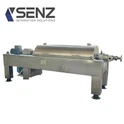
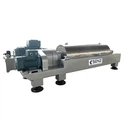
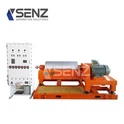
A decanter centrifuge separates prepared, malaxed paste by density in a rotating bowl. Depending on the configuration, it discharges oil and wet solids, or oil, water and solids. Downstream clarification may still be needed before storage.
Traditional hydraulic pressing applies pressure to a prepared charge, followed by unloading and cleaning. Screw pressing is a separate equipment option; designs intended for dry oilseeds should not be assumed suitable for fresh, wet avocado pulp. Press routes may need additional pretreatment and oil clarification. Define exactly which process a quotation includes.
Both routes can use mechanical extraction without solvents. Their suitability for a cold-pressed claim depends on documented process conditions and applicable requirements, rather than the word press or centrifuge on the equipment nameplate.
Where a continuous centrifuge line may help
Continuous feeding and solids discharge can fit a steady fruit intake and reduce repeated batch handling. Adjustable feed and differential speed provide tools for responding to paste variation. The benefit depends on upstream preparation, operator skill, available controls and downstream handling. A centrifuge still requires supervision, cleaning and planned maintenance.
Capacity must be demonstrated at the required recovery and product quality. A larger nameplate throughput has limited value if the fruit supply is irregular or if bottlenecks at washing, malaxation or storage prevent the line from using it.
When a press deserves consideration
A small press may be appropriate for intermittent batches, pilot production or an established process with proven product acceptance. Its installed cost can be lower, but include any drying or pretreatment equipment, mats or filter media, unloading labor and cleaning. Seasonal storage does not remove inspection and preservation requirements.
Use a like-for-like comparison
| Question | Centrifuge line | Press route |
|---|---|---|
| Operating pattern | Normally continuous once paste supply is stable | Hydraulic presses normally batch; screw systems differ |
| Capacity measure | Accepted fruit throughput at agreed recovery and quality | Full-cycle throughput including loading, unloading and cleaning |
| Labor | Receiving, supervision, sampling, cleaning and maintenance | Same tasks plus process-specific batch handling |
| Utilities | Measured electricity, water and thermal requirements | Measured pressing and pretreatment utilities |
| Oil quality | Verify moisture, solids, sensory and laboratory results | Use the same product acceptance criteria |
| Waste handling | Pomace and any water outlet | Press residue, wash water and consumables |
Calculate payback from measured annual benefit
Simple payback = incremental installed investment ÷ positive annual net cash benefit. Calculate the annual benefit from additional saleable oil revenue, verified labor and utility savings, and changes in maintenance, waste handling and other operating costs. Include any loss of by-product income. If the benefit is zero or negative, a positive simple payback does not exist under those assumptions.
Use the same fruit input and analytical basis for both trials. Oil recovered per tonne of fruit is different from oil recovery as a percentage of the oil originally present. Use actual saleable product mass and realistic selling prices rather than counting residual water as oil.
Model conservative, expected and favorable seasons. Change fruit availability, operating hours, selling price, staffing, utility tariffs and downtime independently. For a major investment, add financing, taxes, depreciation and discounted cash flow to the simple comparison.

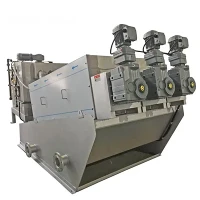
Equipment illustration only. No throughput or payback figures are implied by this image.
Frequently asked questions
Does a centrifuge always recover more avocado oil?
No. Fruit preparation, ripeness, pretreatment, process settings and the specific machine affect recovery. Use representative, comparable trials.
Does a press always cost less?
A small press may have a lower purchase price. Installed infrastructure, pretreatment, cleaning, labor and waste costs can change the overall comparison.
Can a seasonal mill justify a continuous line?
Possibly, if seasonal volume and available operating hours support adequate utilization. Model the actual harvest window and supply interruptions.
What should a trial report contain?
Fruit properties, input and output masses, full operating time, utilities, staffing, oil quality results and residual oil analysis on a clearly stated basis.
Related avocado oil processing guides
- What is an avocado oil centrifuge?
- Two-phase and three-phase avocado oil separation
- Measuring and improving avocado oil yield
- Avocado oil production line decanter
Request an application comparison
Ask China centrifuge manufacturers for a written scope and acceptance criteria. Compare factory and supplier quotations on the same process boundary. Contact SENZ with your fruit volume, existing equipment and target product to discuss a suitable trial.