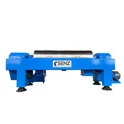

Yeast separation is a critical process in various industries, including brewing, baking, and biotechnology. As a leading yeast separator supplier, we understand the importance of efficient and accurate separation. One of the most frequently asked questions from our customers is about the separation time of a yeast separator for a certain amount of yeast. In this blog post, we will delve into the factors that influence the separation time and provide some insights based on our experience in the field.
Factors Affecting Separation Time
The separation time of a yeast separator is not a fixed value; it is influenced by several key factors. Understanding these factors can help users optimize the separation process and achieve better results.
1. Yeast Concentration
The initial concentration of yeast in the suspension is a significant factor. Higher yeast concentrations generally require more time for separation. When the yeast cells are densely packed, it becomes more challenging for the separator to distinguish and separate them from the liquid medium. For example, in a high - density yeast culture used in large - scale brewing, the separator may need to run for a longer period to achieve a satisfactory separation compared to a low - density culture.
2. Yeast Cell Size and Shape
Yeast cells can vary in size and shape depending on the strain and growth conditions. Larger and irregularly shaped cells may sediment more slowly, increasing the separation time. Some yeast strains may form clumps or aggregates, which further complicates the separation process. Our yeast separators are designed to handle a wide range of cell sizes and shapes, but extreme variations can still impact the efficiency of separation.
3. Separator Design and Capacity
The design and capacity of the yeast separator play a crucial role in determining the separation time. Different types of separators, such as centrifugal separators and membrane separators, have different working principles and separation efficiencies. Centrifugal separators, for instance, use centrifugal force to separate the yeast cells from the liquid. The speed and capacity of the centrifuge directly affect the separation time. A high - capacity centrifuge can process a larger volume of yeast suspension in a shorter time, while a lower - capacity one may take longer.
4. Liquid Viscosity
The viscosity of the liquid medium in which the yeast is suspended also affects the separation time. Higher viscosity liquids offer more resistance to the movement of yeast cells, making it harder for the separator to separate them. For example, if the yeast is suspended in a thick syrup - like medium, the separation process will be slower compared to a less viscous solution.
Estimating Separation Time
Based on our extensive experience as a yeast separator supplier, we can provide some general guidelines for estimating the separation time. However, it's important to note that these are only approximations, and actual separation times may vary depending on the specific conditions.
For a standard centrifugal yeast separator with a medium capacity (able to process around 100 - 200 liters per hour), the following estimates can be made:
- Low - density yeast suspension (less than 10% yeast by volume): In a relatively low - viscosity liquid, the separation time may be around 15 - 30 minutes per batch. This is assuming that the yeast cells are of normal size and shape and there are no significant clumping issues.
- Medium - density yeast suspension (10% - 30% yeast by volume): The separation time may increase to 30 - 60 minutes per batch. The higher concentration of yeast cells requires more time for the centrifuge to separate them effectively.
- High - density yeast suspension (more than 30% yeast by volume): In this case, the separation time can be 60 minutes or more per batch. The thick concentration of yeast and the potential for cell clumping make the separation process more time - consuming.
Optimizing Separation Time
To minimize the separation time and improve the efficiency of the yeast separation process, the following steps can be taken:
1. Pre - treatment of Yeast Suspension
Before using the separator, it may be beneficial to pre - treat the yeast suspension. This can include methods such as gentle agitation to break up cell clumps or dilution to reduce the yeast concentration. Pre - treatment can make the separation process more efficient and reduce the overall separation time.
2. Selecting the Right Separator
Choosing the appropriate yeast separator for the specific application is crucial. Consider factors such as the volume of yeast suspension to be processed, the yeast concentration, and the required separation efficiency. Our team of experts can assist you in selecting the most suitable separator for your needs.
3. Regular Maintenance
Regular maintenance of the yeast separator is essential to ensure its optimal performance. This includes cleaning the separator components, checking the seals and bearings, and calibrating the equipment as needed. A well - maintained separator will operate more efficiently and have a shorter separation time.
Related Separation Equipment
In addition to yeast separators, we also offer a range of other separation equipment that may be of interest to our customers. For example, if you are dealing with oil - related separation processes, we have Oil Sludge Decanter Centrifuge which is designed to separate oil from sludge effectively. Our Sunflower Seed Oil Decanter Centrifuge is specifically tailored for the separation of sunflower seed oil, and the Olive Oil Separator is ideal for olive oil extraction and purification.
Contact Us for Purchase and Consultation
If you are in the market for a yeast separator or any of our other separation equipment, we invite you to contact us for more information. Our team of experienced professionals can provide detailed product specifications, answer your questions, and assist you in making the right purchasing decision. Whether you are a small - scale bakery or a large - scale biotechnology company, we have the solutions to meet your separation needs.


References
- "Principles of Centrifugal Separation" by John Smith, published by ABC Publishing, 2018.
- "Yeast Technology and Applications" by Jane Doe, published by XYZ Press, 2020.
- "Separation Processes in Biotechnology" edited by Robert Johnson, published by DEF Books, 2019.