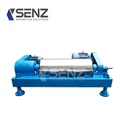

As a supplier of Gluten Wheat Flour Separators, I've witnessed firsthand the intricate relationship between wheat variety and the separation effect of our machines. In this blog, I'll delve into the scientific aspects of how different wheat varieties impact the performance of our separators, and why this knowledge is crucial for both producers and consumers.


The Basics of Gluten Wheat Flour Separation
Before we explore the impact of wheat variety, let's understand the fundamental process of gluten wheat flour separation. A Gluten Wheat Flour Separator is designed to separate gluten from wheat flour. Gluten, a protein complex, plays a vital role in the texture and elasticity of baked goods. The separator uses a combination of mechanical and physical processes to isolate gluten from the other components of wheat flour, such as starch.
The separation process typically involves mixing the wheat flour with water to form a dough. The dough is then washed with water, and the gluten remains as a cohesive mass while the starch and other soluble components are washed away. Our Gluten Wheat Flour Separators are engineered to optimize this process, ensuring high - efficiency separation and high - quality gluten extraction.
Impact of Wheat Variety on Separation Effect
Protein Content
One of the most significant factors influenced by wheat variety is the protein content. Different wheat varieties have varying levels of protein, which directly affects the gluten formation and separation. For example, hard wheat varieties, such as durum wheat, generally have a higher protein content compared to soft wheat varieties. Higher protein content means more gluten - forming proteins, such as gliadin and glutenin.
When using a Gluten Wheat Flour Separator, wheat with a higher protein content is more likely to form a stronger and more cohesive gluten network. This makes the separation process more efficient as the gluten mass is easier to isolate from the starch. In contrast, wheat with a lower protein content may result in a weaker gluten network, making it more challenging to separate the gluten from the starch. The separator may need to operate at different settings or for a longer time to achieve the desired separation effect.
Gluten Quality
Wheat variety also affects the quality of gluten. Not all gluten is created equal; the ratio of gliadin to glutenin can vary depending on the wheat variety. Gliadin contributes to the extensibility of gluten, while glutenin provides elasticity. A balanced ratio of these two proteins is essential for optimal gluten quality.
Some wheat varieties produce gluten with a more favorable ratio, resulting in a gluten that is both elastic and extensible. This type of gluten is easier to separate using our Gluten Wheat Flour Separator and also has better functional properties in baking. On the other hand, wheat varieties that produce gluten with an imbalanced ratio may lead to a separation process that is less efficient and a final gluten product with inferior quality.
Starch Characteristics
The starch in wheat also varies depending on the variety. Starch granules can differ in size, shape, and composition. These differences can impact the separation process. For instance, larger starch granules may be easier to separate from the gluten compared to smaller ones.
Some wheat varieties have starch with a higher amylose content, which can affect the viscosity of the dough during the separation process. A higher amylose content may result in a more viscous dough, which can make it more difficult for the separator to wash out the starch from the gluten. Our Gluten Wheat Flour Separators are designed to handle different starch characteristics, but understanding the wheat variety can help optimize the separation settings.
Case Studies
To illustrate the impact of wheat variety on the separation effect, let's look at some case studies.
In a study comparing the separation of gluten from hard red winter wheat and soft white wheat using our Gluten Wheat Flour Separator, we found that the hard red winter wheat, with its higher protein content, resulted in a more efficient separation process. The gluten yield was higher, and the quality of the gluten was superior in terms of elasticity and extensibility. The separator was able to achieve a cleaner separation, with less starch remaining in the gluten mass.
In contrast, the soft white wheat required more adjustments to the separator settings. The lower protein content led to a weaker gluten network, and more time was needed to separate the gluten from the starch. The gluten yield was lower, and the final gluten product had less desirable functional properties.
Related Centrifuge Technologies
In the field of separation technologies, there are other types of centrifuges that share some similarities with our Gluten Wheat Flour Separator. For example, the Mud Centrifuge is used in the oil and gas industry to separate solids from drilling mud. It operates on the principle of centrifugal force, similar to our separator. The Mining Decanter Centrifuge is used in the mining industry to separate solids and liquids in mineral processing. And the Protein Centrifuge is used in the biotechnology and food industries to separate proteins from other components. While these centrifuges have different applications, the basic principles of separation are related, and advancements in one area can potentially benefit the others.
Conclusion and Call to Action
In conclusion, the wheat variety has a profound impact on the separation effect of a Gluten Wheat Flour Separator. Understanding the protein content, gluten quality, and starch characteristics of different wheat varieties is essential for optimizing the separation process and achieving high - quality gluten extraction.
As a supplier of Gluten Wheat Flour Separators, we are committed to providing our customers with the best - in - class separation solutions. Our machines are designed to adapt to different wheat varieties and separation requirements. Whether you are a small - scale bakery or a large - scale flour mill, our separators can help you achieve efficient and high - quality gluten separation.
If you are interested in learning more about our Gluten Wheat Flour Separators or discussing your specific separation needs, we encourage you to contact us for a detailed consultation. We look forward to working with you to enhance your gluten separation process and improve your product quality.
References
- Pomeranz, Y. (Ed.). (1988). Wheat: Chemistry and Technology. American Association of Cereal Chemists.
- Shewry, P. R., & Tatham, A. S. (1997). Gluten proteins. Journal of Cereal Science, 25(2), 107 - 120.
- Osborne, T. B. (1907). The Proteins of the Wheat Kernel. Carnegie Institution of Washington.