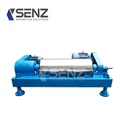

DDGS (Distillers Dried Grains with Solubles) dewatering centrifuges play a crucial role in the ethanol production process. These centrifuges are designed to separate the liquid and solid components of DDGS, thereby improving the efficiency of the overall production and the quality of the final product. One of the key components of a DDGS dewatering centrifuge is the drum, and understanding the materials used for this drum is essential for both manufacturers and users. As a supplier of DDGS Dewatering Centrifuges, I am here to shed light on the materials commonly used for the drum in these centrifuges.
Common Materials for the Drum in DDGS Dewatering Centrifuges
Stainless Steel
Stainless steel is one of the most widely used materials for the drum in DDGS dewatering centrifuges. It offers several advantages that make it suitable for this application. First of all, stainless steel has excellent corrosion resistance. In the DDGS dewatering process, the drum is constantly in contact with the DDGS mixture, which may contain various chemicals and moisture. Stainless steel can withstand the corrosive effects of these substances, ensuring a long service life of the drum.
Secondly, stainless steel has high strength. The drum in a centrifuge rotates at high speeds, generating significant centrifugal forces. The high - strength property of stainless steel allows the drum to withstand these forces without deformation, maintaining the stability and efficiency of the centrifuge operation.
There are different grades of stainless steel available, such as 304 and 316. Grade 304 stainless steel is a common choice due to its good combination of corrosion resistance and cost - effectiveness. Grade 316 stainless steel, on the other hand, contains molybdenum, which provides even better corrosion resistance, especially in environments with high chloride content.
Carbon Steel with Coating
Carbon steel is another material that can be used for the drum, but it is usually coated to enhance its corrosion resistance. Carbon steel has high strength and is relatively inexpensive compared to stainless steel. However, it is prone to corrosion when exposed to the DDGS mixture.
To address this issue, a variety of coatings can be applied to the carbon steel drum. Epoxy coatings are commonly used because they form a protective barrier between the carbon steel and the corrosive environment. These coatings can prevent the penetration of moisture and chemicals, reducing the risk of corrosion.
Another type of coating is ceramic coating. Ceramic coatings offer excellent wear resistance in addition to corrosion protection. In the DDGS dewatering process, the drum may experience some degree of abrasion due to the solid particles in the DDGS mixture. Ceramic coatings can withstand this abrasion, prolonging the life of the drum.
Titanium Alloys
Titanium alloys are a high - performance material option for the drum in DDGS dewatering centrifuges. Titanium has extremely high corrosion resistance, even in highly aggressive environments. It is also lightweight compared to stainless steel and carbon steel, which can reduce the energy consumption of the centrifuge.


However, the main drawback of titanium alloys is their high cost. The production process of titanium alloys is complex and expensive, which makes them less common in general - purpose DDGS dewatering centrifuges. They are usually reserved for applications where the highest level of corrosion resistance is required, such as in environments with extremely high - acid or high - alkali content in the DDGS mixture.
Factors Influencing the Choice of Drum Material
Chemical Composition of DDGS
The chemical composition of the DDGS mixture is a major factor in determining the appropriate drum material. If the DDGS contains a high concentration of corrosive substances, such as acids or salts, a material with high corrosion resistance like stainless steel grade 316 or titanium alloys may be necessary.
For example, if the ethanol production process uses certain additives that increase the acidity of the DDGS, a more corrosion - resistant material will be required to prevent the drum from corroding quickly.
Operating Conditions
The operating conditions of the centrifuge also play a role in material selection. The rotational speed of the centrifuge affects the centrifugal forces acting on the drum. Higher rotational speeds require a material with high strength to withstand these forces.
In addition, the temperature during the dewatering process can influence the choice of material. Some materials may lose their mechanical properties at high temperatures. For instance, certain coatings may degrade at elevated temperatures, reducing their protective effect. Therefore, if the dewatering process operates at high temperatures, a material that can maintain its performance under these conditions, such as stainless steel or titanium alloys, should be selected.
Cost Considerations
Cost is always an important factor in any industrial application. Stainless steel is a popular choice because it offers a good balance between performance and cost. Carbon steel with coating is also a cost - effective option, especially for applications where the corrosion requirements are not extremely high.
Titanium alloys, although offering excellent performance, are often too expensive for most standard DDGS dewatering centrifuge applications. Manufacturers and users need to weigh the cost against the performance requirements to make the most appropriate choice.
Our Product Range and Related Centrifuges
As a DDGS Dewatering Centrifuge supplier, we offer a wide range of centrifuges with drums made from different materials to meet the diverse needs of our customers. Our centrifuges are designed with high - quality components to ensure reliable and efficient operation.
In addition to DDGS dewatering centrifuges, we also provide other types of centrifuges. For example, our Soya Milk Decanter Centrifuge is specifically designed for the separation of soya milk, which can effectively separate the solid and liquid components of soya milk.
We also have Centrifuge For Oil Water Separation, which is used to separate oil and water mixtures in various industries. And our Solid Bowl Decanter Centrifuge is suitable for a wide range of solid - liquid separation applications.
Conclusion and Call to Action
In conclusion, the choice of drum material in a DDGS dewatering centrifuge depends on various factors, including the chemical composition of the DDGS, operating conditions, and cost considerations. Stainless steel, carbon steel with coating, and titanium alloys are the common materials used, each with its own advantages and disadvantages.
If you are in the market for a DDGS dewatering centrifuge or any other type of centrifuge, we are here to help. Our team of experts can assist you in selecting the most suitable centrifuge based on your specific requirements. Whether you need a centrifuge with a stainless - steel drum for general - purpose use or a high - performance titanium - alloy drum for a challenging application, we have the solutions for you. Contact us today to start the procurement negotiation process and find the perfect centrifuge for your business.
References
- Perry, R. H., & Green, D. W. (1997). Perry's Chemical Engineers' Handbook. McGraw - Hill.
- ASM Handbook Committee. (1990). ASM Handbook: Properties and Selection: Irons, Steels, and High - Performance Alloys. ASM International.