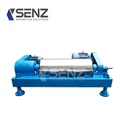

As a supplier of DDGS dewatering centrifuges, I've had the privilege of working closely with various industries that rely on these machines for efficient separation processes. Over the years, I've witnessed firsthand the common problems that can plague DDGS dewatering centrifuges. In this blog, I'll delve into these issues, their causes, and potential solutions, offering insights based on my practical experience in the field.
1. Poor Dewatering Efficiency
One of the most frequent complaints from users of DDGS dewatering centrifuges is poor dewatering efficiency. This manifests as higher moisture content in the separated solids than expected, which can have a significant impact on downstream processes. For example, if the DDGS is intended for animal feed, high moisture content can lead to spoilage and reduced shelf - life.
The causes of poor dewatering efficiency can be multifaceted. Firstly, improper feed rate can be a culprit. If the feed rate is too high, the centrifuge may not have enough time to separate the solids from the liquid effectively. On the other hand, a feed rate that is too low can lead to under - utilization of the centrifuge's capacity and increased energy consumption.
Another factor is the particle size distribution of the DDGS. If the particles are too fine, they may be more difficult to separate from the liquid phase, as they tend to remain suspended in the liquid for longer periods. Additionally, the chemical composition of the DDGS can affect dewatering efficiency. For instance, high levels of soluble solids or colloidal substances can increase the viscosity of the liquid, making it harder to separate from the solids.
To address these issues, it is crucial to optimize the feed rate according to the centrifuge's specifications. Regular monitoring and adjustment of the feed rate based on the incoming material characteristics can help maintain consistent dewatering efficiency. In cases where particle size is a problem, pre - treatment processes such as screening or flocculation can be employed to agglomerate the fine particles and improve separation. For problems related to chemical composition, the addition of appropriate chemicals can help reduce viscosity and enhance dewatering.
2. Wear and Tear of Components
DDGS dewatering centrifuges operate under high - speed rotation and are constantly in contact with abrasive materials. As a result, wear and tear of components is a common problem. The most affected parts are usually the scroll conveyor, the bowl, and the bearings.
The scroll conveyor, which is responsible for transporting the separated solids out of the centrifuge, is particularly vulnerable to wear. The constant friction between the scroll and the solids can cause the surface of the scroll to erode over time. This not only reduces the efficiency of the centrifuge but can also lead to uneven distribution of the solids, resulting in vibration and imbalance.
The bowl, which rotates at high speeds to generate the centrifugal force for separation, can also experience wear. Abrasive particles in the DDGS can cause scratches and pitting on the inner surface of the bowl, weakening its structural integrity. In severe cases, this can lead to bowl failure, which is a costly and time - consuming problem to fix.
Bearings are another critical component that is prone to wear. The high - speed rotation of the centrifuge puts a significant amount of stress on the bearings, and over time, the lubrication can break down, leading to increased friction and heat generation. This can cause the bearings to fail prematurely, resulting in downtime for the centrifuge.


To mitigate wear and tear, regular maintenance is essential. This includes inspecting the components for signs of wear, replacing worn - out parts in a timely manner, and ensuring proper lubrication of the bearings. Using high - quality, wear - resistant materials for the scroll conveyor and the bowl can also extend their service life. Additionally, implementing a preventive maintenance program can help identify potential problems before they escalate into major failures.
3. Vibration and Imbalance
Vibration and imbalance are common issues that can affect the performance and longevity of DDGS dewatering centrifuges. Excessive vibration can cause damage to the centrifuge's components, increase noise levels, and even pose a safety hazard to operators.
Imbalance can occur due to several reasons. Uneven distribution of solids in the bowl is a common cause. If the solids are not evenly spread around the bowl, it can create an imbalance in the rotating mass, leading to vibration. This can happen if the feed is not properly distributed or if there is a blockage in the scroll conveyor.
Another cause of vibration is the misalignment of the centrifuge's components. Over time, the centrifuge may shift due to factors such as floor movement or improper installation. This can cause the rotating parts to be out of alignment, resulting in vibration.
To address vibration and imbalance issues, the centrifuge should be regularly inspected for proper alignment. If misalignment is detected, it should be corrected immediately. Additionally, ensuring even distribution of the feed and the solids is crucial. This can be achieved by using proper feed distribution systems and regularly cleaning the scroll conveyor to prevent blockages. Balancing the centrifuge periodically can also help reduce vibration.
4. Clogging
Clogging is a significant problem in DDGS dewatering centrifuges. It can occur in various parts of the centrifuge, such as the feed inlet, the scroll conveyor, and the discharge ports. Clogging can disrupt the normal operation of the centrifuge, reduce its efficiency, and even cause damage to the components.
The main cause of clogging is the presence of large particles or agglomerates in the DDGS. These particles can block the flow paths in the centrifuge, preventing the proper movement of the solids and liquids. Additionally, the accumulation of sticky substances on the inner surfaces of the centrifuge can also lead to clogging.
To prevent clogging, pre - screening of the DDGS is recommended to remove large particles before they enter the centrifuge. Regular cleaning of the centrifuge, especially the feed inlet, scroll conveyor, and discharge ports, can also help prevent the accumulation of sticky substances. In some cases, the addition of anti - clogging agents or the use of self - cleaning mechanisms can be effective in reducing the risk of clogging.
5. High Energy Consumption
High energy consumption is a concern for many users of DDGS dewatering centrifuges. The centrifuge's high - speed rotation requires a significant amount of power, and inefficient operation can lead to excessive energy usage.
One of the main causes of high energy consumption is improper centrifuge sizing. If the centrifuge is too large for the application, it will consume more energy than necessary to achieve the desired separation. On the other hand, an undersized centrifuge may have to operate at a higher speed or for a longer period to process the same amount of material, also resulting in increased energy consumption.
Another factor is the inefficiency of the centrifuge's motor and drive system. Old or poorly maintained motors may not operate at their optimal efficiency, leading to higher energy consumption. Additionally, friction in the rotating parts of the centrifuge can also contribute to increased energy usage.
To reduce energy consumption, it is important to select the right - sized centrifuge for the application. Conducting a detailed analysis of the material characteristics, feed rate, and desired separation efficiency can help in making an informed decision. Regular maintenance of the motor and drive system, including checking for proper alignment, lubrication, and voltage regulation, can also improve energy efficiency. Implementing energy - saving features such as variable frequency drives can further reduce energy consumption by adjusting the motor speed according to the actual load.
Contact Us for Solutions
If you're facing any of these common problems with your DDGS dewatering centrifuge or are in the market for a new centrifuge, we're here to help. As a leading supplier of DDGS dewatering centrifuges, we have the expertise and experience to provide you with tailored solutions. Whether you need assistance with optimizing your centrifuge's performance, replacing worn - out components, or selecting the right centrifuge for your specific application, our team of experts is ready to assist you.
For more information about our centrifuge products, you can visit our website and explore related products such as Solids Control Centrifuge, Decantador, and Sulfur Foam Separation Centrifuge. Contact us today to start a discussion about how we can meet your dewatering needs.
References
- Perry, R. H., & Green, D. W. (1997). Perry's Chemical Engineers' Handbook. McGraw - Hill.
- Svarovsky, L. (1984). Solid - Liquid Separation. Butterworths.
- Wakeman, R. J., & Tarleton, E. S. (2005). Solid/Liquid Separation Equipment Scale - Up. Elsevier.