
How does the pH value affect the separation performance of a 3 - Phase Decanter Centrifuge?
As a supplier of 3 - Phase Decanter Centrifuges, I've witnessed firsthand the critical role that the pH value plays in the separation performance of these remarkable machines. In this blog, I'll delve into the scientific aspects of how pH value impacts the efficiency and effectiveness of 3 - Phase Decanter Centrifuges, and why it's essential for operators to understand this relationship.
Understanding the 3 - Phase Decanter Centrifuge
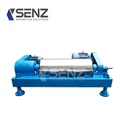
A 3 - Phase Decanter Centrifuge is a sophisticated piece of equipment designed to separate three different phases - typically a solid phase, a light liquid phase, and a heavy liquid phase - from a mixture. It operates on the principle of centrifugal force, which is generated by spinning the mixture at high speeds. The different phases separate according to their densities, with the denser materials moving towards the outer edges of the centrifuge bowl and the lighter materials remaining towards the center.
This type of centrifuge is widely used in various industries, including wastewater treatment, food processing, and chemical manufacturing. For instance, in the wastewater treatment industry, a Sludge Dewatering Unit can effectively separate sludge from water, making it easier to dispose of the sludge and reuse the water. In the food industry, a Tricanter Centrifuge can separate oil, water, and solids from food products, ensuring high - quality end - products. And in the olive oil production, an Olive Oil Decanter Centrifuge is used to separate olive oil, water, and pomace.
The Role of pH Value in Separation
The pH value of a mixture is a measure of its acidity or alkalinity. It ranges from 0 to 14, with 7 being neutral, values below 7 indicating acidity, and values above 7 indicating alkalinity. The pH value can significantly affect the separation performance of a 3 - Phase Decanter Centrifuge in several ways.
1. Particle Surface Charge
Many solid particles in a mixture carry a surface charge. The magnitude and sign of this charge can be influenced by the pH value of the surrounding liquid. In an acidic environment (low pH), particles may acquire a positive surface charge, while in an alkaline environment (high pH), they may acquire a negative surface charge.
This change in surface charge affects the interaction between particles. For example, particles with the same surface charge will repel each other, which can prevent them from aggregating. In a 3 - Phase Decanter Centrifuge, this can lead to better dispersion of solid particles in the liquid phase, making it more difficult to separate the solid phase from the liquid phases. On the other hand, if the pH value is adjusted to a point where the particles have opposite charges, they may attract and aggregate, facilitating their separation from the liquid phases.
2. Solubility of Chemical Components
The pH value can also affect the solubility of various chemical components in the mixture. Some substances may be more soluble in acidic solutions, while others may be more soluble in alkaline solutions.
In a 3 - Phase Decanter Centrifuge, this can have a significant impact on the separation process. For example, if a particular chemical component is highly soluble at a certain pH value, it will remain in the liquid phase, making it difficult to separate it from the other phases. By adjusting the pH value, it may be possible to reduce the solubility of this component, causing it to precipitate out of the solution and form a solid phase that can be more easily separated.


3. Emulsion Stability
In many applications, the mixture to be separated may contain emulsions, which are mixtures of two immiscible liquids (such as oil and water). The stability of these emulsions is often influenced by the pH value.
At certain pH values, the emulsifying agents (substances that help keep the two liquids mixed) may be more effective, resulting in a more stable emulsion. In a 3 - Phase Decanter Centrifuge, a stable emulsion can be challenging to separate into its individual liquid phases. By adjusting the pH value, it may be possible to weaken the emulsifying agents, breaking the emulsion and allowing the two liquids to separate more easily.
Case Studies
Let's take a look at some real - world examples of how pH value affects the separation performance of 3 - Phase Decanter Centrifuges.
In a wastewater treatment plant, the influent wastewater often contains a variety of solid particles and dissolved chemicals. The pH value of the wastewater can vary depending on the source of the water and the industrial activities in the area. If the pH value is too low or too high, it can affect the efficiency of the Sludge Dewatering Unit. By adjusting the pH value to an optimal range, the plant operators can improve the separation of sludge from water, reducing the volume of sludge for disposal and increasing the quality of the treated water.
In the olive oil industry, the pH value of the olive paste can affect the yield and quality of the olive oil. An improper pH value can lead to the formation of stable emulsions between the oil and water phases, making it difficult to separate the oil using an Olive Oil Decanter Centrifuge. By carefully controlling the pH value during the olive oil extraction process, producers can improve the separation efficiency and obtain a higher - quality olive oil.
pH Value Optimization for 3 - Phase Decanter Centrifuges
To optimize the separation performance of a 3 - Phase Decanter Centrifuge, it's crucial to determine the optimal pH value for the specific mixture being processed. This often requires conducting laboratory tests and pilot - scale trials.
During these tests, the pH value of the mixture is gradually adjusted, and the separation performance of the centrifuge is monitored. Key performance indicators such as the clarity of the separated liquid phases, the dryness of the separated solid phase, and the separation efficiency are measured. Based on the results of these tests, the optimal pH value can be determined.
Once the optimal pH value is identified, it's important to maintain it during the operation of the centrifuge. This may involve adding pH - adjusting chemicals to the mixture before it enters the centrifuge. However, it's essential to use these chemicals carefully, as excessive use can have a negative impact on the environment and the quality of the separated products.
Conclusion
The pH value is a critical factor that can significantly affect the separation performance of a 3 - Phase Decanter Centrifuge. By understanding the relationship between pH value and separation efficiency, operators can optimize the performance of their centrifuges, improve the quality of the separated products, and reduce operating costs.
If you're in the market for a high - quality 3 - Phase Decanter Centrifuge or need more information on how to optimize the pH value for your specific application, don't hesitate to contact us for a purchasing discussion. Our team of experts is always ready to assist you in finding the best solution for your needs.
References
- Perry, R. H., & Green, D. W. (1997). Perry's Chemical Engineers' Handbook. McGraw - Hill.
- Svarovsky, L. (1990). Solid - Liquid Separation. Butterworth - Heinemann.
- Wakeman, R. J., & Tarleton, E. S. (2005). Solid - Liquid Filtration and Separation Technology. Wiley - VCH.