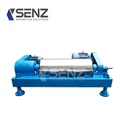
In the dynamic landscape of industrial innovation, the question of whether a sludge decanter centrifuge can be effectively utilized in the cement industry is both timely and significant. As a supplier of sludge decanter centrifuges, I've witnessed firsthand the diverse applications of this technology across multiple sectors. In this blog post, I'll explore the potential of sludge decanter centrifuges in the cement industry, examining the challenges, benefits, and practical considerations.
Understanding the Cement Industry's Sludge Management Challenges
The cement industry is known for its high - volume production processes that generate a substantial amount of sludge. This sludge is a by - product of various operations, including wastewater treatment from the manufacturing process, dust collection systems, and the cleaning of equipment. The sludge typically contains a complex mixture of fine particles, such as cement dust, clay, and other minerals, along with water.
One of the primary challenges in sludge management for the cement industry is the high moisture content of the sludge. High - moisture sludge is difficult to handle, transport, and dispose of. It takes up a large amount of storage space, and its transportation can be costly due to the added weight of the water. Moreover, improper disposal of wet sludge can lead to environmental issues, such as soil and water pollution.
How Sludge Decanter Centrifuges Work
A sludge decanter centrifuge is a powerful piece of equipment that uses centrifugal force to separate solids from liquids in a sludge mixture. The centrifuge consists of a rotating bowl and a screw conveyor. When the sludge is fed into the centrifuge, the high - speed rotation of the bowl creates a centrifugal force that causes the heavier solid particles to settle on the inner wall of the bowl. The screw conveyor then moves these solid particles towards the discharge end of the centrifuge, while the clarified liquid is removed through a separate outlet.
The efficiency of a sludge decanter centrifuge depends on several factors, including the rotational speed of the bowl, the design of the screw conveyor, and the properties of the sludge itself. By adjusting these parameters, the centrifuge can achieve a high degree of separation, resulting in a dry solid cake and a clarified liquid.
Potential Applications of Sludge Decanter Centrifuges in the Cement Industry
1. Wastewater Treatment
In the cement manufacturing process, a significant amount of water is used for various purposes, such as cooling and washing. The wastewater generated from these processes contains suspended solids and other contaminants. A sludge decanter centrifuge can be used to separate the solids from the wastewater, allowing the treated water to be recycled back into the manufacturing process. This not only reduces water consumption but also minimizes the environmental impact of wastewater discharge.
2. Sludge Dewatering
As mentioned earlier, the high moisture content of cement industry sludge is a major challenge. A sludge decanter centrifuge can effectively dewater the sludge, reducing its volume and weight. The dewatered sludge can then be more easily transported and disposed of or even reused in some cases. For example, the dewatered sludge may be used as a raw material in the cement kiln, thus reducing the need for additional raw materials and potentially saving costs.
3. Dust Collection System Sludge Treatment
Cement production involves processes that generate a large amount of dust. Dust collection systems are used to capture this dust, but over time, the collected dust accumulates as sludge. A sludge decanter centrifuge can be used to treat this sludge, separating the solid dust particles from the moisture. The recovered dust particles can be recycled back into the production process, improving resource utilization.
Advantages of Using Sludge Decanter Centrifuges in the Cement Industry
1. High Efficiency
Sludge decanter centrifuges can achieve a high degree of solid - liquid separation in a relatively short period. They can handle large volumes of sludge, making them suitable for the high - volume operations of the cement industry.
2. Cost - Effectiveness
By reducing the volume of sludge, the cost of sludge transportation and disposal can be significantly reduced. Additionally, the recycling of treated water and recovered solids can lead to cost savings in raw material and water usage.
3. Environmental Benefits
Proper sludge management using decanter centrifuges helps to minimize the environmental impact of the cement industry. Reduced wastewater discharge and proper disposal of dewatered sludge contribute to a cleaner environment.
4. Automation and Control
Modern sludge decanter centrifuges are equipped with advanced automation and control systems. This allows for easy operation and monitoring, ensuring consistent performance and reducing the need for manual labor.
Practical Considerations
When considering the use of a sludge decanter centrifuge in the cement industry, several practical factors need to be taken into account:


- Sludge Characteristics: The properties of the cement industry sludge, such as particle size distribution, density, and pH value, can affect the performance of the centrifuge. A detailed analysis of the sludge characteristics is necessary to select the appropriate centrifuge and operating parameters.
- Equipment Size and Capacity: The size and capacity of the centrifuge should be chosen based on the volume of sludge generated by the cement plant. An undersized centrifuge may not be able to handle the sludge load, while an oversized centrifuge may result in unnecessary energy consumption.
- Maintenance Requirements: Regular maintenance is essential to ensure the long - term performance of the centrifuge. It is important to understand the maintenance requirements of the equipment and have a proper maintenance plan in place.
Related Applications of Centrifuges
Beyond the cement industry, sludge decanter centrifuges have a wide range of applications. For example, Septage Dewatering is an important application where centrifuges are used to separate solids from septage, a mixture of human waste, water, and other debris. In the pharmaceutical field, Heparin Sodium Treatment Centrifuge is used to purify and separate heparin sodium, a widely used anticoagulant. Additionally, Industrial Centrifuge Machine finds applications in various industries for solid - liquid separation tasks.
Conclusion
In conclusion, sludge decanter centrifuges have great potential for use in the cement industry. They can effectively address the sludge management challenges faced by cement plants, offering benefits such as high efficiency, cost - effectiveness, and environmental friendliness. By carefully considering the sludge characteristics, equipment size, and maintenance requirements, cement manufacturers can make informed decisions about the implementation of sludge decanter centrifuges in their operations.
If you're in the cement industry and looking for a reliable solution for sludge management, I encourage you to reach out. Our team of experts can provide you with detailed information about our sludge decanter centrifuges, offer customized solutions based on your specific needs, and guide you through the implementation process. Contact us today to start a conversation about how our equipment can enhance your sludge management practices and contribute to the efficiency and sustainability of your cement production.
References
- Smith, J. (2020). Industrial Centrifuge Technology: Principles and Applications. London: Industrial Press.
- Johnson, R. (2019). Wastewater Treatment in the Cement Industry. Journal of Environmental Engineering, 25(3), 123 - 135.
- Brown, A. (2018). Solid - Liquid Separation in Industrial Processes. New York: Chemical Engineering Publications.