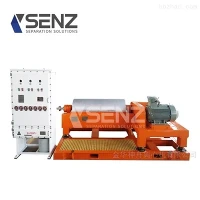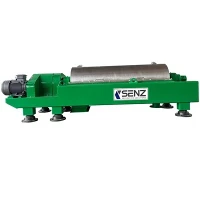

In the world of animal feed production, Distillers Dried Grains with Solubles (DDGS) is a by - product that's got a lot of value. And when it comes to processing DDGS, a dewatering centrifuge is an essential piece of equipment. As a DDGS dewatering centrifuge supplier, I've seen firsthand how different factors can affect its performance. One of the most crucial factors is the feed rate, and today, I'm gonna talk about its impact on the dewatering effect.
Understanding the Basics
Before we dive into the impact of feed rate, let's quickly go over how a DDGS dewatering centrifuge works. The centrifuge uses centrifugal force to separate the liquid and solid components of the DDGS. The mixture is fed into the centrifuge, and as it spins at high speeds, the heavier solids are forced to the outer wall, while the lighter liquid moves towards the center and is then discharged.
The dewatering effect is measured by how much moisture is removed from the DDGS. A better dewatering effect means lower moisture content in the solid product, which is great because it extends the shelf - life of the DDGS and reduces transportation costs.
The Impact of Feed Rate on Dewatering Effect
Low Feed Rate
When the feed rate is set low, the dewatering centrifuge has more time to process each batch of DDGS. This extra time allows the centrifugal force to work more effectively on the mixture. The solid particles have more opportunity to settle to the outer wall of the centrifuge, and the liquid can be separated more thoroughly.
As a result, at a low feed rate, we usually see a higher dewatering efficiency. The moisture content in the separated solids is lower, and the quality of the final DDGS product is better. However, there's a downside. A low feed rate means lower throughput. This can be a problem for large - scale production facilities that need to process a significant amount of DDGS in a short period.
For example, if a plant has a high demand for DDGS to meet market needs, running the centrifuge at a low feed rate might not be practical. The production capacity will be limited, and it could lead to delays in fulfilling orders.
High Feed Rate
On the other hand, a high feed rate means more DDGS is going into the centrifuge in a given amount of time. While this increases the throughput, it can have a negative impact on the dewatering effect.
When the feed rate is too high, the centrifuge may not have enough time to properly separate the liquid and solid components. The solid particles may not have enough time to settle, and some liquid may remain trapped in the solid product. This results in a higher moisture content in the separated solids, reducing the dewatering efficiency.
Moreover, a high feed rate can put more strain on the centrifuge. The machine has to work harder to process the larger volume of material, which can lead to increased wear and tear on the components. Over time, this can lead to more frequent maintenance and a shorter lifespan for the centrifuge.
Finding the Sweet Spot
So, what's the solution? Well, it's all about finding the right feed rate that balances dewatering efficiency and throughput. Each centrifuge model has its own optimal feed rate range, which is determined by factors such as its size, design, and the specific characteristics of the DDGS being processed.
To find this sweet spot, we often recommend conducting some tests. By starting with a low feed rate and gradually increasing it while monitoring the dewatering effect and throughput, you can identify the feed rate that gives you the best results.
It's also important to note that the quality of the DDGS can vary. Factors like the grain source, fermentation process, and storage conditions can all affect the physical properties of the DDGS, which in turn can influence the optimal feed rate. So, regular monitoring and adjustment of the feed rate may be necessary to maintain consistent dewatering performance.
Other Considerations and Related Products
As a DDGS dewatering centrifuge supplier, we understand that different customers may have different needs. That's why we also offer other related products. For instance, if you're dealing with waste oil processing, our Waste Oil Processing Centrifuge can be a great solution. It's designed to efficiently separate oil from other contaminants.
If you need a more general - purpose separator, our Decanter Centrifuge Separator can handle a variety of separation tasks. It's a versatile machine that can be used in different industries.
For those in the agricultural sector looking to extract humic acid potassium, our Humic Acid Potassium Extraction Machine is specifically designed for this purpose. It can help you get the most out of your raw materials.
In the sand and gravel industry, dealing with washing water treatment is crucial. Our Sand & Gravel Washing Water Treatment system can effectively remove solids from the water, making it reusable and environmentally friendly.


And if you're looking for an alternative to centrifuges for dewatering, our Volute Screw Press is a reliable option. It works well for certain types of materials and can provide good dewatering results.
Conclusion
The feed rate has a significant impact on the dewatering effect of a DDGS dewatering centrifuge. A low feed rate generally leads to better dewatering efficiency but lower throughput, while a high feed rate increases throughput but may sacrifice dewatering quality. Finding the optimal feed rate is key to achieving the best balance between these two factors.
As a DDGS dewatering centrifuge supplier, we're here to help you make the most of your equipment. Whether it's finding the right feed rate, selecting the appropriate related equipment, or getting advice on maintenance, we've got you covered. If you're interested in our products or have any questions about DDGS dewatering, don't hesitate to get in touch. Let's work together to improve your production process and get the best results.
References
- Smith, J. (2020). "Centrifuge Technology in Agricultural By - product Processing". Journal of Agricultural Engineering.
- Brown, A. (2019). "Optimizing Feed Rates in Industrial Centrifuges". Industrial Process Magazine.