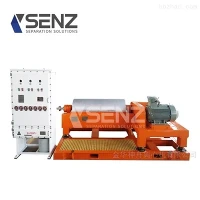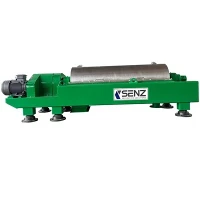

A laboratory centrifuge is an indispensable piece of equipment in various scientific fields, from biology and chemistry to medical research. It operates by spinning samples at high speeds, separating components based on their density. However, the high - speed rotation generates a significant amount of heat, which can affect the accuracy of experiments and the lifespan of the centrifuge itself. This is where the cooling system of a laboratory centrifuge comes into play.
Understanding the Need for a Cooling System
When a centrifuge spins, the friction between the rotor and the air, as well as the internal mechanical components, produces heat. If this heat is not dissipated effectively, it can lead to several problems. For biological samples, excessive heat can denature proteins and damage cell structures, rendering the samples useless for further analysis. In chemical experiments, it can affect reaction rates and the stability of chemical compounds. Moreover, high temperatures can cause the centrifuge's electronic components to malfunction and reduce the mechanical lifespan of the rotor and bearings.
Types of Cooling Systems in Laboratory Centrifuges
Air - Cooling Systems
Air - cooling is one of the simplest and most common cooling methods used in laboratory centrifuges. It works by using a fan to circulate air through the centrifuge's housing. The fan draws in cool air from the surrounding environment and blows it over the heat - generating components, such as the motor and the rotor. As the air absorbs the heat, it is then expelled out of the centrifuge.
The advantages of air - cooling are its simplicity and low cost. It does not require complex refrigeration equipment, making it a cost - effective option for small - scale laboratories or those on a budget. Additionally, air - cooled centrifuges are generally more compact and easier to maintain since there are fewer components involved.
However, air - cooling has its limitations. It is less efficient at removing large amounts of heat compared to other methods. In a high - speed centrifuge that generates a substantial amount of heat, air - cooling may not be able to keep the temperature under control, especially in warm laboratory environments.
Refrigeration - Based Cooling Systems
Refrigeration - based cooling systems are used in more advanced laboratory centrifuges, especially those designed for high - speed or continuous operation. These systems use a refrigeration cycle similar to that found in a household refrigerator or an air - conditioner.
The basic components of a refrigeration - based cooling system include a compressor, a condenser, an expansion valve, and an evaporator. The compressor compresses the refrigerant gas, increasing its temperature and pressure. The hot, high - pressure gas then flows to the condenser, where it releases heat to the surrounding environment and condenses into a liquid. The liquid refrigerant then passes through the expansion valve, which reduces its pressure and causes it to evaporate in the evaporator. As the refrigerant evaporates, it absorbs heat from the centrifuge's interior, effectively cooling it down.
Refrigeration - based cooling systems offer much higher cooling capacities compared to air - cooling systems. They can maintain a stable temperature even during long - term, high - speed operation. This makes them ideal for applications that require precise temperature control, such as ultra - centrifugation in biological research. However, they are more expensive to purchase and operate, and they require more maintenance due to the complexity of the refrigeration cycle.
Water - Cooling Systems
Water - cooling systems are another option for cooling laboratory centrifuges. In a water - cooling system, water is circulated through a heat exchanger attached to the centrifuge. The heat from the centrifuge is transferred to the water, which is then pumped out of the centrifuge and cooled in a separate cooling unit before being recirculated.
Water - cooling systems are highly efficient at heat transfer because water has a high specific heat capacity, meaning it can absorb a large amount of heat without a significant increase in temperature. They can provide consistent cooling, especially in large - scale centrifuge operations. However, they require a continuous supply of water, which can be a limitation in some laboratories. Additionally, there is a risk of water leakage, which can damage the centrifuge and other laboratory equipment.
Our Laboratory Centrifuge Cooling Solutions
As a leading laboratory centrifuge supplier, we understand the importance of an effective cooling system. Our centrifuges are equipped with state - of - the - art cooling technologies, ensuring optimal performance and sample integrity.
For customers on a budget or those with less demanding applications, our air - cooled centrifuges offer a reliable and cost - effective solution. These centrifuges are designed with efficient fans and ventilation systems to ensure adequate heat dissipation.
For high - performance applications, our refrigeration - based centrifuges provide precise temperature control. We use advanced refrigeration components and intelligent temperature control algorithms to maintain a stable temperature within the centrifuge chamber.


In addition to our standard models, we also offer customized cooling solutions. Whether you need a water - cooled centrifuge for a large - scale industrial application or a specialized cooling system for a unique research project, our team of experts can work with you to develop a solution that meets your specific requirements.
Related Products and Applications
We offer a wide range of centrifuge products with various functions. For example, our Sunflower Seed Oil Decanter Centrifuge is specifically designed for the separation of sunflower seed oil. It is equipped with an efficient cooling system to ensure the quality of the oil during the separation process.
Our Paper Pulp Wastewater Treatment centrifuge plays a crucial role in the treatment of paper pulp wastewater. The cooling system helps to maintain the stability of the centrifuge during continuous operation, improving the efficiency of wastewater treatment.
The Volute Screw Press is another product in our portfolio. It uses a unique screw - press mechanism for dewatering, and the cooling system ensures that the mechanical components operate smoothly under high - pressure conditions.
We also have advanced Sludge Dewatering Technologies and Septage Dewatering centrifuges. These products are essential for environmental protection and waste management, and their cooling systems are designed to handle the harsh operating conditions associated with sludge and septage treatment.
Contact Us for Purchase and Consultation
If you are in the market for a laboratory centrifuge or need more information about our cooling systems, we encourage you to contact us. Our team of sales and technical experts is ready to assist you in selecting the right centrifuge for your application and answering any questions you may have. Whether you are a small research laboratory or a large - scale industrial facility, we have the products and solutions to meet your needs.
References
- Brown, R. A. (2018). Laboratory Centrifuges: Principles and Techniques. Academic Press.
- Smith, J. K. (2020). Cooling Systems for High - Performance Laboratory Equipment. Journal of Laboratory Equipment Science, 15(2), 34 - 45.
- Johnson, M. L. (2019). Advances in Centrifuge Technology and Cooling Methods. International Journal of Scientific Instrumentation, 22(3), 56 - 67.