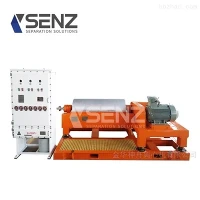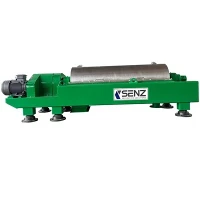

When delving into the world of industrial equipment, understanding power consumption is crucial for both operational efficiency and cost - effectiveness. As a supplier of 2 - Phase Decanter Centrifuges, I am often asked about the power consumption of these remarkable machines. In this blog, we will explore the factors influencing the power consumption of a 2 - Phase Decanter Centrifuge, how it can be optimized, and its implications for various industries.
Understanding the Basics of a 2 - Phase Decanter Centrifuge
A 2 - Phase Decanter Centrifuge is a high - performance separation device used in a wide range of industries, including wastewater treatment, food processing, and oil and gas. Its primary function is to separate two immiscible phases, typically a solid and a liquid, by using centrifugal force. The centrifuge consists of a rotating bowl and a screw conveyor that operates at a differential speed. As the mixture enters the centrifuge, the centrifugal force causes the heavier solid particles to settle on the inner wall of the bowl, while the lighter liquid phase forms an inner layer. The screw conveyor then transports the solid phase towards the discharge end, and the liquid phase is removed through separate outlets.
Factors Affecting Power Consumption
The power consumption of a 2 - Phase Decanter Centrifuge is influenced by several factors. One of the most significant factors is the size and capacity of the centrifuge. Larger centrifuges with higher throughput capacities generally require more power to operate. The diameter and length of the bowl, as well as the speed at which it rotates, play a crucial role in determining the power consumption. A larger bowl diameter and higher rotation speed result in greater centrifugal force, which is necessary for efficient separation. However, these also lead to increased power requirements.
The characteristics of the feed material also have a substantial impact on power consumption. The concentration of solids in the feed, the particle size and density of the solids, and the viscosity of the liquid phase all affect the energy needed to operate the centrifuge. For example, a feed with a high solid concentration or large, dense particles will require more power to separate compared to a feed with a low solid concentration and small, light particles. Additionally, a more viscous liquid phase will increase the resistance to flow within the centrifuge, leading to higher power consumption.
The differential speed between the bowl and the screw conveyor is another important factor. The differential speed is adjusted to control the residence time of the solids in the centrifuge and the dryness of the discharged solids. A higher differential speed generally results in a drier solid phase, but it also increases the power consumption. Operators need to find an optimal differential speed that balances the desired separation efficiency with power consumption.
Measuring Power Consumption
Power consumption in a 2 - Phase Decanter Centrifuge is typically measured in kilowatts (kW). Most modern centrifuges are equipped with power meters that can accurately measure the electrical power drawn by the machine. These meters provide real - time data on power consumption, allowing operators to monitor and analyze the energy usage of the centrifuge.
To calculate the power consumption over a specific period, the average power consumption (in kW) is multiplied by the number of hours of operation. For example, if a centrifuge has an average power consumption of 50 kW and operates for 8 hours a day, the daily power consumption would be 50 kW x 8 hours = 400 kilowatt - hours (kWh).
Power Consumption in Different Industries
In the wastewater treatment industry, 2 - Phase Decanter Centrifuges are used for sludge dewatering. Sludge Dewatering Decanter Centrifuge plays a vital role in reducing the volume of sludge and making it easier to handle and dispose of. The power consumption in this application depends on the characteristics of the sludge, such as its solid content and the type of wastewater being treated. Generally, the power consumption can range from 10 to 50 kW, depending on the size and capacity of the centrifuge.
In the food processing industry, 2 - Phase Decanter Centrifuges are used for separating solids from liquids in the production of various food products. Decanter Centrifuge For Sludge Dewatering can be employed to separate cream from milk, for example. The power consumption in food processing applications is often lower compared to wastewater treatment, as the feed materials are usually less viscous and have a lower solid concentration. Centrifuges used in food processing may have a power consumption of 5 to 20 kW.
In the oil and gas industry, Wastewater Treatment Centrifuge is used for separating oil and water mixtures, as well as for shale separation. Shale Separating Machine often operate at high speeds and require significant power to achieve effective separation. The power consumption in oil and gas applications can range from 50 to several hundred kilowatts, depending on the specific requirements of the operation.


Optimizing Power Consumption
To optimize the power consumption of a 2 - Phase Decanter Centrifuge, several strategies can be employed. First, proper maintenance of the centrifuge is essential. Regular cleaning of the bowl and screw conveyor, as well as lubrication of the bearings, can reduce friction and energy losses. Additionally, ensuring that the centrifuge is properly balanced can prevent excessive vibration, which can also lead to increased power consumption.
Another strategy is to adjust the operating parameters of the centrifuge based on the characteristics of the feed material. By optimizing the differential speed, bowl speed, and feed rate, operators can achieve the desired separation efficiency while minimizing power consumption. For example, if the feed material has a low solid concentration, reducing the bowl speed and differential speed may be sufficient to achieve effective separation, resulting in lower power usage.
Using energy - efficient motors and control systems can also significantly reduce power consumption. Modern motors are designed to operate at high efficiency, and advanced control systems can adjust the power output of the motor based on the actual load requirements of the centrifuge.
Implications of Power Consumption
High power consumption in a 2 - Phase Decanter Centrifuge can have several implications for businesses. Firstly, it directly affects the operating costs. Higher power consumption means higher electricity bills, which can significantly impact the profitability of a company. Secondly, it can have environmental implications. Increased energy consumption leads to higher greenhouse gas emissions, contributing to climate change. Therefore, reducing power consumption is not only beneficial for the bottom line but also for the environment.
Conclusion
In conclusion, the power consumption of a 2 - Phase Decanter Centrifuge is influenced by a variety of factors, including the size and capacity of the centrifuge, the characteristics of the feed material, and the operating parameters. Understanding these factors and implementing strategies to optimize power consumption can lead to significant cost savings and environmental benefits.
If you are in the market for a 2 - Phase Decanter Centrifuge or are looking to upgrade your existing equipment, Two Stage Pusher Centrifuge and our other products offer a reliable and energy - efficient solution. Feel free to reach out to us to discuss your specific requirements and to start a procurement - related conversation. Our team of experts is ready to assist you in finding the best centrifuge for your needs.
References
- "Centrifugal Separation Technology" by Paul A. Schweitzer
- "Industrial Centrifugation Technology" by David Wakeman and Roger Bates
- Manufacturer's technical documentation for 2 - Phase Decanter Centrifuges