
Hey there! As a supplier of sludge decanter centrifuges, I often get asked about the separation efficiency of these machines. So, I thought I'd take a moment to break it down and give you a better understanding of what it means and how it impacts your operations.


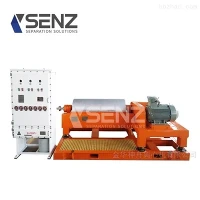
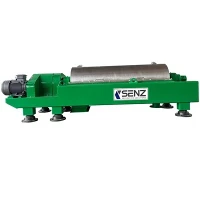
First things first, let's talk about what a sludge decanter centrifuge actually does. In simple terms, it's a piece of equipment that uses centrifugal force to separate solids from liquids in a sludge mixture. This process is crucial in a variety of industries, including wastewater treatment, food processing, and oil and gas.
Now, when we talk about separation efficiency, we're essentially referring to how well the centrifuge can separate the solids from the liquids. A high separation efficiency means that more solids are being removed from the liquid, resulting in a drier cake and clearer centrate (the liquid part that's been separated from the solids).
So, what factors affect the separation efficiency of a sludge decanter centrifuge? Well, there are quite a few.
One of the most important factors is the design of the centrifuge itself. Different models have different specifications, such as bowl diameter, length, and speed. For example, a centrifuge with a larger bowl diameter can generally handle a higher volume of sludge, but it might not be as effective at separating fine particles. On the other hand, a centrifuge with a higher speed can generate more centrifugal force, which can improve the separation of solids and liquids.
Another factor is the characteristics of the sludge being processed. The type of solids in the sludge, their size and density, as well as the viscosity of the liquid, all play a role in how well the centrifuge can separate them. For instance, if the solids are very fine and light, they might be more difficult to separate from the liquid. In this case, the centrifuge might need to be adjusted to operate at a higher speed or with a different configuration.
The feed rate of the sludge into the centrifuge is also crucial. If the feed rate is too high, the centrifuge might not have enough time to separate the solids and liquids effectively. On the other hand, if the feed rate is too low, it might not be making full use of its capacity, which can lead to inefficient operation.
So, how do we measure the separation efficiency of a sludge decanter centrifuge? One common method is to calculate the solids capture rate. This is the percentage of solids that are removed from the sludge and collected in the cake. A high solids capture rate indicates a high separation efficiency. Another way to measure it is by looking at the dryness of the cake. A drier cake means that more water has been removed from the sludge, which also indicates good separation efficiency.
Now, let's talk about the benefits of having a high separation efficiency. Firstly, it can save you money on disposal costs. Since a higher separation efficiency means a drier cake, there's less volume of material to be disposed of. This can significantly reduce your waste management expenses.
Secondly, it can improve the quality of the centrate. A clearer centrate can be reused in the process or discharged more easily, which can also lead to cost savings and environmental benefits.
In addition, a high separation efficiency can increase the lifespan of the centrifuge. When the centrifuge is operating efficiently, there's less wear and tear on its components, which means less maintenance and replacement costs in the long run.
As a supplier of sludge decanter centrifuges, we offer a range of models to meet different needs and requirements. Whether you're in the Wastewater Treatment Sludge Dewatering industry, need a Tapioca Extraction Centrifuge, a Waste Oil Centrifuge Biodiesel Equipment, for Wheat Starch Extraction, or a Coal Tar Decanter Centrifuge, we've got you covered.
Our centrifuges are designed with the latest technology to ensure high separation efficiency. We also provide comprehensive after - sales service, including installation, training, and maintenance. Our team of experts can help you choose the right centrifuge for your specific application and ensure that it operates at its best.
If you're interested in learning more about our sludge decanter centrifuges or want to discuss your separation needs, don't hesitate to get in touch. We're always happy to have a chat and help you find the best solution for your business. Whether you're looking to upgrade your existing centrifuge or are starting a new project, we can provide you with the information and support you need to make an informed decision.
In conclusion, the separation efficiency of a sludge decanter centrifuge is a critical factor that can impact your operations, costs, and environmental footprint. By understanding what affects it and choosing the right centrifuge for your needs, you can achieve better results and improve your bottom line.
References
- Perry, R. H., & Green, D. W. (Eds.). (2008). Perry's Chemical Engineers' Handbook. McGraw - Hill.
- Svarovsky, L. (1990). Solid - Liquid Separation. Butterworth - Heinemann.