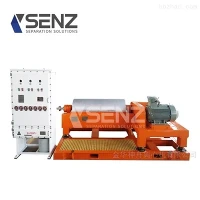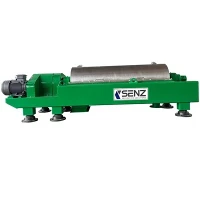

In the industrial landscape, decanter machines play a pivotal role in various separation processes. As a seasoned decanter machine supplier, I've witnessed firsthand the diverse applications and unique features of different types of decanter machines. This blog aims to delve into the differences between these machines, shedding light on their specific functions, advantages, and ideal use - cases.
1. Working Principle Basics
Before we explore the differences, it's essential to understand the fundamental working principle of decanter machines. Decanter centrifuges operate on the principle of sedimentation, using centrifugal force to separate solid and liquid phases in a mixture. The mixture is fed into the rotating bowl of the centrifuge, and due to the high - speed rotation, heavier solid particles are forced to the outer wall of the bowl while the lighter liquid phase forms an inner layer. The conveyor screw then transports the separated solids out of the bowl, while the liquid is discharged through an outlet.
2. Fish Meal Dewatering Centrifuge
The Fish Meal Dewatering Centrifuge is specifically designed for the fish processing industry. In this application, fish waste is converted into fish meal, a valuable protein source for animal feed. The main difference lies in its ability to handle high - moisture and high - fat fish materials.
This type of centrifuge has a special design to prevent clogging caused by fish fat and small bones. It typically has a larger bowl diameter and a more robust conveyor screw to efficiently remove the solid fish residues from the liquid. The separation efficiency is crucial as it directly impacts the quality and yield of the fish meal. Moreover, the materials used in the construction of the centrifuge are often corrosion - resistant, as fish waste can be highly acidic and corrosive.
3. Mining Decanter Centrifuge
The Mining Decanter Centrifuge serves a very different purpose compared to the fish meal dewatering centrifuge. In the mining industry, it is used for separating solids from slurries, such as in coal washing, mineral processing, and tailings management.
One of the key differences is the high - wear resistance required. The slurries in mining operations contain abrasive particles like sand, gravel, and various minerals. Therefore, the bowl and conveyor of mining decanter centrifuges are often made of high - strength, wear - resistant materials such as hardened steel or ceramic - coated alloys. Additionally, these centrifuges need to handle large volumes of slurry, so they are usually designed with a higher throughput capacity. The control system of a mining decanter centrifuge is also more complex, as it needs to adjust to different slurry densities and compositions during the mining process.
4. Sulfur Foam Separation Centrifuge
The Sulfur Foam Separation Centrifuge is tailored for the chemical industry, specifically for the separation of sulfur foam. Sulfur foam is a by - product in many chemical processes, and its separation is crucial for product quality and environmental protection.
This type of centrifuge has a unique design to handle the foamy nature of the sulfur mixture. It often includes anti - foaming mechanisms, such as special baffles or defoaming agents injection systems, to ensure efficient separation. The materials of construction are selected to be resistant to sulfur - containing chemicals, which can be highly reactive and corrosive. The separation accuracy is also of utmost importance, as even small amounts of impurities in the separated sulfur can affect its further use in chemical production.
5. Centrifuge For Oil Water Separation
The Centrifuge For Oil Water Separation has a distinct set of features. It is widely used in the petroleum industry, as well as in wastewater treatment plants dealing with oil - contaminated water.
The main difference is the separation of two immiscible liquids with different densities. The centrifuge needs to be designed to achieve a high degree of separation efficiency between oil and water. It often has a sophisticated interface control system to prevent the carry - over of oil into the water phase or vice versa. The bowl design is optimized for the laminar flow of the oil - water mixture to enhance the separation process. Additionally, anti - fouling measures are implemented to prevent the build - up of oils and other contaminants on the internal components of the centrifuge.
6. Petrole Oil Sludge Dewatering Machine
The Petrole Oil Sludge Dewatering Machine focuses on the treatment of oil sludge, which is a complex mixture of oil, water, and solid particles. This mixture is difficult to handle due to its high viscosity and the presence of heavy - metal contaminants.
This type of centrifuge has a powerful motor to handle the high - torque requirements when processing thick oil sludge. The conveyor design is optimized to break up and remove the solid particles from the viscous oil - water - solid mixture. It also has a special heating or chemical injection system to reduce the viscosity of the sludge, making the separation process more effective. The materials used in the construction are resistant to the harsh chemicals and high - temperature conditions associated with oil sludge treatment.
7. Design and Construction Differences
Beyond the application - specific differences, there are also notable variations in design and construction across these types of decanter machines.
- Bowl Size: Machines designed for high - volume applications, like mining and large - scale wastewater treatment, usually have larger bowl diameters to accommodate more material and increase throughput. In contrast, centrifuge for more specialized and smaller - scale processes such as sulfur foam separation may have smaller bowls.
- Conveyor Design: The pitch, shape, and material of the conveyor screw vary depending on the type of material being processed. For example, a conveyor in a fish meal dewatering centrifuge may have a different pitch to handle the soft and moist fish waste compared to the conveyor in a mining decanter centrifuge, which needs to move abrasive solids.
- Control Systems: The complexity of the control system also differs. Centrifuges used in industries with strict quality control requirements, such as the chemical and petroleum industries, often have more advanced control systems that can precisely adjust parameters like rotational speed, feed rate, and separation time.
8. Considerations for Selection
When selecting a decanter machine, several factors need to be considered:


- Material Characteristics: The nature of the material, including its viscosity, density, particle size, and corrosiveness, is a primary factor. For example, if the material is highly viscous, a centrifuge with a powerful motor and a suitable conveyor design for viscous materials is required.
- Throughput Requirements: Industries with high - volume production need a centrifuge with a large throughput capacity. This will ensure efficient processing and prevent bottlenecks in the production line.
- Separation Efficiency: Depending on the application, the required separation efficiency may vary. Some processes, like high - purity chemical production, demand very high separation accuracy, while others may tolerate a lower level of separation.
As a decanter machine supplier, we understand the importance of these factors and are dedicated to providing the right solution for your specific needs. If you are in the market for a decanter machine, whether it's for fish meal dewatering, mining, sulfur foam separation, oil - water separation, or oil sludge dewatering, we invite you to contact us for a detailed discussion. Our team of experts is ready to assist you in finding the most suitable decanter machine for your operation.
References
- "Centrifuge Technology Handbook", John Wiley & Sons
- "Industrial Separation Processes" by Separation Science Press
- Industry reports from the fish processing, mining, chemical, and petroleum industries.