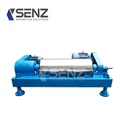

As a supplier of Fish Oil Decanter Centrifuges, I've had numerous inquiries about the ideal humidity requirements for these crucial pieces of equipment. In this blog, I'll delve into the significance of humidity in the operation of fish oil decanter centrifuges, explore the impacts of improper humidity levels, and provide guidelines on maintaining the right humidity conditions.
Understanding the Role of Humidity in Fish Oil Decanter Centrifuges
Fish oil decanter centrifuges are designed to separate fish oil from other components such as water, solids, and impurities. These machines operate at high speeds, and the efficiency of the separation process can be significantly affected by the surrounding humidity.


Humidity refers to the amount of water vapor present in the air. In the context of a fish oil decanter centrifuge, the humidity of the environment can influence the performance and longevity of the equipment in several ways.
First, high humidity can lead to corrosion of the centrifuge's metal components. The water vapor in the air can react with the metal surfaces, causing rust and degradation over time. This not only reduces the structural integrity of the centrifuge but also can contaminate the fish oil being processed.
Second, humidity can affect the viscosity of the fish oil. Higher humidity levels can increase the moisture content in the oil, which in turn can change its viscosity. This can make it more difficult for the centrifuge to separate the oil from other substances effectively, leading to a decrease in the quality of the final product.
On the other hand, low humidity can also pose problems. Extremely dry conditions can cause static electricity to build up in the centrifuge, which can attract dust and other particles. These particles can then enter the oil, reducing its purity. Additionally, low humidity can cause the seals and gaskets in the centrifuge to dry out and crack, leading to leaks and potential malfunctions.
Ideal Humidity Range for Fish Oil Decanter Centrifuges
Based on industry standards and our experience as a supplier, the ideal humidity range for operating a fish oil decanter centrifuge is between 40% and 60%. This range provides a balance that minimizes the risks associated with both high and low humidity.
Within this range, the risk of corrosion is significantly reduced. The metal components of the centrifuge are less likely to react with the moisture in the air, ensuring a longer lifespan for the equipment. Moreover, the viscosity of the fish oil remains relatively stable, allowing for efficient separation.
In addition, the static electricity build - up is also minimized at this humidity level. This helps to keep the centrifuge clean and free from dust and particle contamination, ensuring the purity of the fish oil.
Monitoring and Controlling Humidity
To maintain the ideal humidity range, it is essential to monitor the humidity levels in the centrifuge's operating environment regularly. There are various tools available for this purpose, such as hygrometers. These devices can provide accurate readings of the humidity in the air, allowing operators to take appropriate action if the levels deviate from the ideal range.
If the humidity is too high, there are several methods to reduce it. One option is to use dehumidifiers. These machines work by removing moisture from the air, effectively lowering the humidity level. Another approach is to improve ventilation in the area. By increasing the airflow, the excess moisture can be carried away, helping to maintain a more suitable humidity environment.
Conversely, if the humidity is too low, humidifiers can be used to add moisture to the air. This helps to prevent the seals and gaskets from drying out and reduces the risk of static electricity build - up.
Impact of Humidity on Different Types of Fish Oil Decanter Centrifuges
Different models of fish oil decanter centrifuges may have slightly different sensitivities to humidity. For example, some high - end models with more advanced materials and coatings may be more resistant to corrosion caused by high humidity. However, even these models can benefit from maintaining the ideal humidity range to ensure optimal performance.
In addition, the size and capacity of the centrifuge can also play a role. Larger centrifuges may generate more heat during operation, which can affect the local humidity levels. Operators need to take this into account when monitoring and controlling the humidity in the operating environment.
Related Centrifuges and Their Humidity Requirements
While we focus on fish oil decanter centrifuges, it's worth mentioning that other types of centrifuges also have specific humidity requirements. For instance, the Waste Oil Processing Centrifuge is used to separate impurities from waste oil. Similar to fish oil decanter centrifuges, it is also sensitive to humidity. High humidity can cause corrosion in its components, while low humidity can lead to static electricity issues.
The Volute Screw Press is another type of equipment used in the oil and wastewater treatment industries. It requires a stable humidity environment to ensure the proper functioning of its mechanical parts. Unstable humidity levels can lead to mechanical failures and reduced efficiency.
The Tapioca Extraction Centrifuge is used in the food industry to extract tapioca starch. Maintaining the right humidity is crucial for preventing mold growth and ensuring the quality of the extracted starch.
Conclusion
In conclusion, humidity is a critical factor in the operation of fish oil decanter centrifuges. Maintaining the ideal humidity range between 40% and 60% is essential for ensuring the longevity of the equipment, the efficiency of the separation process, and the quality of the final fish oil product. By regularly monitoring and controlling the humidity levels, operators can avoid many potential problems associated with improper humidity.
If you are in the market for a high - quality fish oil decanter centrifuge or have any questions about humidity requirements and centrifuge operation, we are here to help. We have a wide range of centrifuge models to meet your specific needs. Contact us to start a procurement discussion and find the best solution for your business.
References
- "Centrifuge Technology Handbook", published by Industry Press
- "Fish Oil Processing: Best Practices", a research report by a leading food industry research institute