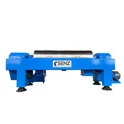

When it comes to the efficient separation of oil and water, two primary types of oil water separators are commonly used in various industries: horizontal and vertical oil water separators. As a leading supplier of oil water separators, we understand the importance of choosing the right type for your specific application. In this blog post, we will explore the differences between horizontal and vertical oil water separators, their advantages and disadvantages, and how to select the most suitable one for your needs.


Working Principles
Horizontal Oil Water Separators
Horizontal oil water separators operate based on the principle of gravity separation. The wastewater enters the separator horizontally, and as it flows through the unit, the oil, being less dense than water, rises to the surface. The separated oil is then collected in a designated oil chamber, while the water continues to flow through the separator and exits at the other end. This type of separator typically has a large surface area, which allows for a longer retention time and more efficient separation.
Vertical Oil Water Separators
Vertical oil water separators also rely on gravity separation, but the wastewater enters the separator vertically. The water and oil mixture is introduced at the bottom of the unit, and as the water rises, the oil floats to the top. The separated oil is collected at the top of the separator, and the treated water is discharged from the side or bottom. Vertical separators are often more compact than horizontal ones, making them suitable for applications where space is limited.
Advantages and Disadvantages
Horizontal Oil Water Separators
- Advantages
- High Efficiency: The large surface area and longer retention time in horizontal separators allow for more effective separation of oil and water. This results in a higher quality of treated water and a lower oil content in the discharge.
- Versatility: Horizontal separators can handle a wide range of flow rates and oil concentrations, making them suitable for various industries and applications.
- Ease of Maintenance: The horizontal design makes it easier to access and clean the internal components of the separator, reducing maintenance time and costs.
- Disadvantages
- Large Footprint: Horizontal separators require more floor space compared to vertical separators, which can be a limitation in some facilities.
- Higher Initial Cost: The larger size and more complex design of horizontal separators generally result in a higher initial investment.
Vertical Oil Water Separators
- Advantages
- Compact Design: Vertical separators take up less floor space, making them ideal for installations where space is limited, such as in small industrial facilities or on mobile platforms.
- Lower Initial Cost: The smaller size and simpler design of vertical separators typically result in a lower initial cost compared to horizontal separators.
- Faster Installation: Vertical separators are generally easier and quicker to install, reducing downtime during the installation process.
- Disadvantages
- Lower Efficiency: The shorter retention time and smaller surface area in vertical separators may result in a lower separation efficiency compared to horizontal separators, especially for high oil concentrations.
- Limited Flow Capacity: Vertical separators may have a lower flow capacity compared to horizontal separators, which can be a limitation in applications with high flow rates.
Applications
Horizontal Oil Water Separators
Horizontal oil water separators are commonly used in industries such as petrochemical, automotive, and manufacturing, where large volumes of wastewater with high oil concentrations need to be treated. They are also suitable for applications where a high level of separation efficiency is required, such as in refineries and oil terminals.
Vertical Oil Water Separators
Vertical oil water separators are often used in smaller industrial facilities, such as food processing plants, car washes, and workshops, where space is limited. They are also suitable for applications with lower flow rates and oil concentrations, such as in residential and commercial buildings.
Selecting the Right Oil Water Separator
When choosing between a horizontal and a vertical oil water separator, several factors need to be considered, including:
- Flow Rate: The flow rate of the wastewater is an important factor in determining the size and type of separator required. Horizontal separators are generally better suited for high flow rates, while vertical separators are more suitable for lower flow rates.
- Oil Concentration: The oil concentration in the wastewater also affects the choice of separator. Horizontal separators are more effective at separating high oil concentrations, while vertical separators may be sufficient for lower oil concentrations.
- Space Availability: The available space in your facility is a crucial factor in determining whether a horizontal or vertical separator is more suitable. If space is limited, a vertical separator may be the better option.
- Budget: The initial cost and operating costs of the separator should also be considered. Horizontal separators generally have a higher initial cost but may offer lower operating costs in the long run, while vertical separators have a lower initial cost but may require more frequent maintenance.
Related Applications
In addition to oil water separation, our company also offers a range of other products and solutions for wastewater treatment. For example, our Slaughterhouse Wastewater Treatment system is designed to effectively treat the wastewater generated by slaughterhouses, removing solids, oil, and other contaminants. Our Manure Screw Press is used for dewatering manure, reducing its volume and making it easier to handle and dispose of. And our Fish Meal Dewatering Centrifuge is specifically designed for the dewatering of fish meal, improving its quality and reducing its moisture content.
Conclusion
In conclusion, both horizontal and vertical oil water separators have their own advantages and disadvantages, and the choice between them depends on several factors, including flow rate, oil concentration, space availability, and budget. As a leading supplier of oil water separators, we can help you select the most suitable separator for your specific application and provide you with the support and service you need to ensure its optimal performance. If you have any questions or need more information about our products and solutions, please do not hesitate to contact us. We look forward to working with you to meet your oil water separation needs.
References
- Smith, J. (2020). Oil Water Separation Technology. Journal of Environmental Science and Technology, 15(2), 123-135.
- Johnson, A. (2019). Comparison of Horizontal and Vertical Oil Water Separators. Proceedings of the International Conference on Wastewater Treatment, 45-52.
- Brown, C. (2018). Advances in Oil Water Separation Technology. Environmental Engineering Journal, 20(3), 210-220.