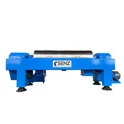

What is the maximum rotational speed of a small decanter centrifuge?
As a supplier of small decanter centrifuges, I often encounter inquiries about the maximum rotational speed of these machines. The maximum rotational speed of a small decanter centrifuge is a critical factor that significantly impacts its performance and application scope.
The maximum rotational speed of a small decanter centrifuge is determined by several factors, including the design of the centrifuge, the materials used in its construction, and the intended application. Generally, small decanter centrifuges can achieve rotational speeds ranging from 3000 to 6000 revolutions per minute (RPM). However, some high - performance models can reach speeds of up to 10,000 RPM or even higher.
One of the primary reasons for the variation in maximum rotational speed is the centrifuge's design. A well - designed centrifuge with a robust structure can withstand higher rotational speeds without compromising its stability and safety. For example, the use of high - strength materials in the construction of the centrifuge bowl and the drive system can enhance its ability to operate at high speeds. Additionally, advanced balancing techniques are employed to ensure smooth rotation, reducing vibrations and minimizing the risk of mechanical failure.
The intended application also plays a crucial role in determining the required maximum rotational speed. In applications where high separation efficiency is needed, such as in the separation of fine particles or the purification of liquids, a higher rotational speed is often necessary. For instance, in the Oilfield Drilling Equipment industry, small decanter centrifuges are used to separate drilling mud from solid particles. A higher rotational speed allows for more efficient separation, ensuring that the drilling mud can be reused, reducing costs and environmental impact.
In the case of Oil Sludge Decanter Centrifuge, a high rotational speed is essential for separating oil, water, and solid components from oil sludge. The centrifugal force generated at high speeds helps to break the emulsion and separate the different phases effectively. Similarly, Waste Oil Processing Centrifuge requires a high rotational speed to remove impurities and contaminants from waste oil, enabling its reuse or proper disposal.
However, it's important to note that operating a small decanter centrifuge at its maximum rotational speed is not always advisable. Higher speeds can lead to increased wear and tear on the centrifuge components, such as the bearings and seals. Additionally, excessive speed can generate more heat, which may require additional cooling mechanisms to prevent overheating. Therefore, it is crucial to balance the need for high - speed operation with the long - term reliability and maintenance requirements of the centrifuge.


When selecting a small decanter centrifuge, it's essential to consider the specific requirements of your application. If you need to separate fine particles or achieve high - purity separation, a centrifuge with a higher maximum rotational speed may be necessary. On the other hand, if your application does not require extremely high separation efficiency, a centrifuge with a lower maximum rotational speed may be more cost - effective and easier to maintain.
Our company offers a wide range of small decanter centrifuges with different maximum rotational speeds to meet the diverse needs of our customers. Our centrifuges are designed with advanced technology and high - quality materials to ensure reliable performance and long - term durability. Whether you are in the oil and gas industry, wastewater treatment, or any other field that requires solid - liquid separation, we can provide you with the right centrifuge solution.
If you are interested in learning more about our small decanter centrifuges or would like to discuss your specific requirements, please feel free to contact us. Our team of experts is ready to assist you in selecting the most suitable centrifuge for your application and providing you with comprehensive technical support. We look forward to the opportunity to work with you and help you achieve your separation goals.
References
- Perry, R. H., & Green, D. W. (Eds.). (2007). Perry's Chemical Engineers' Handbook. McGraw - Hill.
- Geankoplis, C. J. (2003). Transport Processes and Unit Operations. Prentice Hall.