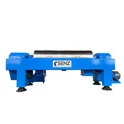
Power consumption is a crucial factor to consider when it comes to operating any type of equipment, and small decanter centrifuges are no exception. As a supplier of small decanter centrifuges, I often receive inquiries from customers about the power consumption of these machines. In this blog post, I will delve into the details of what affects the power consumption of a small decanter centrifuge and how you can manage it effectively.
Understanding the Basics of Small Decanter Centrifuges
Before we discuss power consumption, let's briefly understand what a small decanter centrifuge is. A decanter centrifuge is a type of centrifuge that is used to separate solids from liquids or different liquid phases based on their density differences. Small decanter centrifuges are typically used in various industries such as food and beverage, chemical, pharmaceutical, and wastewater treatment, where the volume of material to be processed is relatively small.
These centrifuges work by spinning the mixture at high speeds, causing the denser components to move towards the outer wall of the centrifuge bowl while the lighter components remain closer to the center. The separated components are then discharged through different outlets.
Factors Affecting Power Consumption
Several factors influence the power consumption of a small decanter centrifuge. Understanding these factors can help you optimize the energy efficiency of your centrifuge and reduce operating costs.
1. Rotational Speed
The rotational speed of the centrifuge is one of the most significant factors affecting power consumption. Higher rotational speeds require more energy to maintain. The centrifuge motor has to work harder to spin the bowl and the conveyor at a faster rate. For example, if you increase the rotational speed from 3000 RPM to 4000 RPM, the power consumption will increase significantly. However, higher speeds also result in better separation efficiency, so there is a trade - off between power consumption and performance.
2. Bowl Diameter and Length
The size of the centrifuge bowl, specifically its diameter and length, also impacts power consumption. Larger bowls require more energy to rotate due to the increased mass and inertia. A centrifuge with a larger diameter bowl will need a more powerful motor to achieve the same rotational speed as a smaller bowl. Similarly, a longer bowl may also increase power consumption as it has a greater surface area and volume of material to process.
3. Feed Rate and Concentration
The rate at which the material is fed into the centrifuge and its concentration play a role in power consumption. A higher feed rate means more material needs to be processed in a given time, which requires more energy. Additionally, if the feed material has a high concentration of solids or a high viscosity, the centrifuge has to work harder to separate the components, leading to increased power consumption.
4. Efficiency of the Motor and Drive System
The efficiency of the motor and the drive system used in the centrifuge is crucial. A high - efficiency motor will consume less power to perform the same task compared to a low - efficiency motor. Modern motors with advanced control systems can adjust the power output based on the load, which helps in reducing power consumption.
Calculating Power Consumption
To calculate the power consumption of a small decanter centrifuge, you need to consider the following formula:
[P = \frac{T\times\omega}{1000}]
where (P) is the power in kilowatts (kW), (T) is the torque in Newton - meters (N·m), and (\omega) is the angular velocity in radians per second (rad/s).
The torque (T) is related to the load on the centrifuge, which is affected by the factors mentioned above such as rotational speed, bowl size, and feed rate. The angular velocity (\omega) is directly related to the rotational speed of the centrifuge.
In practical terms, most small decanter centrifuges come with a power rating specified by the manufacturer. This rating gives you an idea of the maximum power the centrifuge will consume under normal operating conditions. However, the actual power consumption may vary depending on the specific application and operating parameters.
Strategies to Reduce Power Consumption
As a supplier, I always recommend my customers to take steps to reduce the power consumption of their small decanter centrifuges. Here are some strategies that can be implemented:
1. Optimize Rotational Speed
Find the optimal rotational speed for your application. You don't always need the maximum speed to achieve the desired separation. By reducing the rotational speed slightly, you can significantly reduce power consumption without sacrificing too much separation efficiency.
2. Control Feed Rate
Monitor and control the feed rate of the material into the centrifuge. Avoid overfeeding, as this can increase the load on the centrifuge and lead to higher power consumption. Use a flow control valve or a feeder system to regulate the feed rate.
3. Maintain the Centrifuge
Regular maintenance of the centrifuge is essential to ensure its efficient operation. Keep the bearings lubricated, the belts properly tensioned, and the bowl clean. A well - maintained centrifuge will operate more smoothly and consume less power.
4. Upgrade to High - Efficiency Components
Consider upgrading the motor and drive system to more energy - efficient models. Newer motors with variable frequency drives (VFDs) can adjust the power output based on the load, resulting in significant energy savings.


Applications and Their Power Requirements
Small decanter centrifuges are used in a wide range of applications, each with its own power requirements.
Gluten Wheat Flour Separator
In the food industry, a Gluten Wheat Flour Separator is used to separate gluten from wheat flour. The power consumption of a small decanter centrifuge used for this application depends on the capacity of the centrifuge and the feed rate. Generally, a small - scale separator may consume around 2 - 5 kW of power, but this can vary based on the specific design and operating conditions.
Decantador
In Spanish - speaking regions, a Decantador is a decanter centrifuge used in various industries such as chemical and wastewater treatment. The power consumption of a decantador can range from 3 - 10 kW, depending on the size and the type of material being processed.
Waste Oil Centrifuge Biodiesel Equipment
For the production of biodiesel, a Waste Oil Centrifuge Biodiesel Equipment is used to separate impurities from waste oil. The power consumption of a small - scale waste oil centrifuge can be around 4 - 8 kW, depending on the processing capacity and the quality of the waste oil.
Conclusion
Power consumption is an important aspect to consider when using a small decanter centrifuge. By understanding the factors that affect power consumption and implementing strategies to reduce it, you can save energy and lower your operating costs. As a supplier of small decanter centrifuges, I am committed to providing high - quality equipment that is energy - efficient and reliable.
If you are interested in purchasing a small decanter centrifuge or have any questions about power consumption and energy efficiency, please feel free to contact us for a detailed discussion. We can help you choose the right centrifuge for your specific application and provide guidance on optimizing its performance.
References
- Perry, R. H., & Green, D. W. (2008). Perry's Chemical Engineers' Handbook. McGraw - Hill.
- Geankoplis, C. J. (2003). Transport Processes and Unit Operations. Prentice Hall.