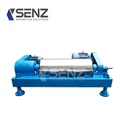

In the field of industrial waste management and environmental protection, oil water separators play a crucial role. As a leading supplier of oil water separators, I often encounter inquiries from clients about the differences between continuous and batch - type oil water separators. Understanding these differences is essential for making an informed decision when it comes to selecting the most suitable separator for specific applications.
Continuous Oil Water Separators
Continuous oil water separators are designed to operate continuously, meaning they can handle a constant flow of oil - water mixtures without interruption. This type of separator is ideal for industries that generate large volumes of oily wastewater on a regular basis, such as refineries, petrochemical plants, and automotive manufacturing facilities.
One of the key advantages of continuous oil water separators is their high throughput capacity. They can process large amounts of oil - water mixtures per unit of time, which is essential for industries with high - volume waste streams. For example, in a refinery, thousands of gallons of oily wastewater may be generated every hour. A continuous separator can handle this volume efficiently, ensuring that the wastewater is treated in a timely manner.
Another significant benefit is the consistent performance. Continuous separators are engineered to maintain a stable separation process over long periods. They use advanced separation technologies, such as gravity separation, coalescence, and filtration, to ensure that the oil and water are effectively separated. This results in a more reliable and predictable output quality, which is crucial for meeting environmental regulations and downstream processing requirements.
Continuous oil water separators also offer better automation capabilities. They can be integrated into existing industrial processes and controlled remotely, reducing the need for manual intervention. This not only improves operational efficiency but also reduces labor costs. For instance, in a modern petrochemical plant, a continuous oil water separator can be connected to the plant's central control system, allowing operators to monitor and adjust the separation process from a control room.
However, continuous oil water separators also have some limitations. They typically require a relatively large initial investment due to their complex design and high - end technology. Additionally, they may not be suitable for applications with intermittent or low - volume waste streams, as they are optimized for continuous operation.
Batch - Type Oil Water Separators
Batch - type oil water separators, on the other hand, operate in a discontinuous manner. They process a fixed volume of oil - water mixture at a time. This type of separator is often used in smaller industries, laboratories, or applications where the waste stream is intermittent or has a low volume.
One of the main advantages of batch - type separators is their lower cost. They are generally less expensive to purchase and install compared to continuous separators, making them a more affordable option for small businesses and start - ups. For example, a small automotive repair shop may not generate a large volume of oily wastewater on a daily basis. A batch - type separator can provide a cost - effective solution for treating this wastewater.
Batch - type separators also offer more flexibility. They can be easily adjusted to handle different types of oil - water mixtures and varying separation requirements. Since they process the mixture in batches, operators can closely monitor and control each separation cycle, ensuring optimal results. This is particularly useful in industries where the composition of the waste stream may change frequently.


Another benefit is the simplicity of operation. Batch - type separators are relatively easy to understand and operate, even for non - technical personnel. They do not require complex automation systems, which reduces the training requirements and maintenance costs.
However, batch - type oil water separators have some drawbacks. Their throughput capacity is limited compared to continuous separators. Processing waste in batches takes more time, which may not be suitable for industries with high - volume waste streams. Additionally, the performance of batch - type separators can be more variable, as each batch may have different characteristics and separation conditions.
Comparison in Different Applications
When it comes to specific applications, the choice between continuous and batch - type oil water separators depends on several factors.
In the food and beverage industry, continuous oil water separators are often preferred. This industry generates large volumes of oily wastewater from cooking, cleaning, and processing operations. A continuous separator can handle the continuous flow of wastewater, ensuring that the oil is effectively removed before the water is discharged or reused. For example, in a large - scale brewery, a continuous oil water separator can be installed to treat the wastewater generated during the brewing process, preventing oil from entering the sewer system and causing environmental problems.
In the metalworking industry, both continuous and batch - type separators can be used. Large metalworking shops with continuous machining operations may opt for continuous separators to handle the high - volume oily coolant waste. However, smaller workshops or those with intermittent operations may find batch - type separators more suitable. These workshops can collect the oily coolant waste in batches and then process it using a batch - type separator.
In environmental monitoring and research laboratories, batch - type oil water separators are commonly used. These laboratories often deal with small - volume and diverse samples. A batch - type separator allows researchers to process each sample individually, ensuring accurate and detailed analysis.
Related Products and Their Applications
As an oil water separator supplier, we also offer a range of related products, such as the Sulfur Foam Separation Centrifuge, Wastewater Centrifuge, and Clarifying Decanter Centrifuge.
The Sulfur Foam Separation Centrifuge is designed to separate sulfur foam from the liquid phase in the sulfur recovery process. It uses centrifugal force to achieve high - efficiency separation, which is crucial for improving the quality of sulfur products and reducing environmental pollution.
The Wastewater Centrifuge is used for the treatment of various types of wastewater. It can effectively separate solids and liquids in wastewater, reducing the volume of sludge and improving the quality of the treated water. This centrifuge is suitable for industries such as municipal wastewater treatment, chemical manufacturing, and food processing.
The Clarifying Decanter Centrifuge is mainly used for the clarification of liquids. It can remove fine particles and impurities from liquids, making the liquid clearer and more suitable for further processing or reuse. This centrifuge is widely used in industries such as pharmaceuticals, biotechnology, and beverage production.
Conclusion
In conclusion, the choice between a continuous and a batch - type oil water separator depends on the specific requirements of the application, including the volume and characteristics of the waste stream, the required throughput capacity, the budget, and the level of automation. Continuous separators are ideal for high - volume, continuous waste streams, offering high throughput, consistent performance, and advanced automation. Batch - type separators, on the other hand, are more suitable for low - volume, intermittent waste streams, providing cost - effectiveness, flexibility, and simplicity of operation.
If you are in need of an oil water separator or any of our related products, we are here to help. Our team of experts can provide you with detailed information, technical support, and customized solutions based on your specific needs. Contact us to start a discussion about your requirements and explore the best options for your business.
References
- "Handbook of Separation Process Technology" by Ronald W. Rousseau
- "Industrial Wastewater Treatment, Recycling, and Reuse" by Shabbir H. Gheewala and Rajesh K. Gupta
- "Environmental Engineering: Fundamentals, Sustainability, Design" by David A. Vaccari and David A. Reckhow