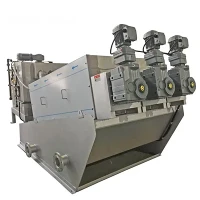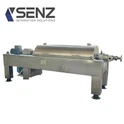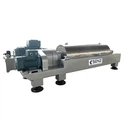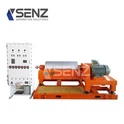


An olive oil centrifuge quotation is only as useful as the feed and operating assumptions behind it. To size a mill's separation equipment, begin with the amount of olives that must be processed during the available production window. Then describe the paste, the rest of the line and the results that the equipment must demonstrate.
Avoid comparing machines solely by motor power, bowl diameter or a headline capacity. Those figures do not explain whether two suppliers have rated their machines for the same feed conditions.
1. Define throughput in unambiguous units
State whether the requirement is tonnes of incoming olives per hour, tonnes of prepared paste per hour or a liquid flow rate. These are different quantities. Make the feed basis explicit on every quotation and test sheet.
As an arithmetic example, a mill planning to process 40 tonnes of olives in eight actual production hours requires an average intake rate of 5 tonnes per hour. This is a planning calculation, not a centrifuge rating. Time spent cleaning, changing batches or waiting for upstream equipment reduces the hours available for production.
Record both the average day and the busiest expected day. Discuss the appropriate capacity margin with the supplier instead of applying an unexplained percentage.
2. Describe the seasonal feed range
Olive paste is not a constant industrial test fluid. Variety, ripeness and preparation affect the feed presented to the decanter. Provide the supplier with representative information from the beginning, middle and end of the harvest where available.
Useful records include fruit variety, intake condition, measured moisture or oil content if available, crusher arrangement, malaxer operating conditions and any water addition. Identify which values are measured and which are estimates. Label samples with the preparation method so that a trial result can be interpreted correctly.
3. Check the surrounding line
A decanter works after paste preparation. Clarification equipment then handles the extracted oil. The capacity and operating pattern of these stages must be compatible.
For a replacement project, provide the existing equipment list and a layout showing access, transfer distances and connection points. Ask who is responsible for feed pumps, collection vessels, electrical interfaces, guarding and commissioning. An attractive centrifuge quotation can leave a substantial installation gap if these items are undefined.
4. Make hygiene and service requirements specific
Ask for the proposed product-contact materials, seal compatibility and cleaning procedure. A general reference to stainless steel does not describe the complete food-contact arrangement. Confirm what can be inspected, drained and cleaned, and which components require manual access.
Document the local power supply and available installation space. Include the clearance needed to remove service components rather than only the operating footprint. Request a seasonal spare-parts recommendation with lead times and an explanation of which maintenance tasks require specialist support.
5. Agree on acceptance criteria before the trial
Write down the test feed, sustained operating period and sampling locations. Specify how throughput, oil carryover in by-products and the condition of the oil discharge will be measured. Agree on the analytical method and whether a reported concentration uses a wet or dry basis.
A recovery percentage without a defined calculation is difficult to compare. Ask for the mass-balance method and the treatment of any oil recovered in later processing stages. Keep separation performance separate from the final oil quality assessment.
A compact request-for-quotation package
Send the same package to each supplier:
- Daily intake, peak intake and actual operating hours.
- Feed descriptions and available sample analyses.
- New-line or replacement scope, with layout.
- Preferred discharge arrangement and by-product destination.
- Power supply, utilities and cleaning requirements.
- Performance measurements and trial acceptance criteria.
- Delivery, commissioning, training and spare-parts scope.
Frequently asked questions
Can a wastewater centrifuge capacity be used to size an olive mill? No. Ask for an application-specific assessment of olive paste and the required separation duty.
Is a larger motor proof of higher oil recovery? No. Motor power alone does not establish the result on a particular feed. Compare documented trials and the conditions attached to them.
What is the best first step for a quotation? Prepare the intake schedule and feed description, then identify the scope of supply. You can use the SENZ olive oil separation equipment page as the starting point for an application discussion.