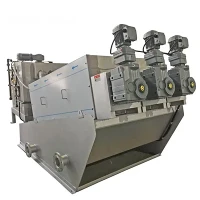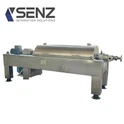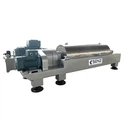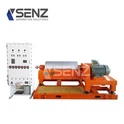


Choosing between a two-phase and a three-phase olive oil decanter starts with a practical question: where will each discharge stream go? The centrifuge must fit the mill's water supply, by-product handling and downstream oil clarification. A configuration that looks attractive in isolation can create extra work elsewhere in the plant.
In two-phase olive processing, the decanter produces an oil stream and wet pomace containing much of the fruit's water. Three-phase processing separates oil, water and pomace into distinct discharge streams. Those outlet arrangements shape the equipment and storage needed around the machine.
Start with a discharge map
Draw the route from every centrifuge outlet to its next destination. Include the oil collection vessel, clarification stage, pomace transport and any wastewater storage or treatment. Mark who operates each transfer and what happens when the next stage stops.
For wet pomace, ask the receiving contractor or downstream processor about acceptable consistency, collection frequency and storage requirements. A mill should confirm this arrangement before ordering a machine. The availability of an outlet for the by-product matters as much as the centrifuge footprint.
For a separate water stream, establish the expected quantity and the available handling route. A decanter separates phases; it does not make the discharged water suitable for unrestricted disposal. Obtain a site-specific assessment of treatment and discharge requirements.
Compare water use at the same system boundary
Two-phase olive oil decanters commonly require little or no dilution water during extraction. Three-phase operation may require added process water, depending on the machine and paste. However, extraction water is only one part of a mill's water balance. Fruit washing and equipment cleaning also need to be included.
When requesting quotations, ask suppliers to separate these uses instead of providing one unexplained consumption figure. Specify whether the stated value refers to a tonne of incoming olives, a tonne of paste or an hour of operation. Keep the units identical when comparing proposals.
Keep oil clarification in the design
The decanter's oil discharge can contain remaining water and fine particles. Downstream clarification therefore needs its own capacity assessment. Do not assume that the decanter's paste throughput is also the required liquid throughput of the clarification equipment.
Ask how the machines will respond to a temporary interruption. A coordinated arrangement should address transfer pumps, collection capacity, level control and restart procedures. The objective is to keep an interruption at one stage from becoming an uncontrolled overflow at another.
Evaluate the complete operating cost
A useful comparison includes more than the machine price. Request separate estimates for installation, utilities, cleaning, wear parts, service and by-product transport. Record the assumptions behind each estimate so that a change in harvest volume can be reflected in the calculation.
Use a simple project worksheet with these entries:
- Expected daily olive intake and usable processing hours.
- Available water supply and extraction-water allowance.
- Pomace destination, storage arrangement and collection schedule.
- Water-stream handling and treatment arrangements.
- Oil clarification capacity and buffer storage.
- Planned cleaning time and seasonal service access.
Questions to settle before ordering
Does two-phase operation eliminate all wastewater? No. It changes how water leaves the extraction stage, but washing and cleaning still create water streams that the mill must manage.
Can every decanter switch between two-phase and three-phase processing? Do not assume so. Ask the supplier to confirm whether the proposed model supports conversion and which mechanical changes and operating procedures are required.
Which configuration gives the best result? There is no responsible universal answer without feed information and agreed performance criteria. Compare suitable configurations using representative olives and the same measurement method.
For an equipment discussion, review the SENZ olive oil separator page and prepare a discharge map with your expected processing schedule. This gives the supplier a clearer basis for reviewing the application than a throughput figure alone.