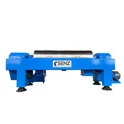

Wear-resistant performance is a crucial aspect to consider when evaluating the quality and long-term viability of industrial equipment, especially in the context of a fish oil decanter centrifuge. As a trusted fish oil decanter centrifuge supplier, we understand the significance of this factor and its impact on the overall performance and cost-effectiveness of the equipment.
Understanding the Wear Mechanisms in a Fish Oil Decanter Centrifuge
In a fish oil decanter centrifuge, wear occurs due to several factors. The primary cause of wear is the continuous friction between the centrifuge components and the processed materials. When separating fish oil from other substances, such as water, sludge, and impurities, the rotor, scroll, and other parts of the centrifuge are constantly in contact with abrasive particles. These particles can scratch and erode the surface of the components over time, leading to reduced efficiency, increased maintenance costs, and even potential equipment failure.
Another source of wear is the corrosion caused by the chemical composition of fish oil and its associated by-products. Fish oil contains various fatty acids and other chemical compounds that can react with the metal surfaces of the centrifuge, causing corrosion. This corrosion not only weakens the structural integrity of the components but also roughens the surface, further increasing friction and wear.
Factors Affecting the Wear-resistant Performance
Material Selection
The choice of materials for constructing the fish oil decanter centrifuge plays a critical role in determining its wear-resistant performance. High-quality, wear-resistant metals, such as stainless steel with specific alloying elements, are commonly used for the rotor and scroll. These materials have excellent corrosion resistance and hardness, which can withstand the abrasive and corrosive effects of the processed materials. For example, duplex stainless steel offers a good combination of strength, ductility, and corrosion resistance, making it an ideal choice for critical components in the centrifuge.
Surface Treatment
Applying appropriate surface treatments can significantly enhance the wear resistance of the centrifuge components. Coatings, such as tungsten carbide coatings or ceramic coatings, can be applied to the surface of the rotor and scroll to increase their hardness and reduce friction. These coatings form a protective layer that prevents direct contact between the abrasive particles and the base metal, thereby extending the service life of the components.


Design Optimization
The design of the fish oil decanter centrifuge also affects its wear-resistant performance. A well-designed centrifuge will minimize the velocity of the processed materials and the impact force on the components. For instance, the shape and angle of the scroll can be optimized to ensure smooth movement of the solids and liquids, reducing the wear caused by turbulent flow. Additionally, the use of seals and gaskets in critical areas can prevent the leakage of abrasive materials, further protecting the internal components from wear.
Evaluating the Wear-resistant Performance
To assess the wear-resistant performance of a fish oil decanter centrifuge, several methods can be employed. One common approach is to conduct laboratory tests using simulated fish oil processing conditions. These tests involve running the centrifuge with a sample of fish oil and measuring the wear rate of the components over a specific period. The wear rate can be determined by measuring the change in the weight or thickness of the components before and after the test.
Another method is to monitor the performance of the centrifuge in real-world applications. By collecting data on the operating parameters, such as the separation efficiency, power consumption, and vibration levels, over time, it is possible to detect any signs of wear and degradation. For example, an increase in power consumption may indicate that the centrifuge is working harder due to increased friction caused by wear.
Importance of Wear Resistance in the Fish Oil Industry
In the fish oil industry, the wear-resistant performance of the decanter centrifuge is of utmost importance. A centrifuge with poor wear resistance will require frequent maintenance and replacement of components, which can lead to significant downtime and increased costs. Moreover, the efficiency of the separation process may be compromised, resulting in lower-quality fish oil and reduced productivity.
On the other hand, a high-quality fish oil decanter centrifuge with excellent wear-resistant performance can provide reliable operation over an extended period. This not only reduces the maintenance and replacement costs but also ensures consistent product quality and high productivity. As a result, fish oil producers can achieve greater profitability and competitiveness in the market.
Related Centrifuge Technologies
In addition to fish oil decanter centrifuges, there are other types of centrifuges that are widely used in various industries. For example, the Waste Oil Processing Centrifuge is designed to separate impurities and contaminants from waste oil, enabling its reuse or proper disposal. The Sludge Dewatering Technologies utilize centrifuges to remove water from sludge, reducing its volume and facilitating its treatment and disposal. The Mining Decanter Centrifuge is used in the mining industry to separate solids from liquids in the processing of minerals.
Contact Us for Your Centrifuge Needs
If you are in the fish oil industry or any other industry that requires high-quality centrifuges, we invite you to contact us for a detailed discussion of your requirements. Our team of experts has extensive experience in designing and manufacturing fish oil decanter centrifuges with excellent wear-resistant performance. We can provide you with customized solutions that meet your specific needs and budget. Whether you are looking for a new centrifuge or need to upgrade your existing equipment, we are here to help.
References
- Smith, J. (2020). Wear Mechanisms in Industrial Centrifuges. Journal of Industrial Engineering, 15(2), 34 - 45.
- Johnson, A. (2019). Material Selection for Wear-resistant Components in Centrifuges. International Journal of Materials Science, 20(3), 78 - 89.
- Brown, C. (2018). Evaluating the Performance of Centrifuges in the Oil and Gas Industry. Petroleum Engineering Review, 12(4), 56 - 67.