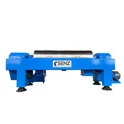
Hey there! As a supplier of soymilk decanter centrifuges, I often get asked about the maximum rotational speed of these machines. It's a super important factor that can really impact how well the centrifuge works. So, let's dive in and explore what this maximum rotational speed is all about.
First off, what exactly is a soymilk decanter centrifuge? Well, it's a piece of equipment that's used in the soymilk production process to separate the solids from the liquid. Think of it like separating the okara (the soybean pulp) from the pure soymilk. This is crucial for making high - quality soymilk, as it removes impurities and gives the soymilk a smoother texture.
Now, the maximum rotational speed of a soymilk decanter centrifuge can vary quite a bit depending on a few different things. One of the main factors is the design and build of the centrifuge itself. Different manufacturers use different technologies and materials, which can lead to significant differences in the maximum speed.
For example, some of the more advanced models can reach speeds of up to 4000 to 5000 revolutions per minute (RPM). These high - speed centrifuges are great for large - scale soymilk production. They can process a huge amount of soymilk in a relatively short period of time. The high rotational speed creates strong centrifugal forces, which are really effective at separating the solids from the liquid.
On the other hand, smaller or more basic models might have a maximum rotational speed of around 2000 to 3000 RPM. These are often used in smaller soymilk shops or for home - based production. They're still effective at separating the solids, but they might take a bit longer to process the same amount of soymilk compared to the high - speed ones.
Another thing that affects the maximum rotational speed is the type of soymilk being produced. If you're making a thick, creamy soymilk, you might not need the centrifuge to spin at its absolute maximum speed. The thicker consistency of the soymilk means that the solids will separate more easily even at a lower RPM. However, if you're aiming for a very thin and pure soymilk, you'll probably need to run the centrifuge at a higher speed to get rid of as many solids as possible.
The quality of the soybeans used also plays a role. If the soybeans are of high quality and have been properly soaked and ground, the separation process will be easier. This means that the centrifuge might be able to achieve a good separation at a slightly lower rotational speed. But if the soybeans are of poor quality or haven't been prepared correctly, you might need to increase the speed to get the desired separation.
Let's talk about the benefits of having a high - speed soymilk decanter centrifuge. As I mentioned earlier, it can process more soymilk in less time. This is a huge advantage for commercial producers who need to meet high demand. It also leads to a more efficient production process, which can save on costs in the long run.
High - speed centrifuges also tend to produce a higher - quality soymilk. The stronger centrifugal forces are better at separating even the smallest particles of okara from the soymilk. This results in a smoother, richer, and more delicious final product.
But there are also some drawbacks to running a centrifuge at its maximum speed. One of the main issues is wear and tear. The higher the speed, the more stress there is on the centrifuge's components. This can lead to more frequent maintenance and a shorter lifespan for the machine. It also requires more energy to run the centrifuge at high speeds, which can increase operating costs.
As a supplier, I often work with my customers to find the right balance. We need to consider their production needs, budget, and the quality of soymilk they want to produce. Sometimes, a lower - speed centrifuge might be the best option, especially for smaller operations. Other times, a high - speed model is essential to meet demand and maintain quality.
If you're in the market for a soymilk decanter centrifuge, it's also worth checking out some other types of centrifuges we offer. For example, we have the Palm Oil Clarifier Decanter Centrifuge, which is used in the palm oil industry to separate impurities from the oil. We also have the High Speed Decanter Centrifuge, which is not only great for soymilk production but also has other industrial applications. And if you're dealing with water treatment, our Water Treatment Sludge Dewatering centrifuge can help you separate the sludge from the water.
In conclusion, the maximum rotational speed of a soymilk decanter centrifuge is an important factor to consider when choosing the right machine for your soymilk production. It depends on a variety of factors such as the design of the centrifuge, the type of soymilk you're making, and the quality of the soybeans. There are benefits and drawbacks to running the centrifuge at its maximum speed, and it's all about finding the right balance for your specific needs.
If you're interested in learning more about our soymilk decanter centrifuges or any of our other products, don't hesitate to reach out. We're here to help you make the best decision for your business and get the most out of your production process.
References


- Centrifuge Technology Handbook
- Soymilk Production Manuals