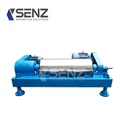
Sure, here is a blog post exploring whether a 2 - Phase Decanter Centrifuge can be used for continuous separation:
Yo, folks! As a supplier of 2 - Phase Decanter Centrifuges, I've been getting a lot of questions lately about whether these babies can be used for continuous separation. Well, let's dive right in and break it down.
First off, what exactly is a 2 - Phase Decanter Centrifuge? In simple terms, it's a machine that separates two phases of a mixture – usually a solid and a liquid, or two immiscible liquids – through the use of centrifugal force. The way it works is pretty fascinating. The mixture is fed into the rotating bowl of the centrifuge, and the centrifugal force pushes the heavier phase (the solids or the denser liquid) towards the outer wall of the bowl. The lighter phase, on the other hand, stays closer to the center. There are specially designed compartments and outlets that allow for the separate collection of these two phases.
Now, the big question: Can it do continuous separation? The answer is a resounding yes! One of the major advantages of a 2 - Phase Decanter Centrifuge is its ability to perform continuous separation. Unlike some other separation methods that require a batch - by - batch approach, these centrifuges can handle a constant inflow of the mixture. The continuous operation is made possible by the well - designed geometry of the centrifuge bowl and the efficient feeding and discharging systems.
The continuous operation offers several benefits. For starters, it significantly boosts productivity. In industries where large volumes of materials need to be processed, such as the food and beverage industry, continuous separation means that more product can be processed in less time. Take the example of the Horizontal Beverage Centrifuge. This type of centrifuge is used to separate solids from beverages like beer, wine, or fruit juices. With continuous separation, beverage manufacturers can keep their production lines running smoothly, ensuring a steady supply of high - quality products to the market.
Another advantage is the consistency of the separation process. Since the 2 - Phase Decanter Centrifuge operates continuously under stable conditions, the quality of the separated phases is more uniform. This is crucial in industries like the dairy sector. The Dairy Milk Separator Equipment uses a 2 - Phase Decanter Centrifuge to separate milk into cream and skim milk. Consistent separation ensures that the fat content of the cream and skim milk meets the strict quality standards set by the industry, which is a win for both producers and consumers.


Cost - efficiency is also a big plus. Continuous separation reduces the need for frequent start - up and shut - down of the equipment, which saves energy and reduces wear and tear on the centrifuge components. Additionally, the ability to handle large volumes in one go means that fewer machines are required, cutting down on capital investment and maintenance costs. In the chemical industry, for example, Chemical Wastewater Centrifuges are used to separate solid contaminants from chemical wastewater. Continuous operation allows chemical plants to treat wastewater more economically, which is both good for the bottom line and the environment.
But like any piece of equipment, 2 - Phase Decanter Centrifuges also have some considerations when it comes to continuous separation. One of the key factors is the nature of the mixture being separated. The viscosity, density difference between the two phases, and the size and shape of the solid particles (if present) can all affect the performance of the centrifuge. For example, if the mixture has a very high viscosity, it may be more difficult for the centrifuge to achieve efficient separation. In such cases, pre - treatment of the mixture, such as heating or dilution, may be necessary.
Maintenance is another aspect to keep in mind. To ensure continuous and reliable operation, regular maintenance of the centrifuge is essential. This includes cleaning the bowls, inspecting the bearings, and replacing worn - out parts. However, most modern 2 - Phase Decanter Centrifuges are designed with ease of maintenance in mind, with features like quick - access panels and user - friendly control systems.
In terms of applications, the versatility of 2 - Phase Decanter Centrifuges for continuous separation is truly remarkable. Besides the food, beverage, dairy, and chemical industries we've already mentioned, they are also widely used in the pharmaceutical industry. In pharmaceutical manufacturing, continuous separation can be used to separate cells from cell culture media, or to purify active pharmaceutical ingredients. This helps in ensuring the high quality and purity of pharmaceutical products.
In the mining industry, 2 - Phase Decanter Centrifuges are used to separate fine solids from slurries. Continuous separation allows for the efficient recovery of valuable minerals, while also reducing the environmental impact of mining operations.
So, if you're in an industry that requires continuous separation of two - phase mixtures, a 2 - Phase Decanter Centrifuge could be the perfect solution for you. With its high productivity, consistent results, and cost - efficiency, it offers a lot of bang for your buck.
If you're interested in learning more about our 2 - Phase Decanter Centrifuges or if you're considering purchasing one for your operation, don't hesitate to reach out. We're here to answer all your questions and help you find the best centrifuge for your specific needs.
References
- Michaud, L., & Melanson, P. (2017). Principles of Solid - Liquid Separation. CRC Press.
- Purcell, R., & Greaves, M. (2008). Centrifugal Separation Technology. John Wiley & Sons.