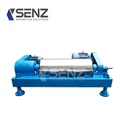

Selecting the right 3 phase centrifuge for your specific needs is a crucial decision that can significantly impact the efficiency and effectiveness of your operations. As a trusted 3 phase centrifuge supplier, I understand the complexities involved in this process and am here to guide you through the key considerations.
Understanding the Basics of 3 Phase Centrifuges
A 3 phase centrifuge, also known as a tricanter centrifuge, is a powerful separation device designed to separate three different phases from a mixture: a light liquid phase, a heavy liquid phase, and a solid phase. This technology is widely used in various industries, including wastewater treatment, food and beverage, chemical processing, and oil and gas.
The principle behind a 3 phase centrifuge is based on the difference in density between the phases. When the mixture is fed into the centrifuge, it rotates at high speed, creating a centrifugal force that causes the heavier components to move towards the outer wall of the centrifuge bowl, while the lighter components remain closer to the center. The separated phases are then discharged through different outlets.
Key Factors to Consider When Choosing a 3 Phase Centrifuge
1. Application Requirements
The first step in choosing the right 3 phase centrifuge is to clearly define your application requirements. Consider the type of mixture you need to separate, the desired separation efficiency, and the throughput capacity. For example, if you are working in the wastewater treatment industry, you may need a centrifuge that can effectively separate sludge from water and achieve a high degree of dewatering. In this case, a Sludge Dewatering Unit would be a suitable choice.
On the other hand, if you are in the food and beverage industry, such as olive oil production, you may require a centrifuge that can separate olive oil, water, and solids. An Olive Oil Decanter Centrifuge is specifically designed for this application, ensuring high-quality oil extraction and efficient separation.
2. Separation Efficiency
Separation efficiency is a critical factor in determining the performance of a 3 phase centrifuge. It refers to the ability of the centrifuge to separate the different phases effectively and achieve the desired purity levels. Several factors can affect separation efficiency, including the design of the centrifuge bowl, the speed of rotation, and the feed rate.
When evaluating separation efficiency, it is important to consider the specific requirements of your application. For example, in some industries, such as the pharmaceutical industry, high purity levels are essential, and a centrifuge with a high separation efficiency is required. In other industries, such as mining, a lower level of separation efficiency may be acceptable, depending on the specific process requirements.
3. Throughput Capacity
Throughput capacity refers to the amount of mixture that a 3 phase centrifuge can process per unit of time. It is an important consideration, especially for large-scale industrial applications where high production volumes are required. When choosing a centrifuge, you need to ensure that it has the capacity to handle your expected feed rate.
The throughput capacity of a centrifuge is influenced by several factors, including the size of the centrifuge bowl, the speed of rotation, and the design of the feed system. It is important to consult with a centrifuge supplier to determine the appropriate throughput capacity for your specific application.
4. Material Compatibility
The materials used in the construction of a 3 phase centrifuge must be compatible with the mixture being processed. This is particularly important when dealing with corrosive or abrasive materials, as they can cause damage to the centrifuge components and reduce its lifespan.
When choosing a centrifuge, consider the chemical properties of the mixture and select a centrifuge that is made from materials that are resistant to corrosion and abrasion. Common materials used in centrifuge construction include stainless steel, titanium, and special alloys.
5. Operating and Maintenance Requirements
The operating and maintenance requirements of a 3 phase centrifuge can have a significant impact on its overall cost and performance. When choosing a centrifuge, consider the ease of operation, the availability of spare parts, and the cost of maintenance.
A centrifuge that is easy to operate and maintain can reduce downtime and increase productivity. Look for a centrifuge that has a user-friendly control system, easy access to components for maintenance and cleaning, and a reliable supply of spare parts.
6. Energy Efficiency
Energy efficiency is an important consideration in today's environmentally conscious world. A 3 phase centrifuge that is energy-efficient can help reduce operating costs and minimize the environmental impact of your operations.
When evaluating energy efficiency, consider the power consumption of the centrifuge, the design of the motor, and the use of energy-saving features. Look for a centrifuge that is designed to minimize energy consumption without compromising on performance.
Additional Considerations
1. Manufacturer Reputation and Support
The reputation of the centrifuge manufacturer is an important factor to consider when making a purchasing decision. A reputable manufacturer with a proven track record of producing high-quality centrifuges is more likely to provide reliable products and excellent customer support.
When choosing a centrifuge supplier, look for a company that has been in business for a long time, has a good reputation in the industry, and offers comprehensive after-sales support. This includes technical assistance, training, and maintenance services.
2. Cost
Cost is always a consideration when making a purchasing decision. However, it is important to remember that the cheapest option may not always be the best. When evaluating the cost of a 3 phase centrifuge, consider the total cost of ownership, which includes the purchase price, operating costs, maintenance costs, and the cost of spare parts.
A high-quality centrifuge may have a higher purchase price, but it can offer better performance, longer lifespan, and lower operating costs in the long run. It is important to balance the cost with the quality and performance of the centrifuge to make the best decision for your business.
Conclusion
Choosing the right 3 phase centrifuge for your needs is a complex decision that requires careful consideration of several factors. By understanding your application requirements, evaluating separation efficiency, throughput capacity, material compatibility, operating and maintenance requirements, energy efficiency, and other key factors, you can select a centrifuge that meets your specific needs and provides optimal performance.
As a 3 phase centrifuge supplier, I am committed to providing high-quality centrifuges and excellent customer support. If you have any questions or need assistance in choosing the right centrifuge for your application, please do not hesitate to contact me. I would be happy to discuss your requirements and help you make an informed decision.


References
- Perry, R. H., & Green, D. W. (1997). Perry's Chemical Engineers' Handbook. McGraw-Hill.
- Svarovsky, L. (1990). Solid-Liquid Separation. Butterworth-Heinemann.
- Trowbridge, D. (2007). Centrifuges: Principles, Types, and Applications. Elsevier.