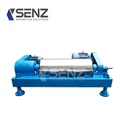

In the realm of industrial waste management and environmental protection, sludge decanter centrifuges play a pivotal role. As a reputable supplier of Sludge Decanter Centrifuges, I've witnessed firsthand the critical importance of each component within these machines. One such component, the conveyor screw, is often overlooked but is indispensable for the efficient operation of the centrifuge. In this blog post, I'll delve into the role of the conveyor screw in a sludge decanter centrifuge and why it matters so much.
Understanding the Basics of a Sludge Decanter Centrifuge
Before we explore the role of the conveyor screw, it's essential to have a basic understanding of how a sludge decanter centrifuge works. A sludge decanter centrifuge is a high - speed rotating machine used to separate solids from liquids in a sludge mixture. The centrifuge consists of a rotating bowl and a conveyor screw inside the bowl. When the centrifuge is in operation, the sludge is fed into the rotating bowl. Due to the high - speed rotation, a centrifugal force is generated, which causes the heavier solid particles in the sludge to settle on the inner wall of the bowl, while the lighter liquid phase forms an inner layer.
Primary Role of the Conveyor Screw: Solids Discharge
The most fundamental role of the conveyor screw in a sludge decanter centrifuge is to discharge the separated solid particles from the centrifuge. Once the solid particles have settled on the inner wall of the rotating bowl, the conveyor screw rotates at a slightly different speed compared to the bowl. This differential speed creates a relative motion between the screw and the bowl, allowing the screw to scrape the solid layer from the bowl wall and convey it towards the solids discharge end of the centrifuge.
The design of the conveyor screw is crucial for efficient solids discharge. The pitch of the screw, which is the distance between adjacent threads, determines the rate at which the solids are conveyed. A larger pitch can result in a higher solids discharge rate, but it may also reduce the compaction of the solids. On the other hand, a smaller pitch can lead to better compaction of the solids, which is beneficial for reducing the moisture content of the discharged solids.
Secondary Role: Compaction of Solids
In addition to discharging the solids, the conveyor screw also plays a role in compacting the separated solids. As the screw conveys the solids towards the discharge end, it applies pressure on the solids, squeezing out the remaining liquid trapped within the solid mass. This compaction process helps to reduce the moisture content of the discharged solids, which is highly desirable in many industrial applications.
For example, in the wastewater treatment industry, reducing the moisture content of the sludge can significantly reduce the volume of the sludge for disposal. This not only saves on disposal costs but also has environmental benefits. The compaction ability of the conveyor screw is influenced by factors such as the shape of the screw flights, the differential speed between the screw and the bowl, and the length of the compaction zone within the centrifuge.
Influence on Liquid Clarification
The conveyor screw also has an indirect influence on the clarification of the liquid phase in the centrifuge. By efficiently removing the solid particles from the bowl, the conveyor screw helps to maintain a clear liquid layer in the centrifuge. This is important because a clear liquid phase means that the centrifuge is effectively separating the solids from the liquid, and the quality of the separated liquid is higher.
In some industrial processes, the clarified liquid can be recycled or reused, which can lead to significant cost savings. For instance, in the food and beverage industry, the clarified liquid separated from the sludge can be used in other production processes, reducing the need for fresh water intake.
Importance of Conveyor Screw Design and Material
The design and material of the conveyor screw are of utmost importance for the performance and longevity of the sludge decanter centrifuge. The screw needs to be designed to withstand the high - speed rotation, the abrasive nature of the solids, and the corrosive environment in the centrifuge.
Common materials used for conveyor screws include stainless steel, which offers good corrosion resistance, and hardened steel, which provides high wear resistance. The surface of the screw can also be treated with special coatings to further enhance its wear and corrosion resistance.
Applications and Related Technologies
Sludge decanter centrifuges with well - designed conveyor screws are used in a wide range of industries. In the mining industry, they are used to separate minerals from the slurry. In the oil and gas industry, they are used for oil - water - solids separation. And in the environmental sector, they are crucial for wastewater treatment and sludge dewatering.
If you're interested in learning more about related technologies, you can visit our pages on Coal Tar Decanter Centrifuge, Sludge Dewatering Technologies, and Centrifugal Dewaterer.


Conclusion and Call to Action
In conclusion, the conveyor screw is a vital component in a sludge decanter centrifuge. Its roles in solids discharge, compaction, and influencing liquid clarification are essential for the efficient operation of the centrifuge. As a supplier of Sludge Decanter Centrifuges, we understand the importance of a well - designed and high - quality conveyor screw.
If you're in the market for a sludge decanter centrifuge or need to upgrade your existing equipment, we're here to help. Our team of experts can provide you with customized solutions based on your specific requirements. Contact us today to start a procurement discussion and find the best centrifuge solution for your business.
References
- "Centrifugal Separation Technology" by S. R. Pahl and W. R. Muschelknautz
- "Industrial Centrifugation Technology" edited by A. S. Mujumdar