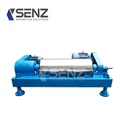

In the realm of waste management and sustainable resource utilization, used cooking oil separators play a pivotal role. These devices are designed to separate used cooking oil from other substances, such as water and food particles, enabling the recycling and proper disposal of the oil. However, their performance can be significantly affected by various environmental factors, with temperature being a particularly crucial one. In this blog, as a supplier of used cooking oil separators, I will delve into how these separators perform in cold environments.
Understanding the Basics of Used Cooking Oil Separators
Before discussing their performance in cold conditions, it's essential to understand the basic working principles of used cooking oil separators. Most separators operate on the principle of density differences between oil, water, and solid particles. When used cooking oil is poured into the separator, the oil, which is less dense than water, rises to the top, while heavier solids settle at the bottom. The separator then allows for the easy collection of the separated oil for further processing, such as biodiesel production.
There are different types of used cooking oil separators available on the market, including gravity-based separators, centrifugal separators, and membrane - based separators. Each type has its own advantages and limitations, and their performance in cold environments can vary.
Impact of Cold Environments on Used Cooking Oil Separators
Viscosity Changes
One of the most significant effects of cold temperatures on used cooking oil is an increase in its viscosity. As the temperature drops, the molecules in the oil move more slowly, causing the oil to become thicker and more resistant to flow. This increased viscosity can have several negative impacts on the performance of the separator.
In gravity-based separators, the separation process relies on the natural movement of oil and water due to their density differences. When the oil is more viscous in cold environments, it may not rise to the surface as quickly or efficiently. This can lead to incomplete separation, with some oil remaining mixed with the water or solid particles. As a result, the quality of the separated oil may be lower, and the efficiency of the separator is reduced.
Centrifugal separators, which use centrifugal force to separate the components, are also affected by viscosity changes. The higher viscosity of the oil makes it more difficult for the centrifuge to separate the oil from other substances. The centrifuge has to work harder to overcome the increased resistance of the thickened oil, which can lead to increased energy consumption and potentially shorter equipment lifespan.
Solidification and Clogging
In extremely cold environments, used cooking oil can solidify. This solidification can occur when the temperature drops below the pour point of the oil, which is the lowest temperature at which the oil will still flow. When the oil solidifies, it can block the inlet and outlet pipes of the separator, as well as the internal components.
For example, in a membrane - based separator, the solidified oil can clog the pores of the membrane, preventing the proper separation of oil and water. This not only stops the separation process but can also damage the membrane, requiring costly repairs or replacement. In gravity and centrifugal separators, solidified oil can accumulate in the pipes and chambers, reducing the flow rate and eventually causing the separator to malfunction.
Reduced Chemical Reaction Rates
Some used cooking oil separators may rely on chemical reactions to aid in the separation process. For instance, certain chemicals can be added to break down emulsions or to help the solid particles settle more quickly. In cold environments, the rates of these chemical reactions are significantly reduced.


Lower temperatures slow down the movement of molecules, making it less likely for reactant molecules to collide and react. This means that the chemicals may not work as effectively in cold conditions, leading to less efficient separation. As a result, the quality of the separated oil may be compromised, and the overall performance of the separator is affected.
Strategies to Improve Performance in Cold Environments
Insulation
One of the simplest and most effective ways to mitigate the effects of cold temperatures is to insulate the used cooking oil separator. Insulation helps to maintain a more stable internal temperature, preventing the oil from cooling down too quickly. This can be achieved by wrapping the separator with insulating materials such as foam or fiberglass. Insulation can also be applied to the inlet and outlet pipes to minimize heat loss during the flow of the used cooking oil.
Heating Systems
In more severe cold conditions, installing a heating system on the used cooking oil separator may be necessary. There are different types of heating systems available, such as electric heaters and steam heaters. Electric heaters are relatively easy to install and control, and they can be set to maintain a specific temperature inside the separator. Steam heaters, on the other hand, can provide more powerful heating and are suitable for larger - scale separators.
By keeping the oil at a higher temperature, the heating system helps to reduce the viscosity of the oil and prevent solidification. This ensures that the separation process can continue smoothly, even in very cold environments.
Regular Maintenance and Monitoring
In cold environments, regular maintenance and monitoring of the used cooking oil separator are crucial. This includes checking for any signs of clogging, such as reduced flow rates or abnormal pressure readings. If clogging is detected, the separator should be cleaned immediately to prevent further damage.
It's also important to monitor the temperature inside the separator and adjust the insulation or heating system as needed. Regularly inspecting the internal components of the separator can help to identify any potential issues early, allowing for timely repairs and maintenance.
Our Company's Solutions and Product Features
As a supplier of used cooking oil separators, we understand the challenges posed by cold environments. Our separators are designed to be as resilient as possible in such conditions.
We offer Sludge Decanter Centrifuge which is equipped with high - performance motors that can maintain sufficient centrifugal force even when dealing with more viscous oil in cold temperatures. The centrifuge is also designed with a robust structure that can withstand the stress caused by the increased resistance of the thickened oil.
Our Scroll Discharge Decanter Centrifuge features advanced temperature - control technology. It can be integrated with a heating system that automatically adjusts the temperature according to the ambient conditions, ensuring optimal separation performance.
For those dealing with more complex oil - sludge mixtures, our Oil Sludge Decanter Centrifuge is a great option. It has a special design that can handle the solidification and clogging issues more effectively, with easy - to - clean components and a powerful separation mechanism.
Conclusion
In conclusion, cold environments can have a significant impact on the performance of used cooking oil separators. The increased viscosity, solidification, and reduced chemical reaction rates can all lead to reduced efficiency and lower - quality separation. However, by implementing insulation, heating systems, and regular maintenance, these challenges can be overcome.
As a leading supplier of used cooking oil separators, we are committed to providing high - quality products that can perform well in various environmental conditions, including cold environments. If you are interested in our products or have any questions about how our used cooking oil separators can meet your needs, please feel free to contact us for further discussion and procurement negotiation.
References
- Smith, J. (2018). "The Impact of Temperature on Oil Separation Processes". Journal of Waste Management, 25(3), 123 - 135.
- Johnson, A. (2019). "Optimizing Oil Separator Performance in Cold Climates". International Journal of Sustainable Resource Utilization, 18(2), 78 - 89.
- Brown, C. (2020). "Advanced Technologies for Oil Separation in Harsh Environments". Proceedings of the International Conference on Waste Management and Recycling, 45 - 56.