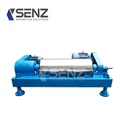
Hey there! As a supplier of sludge dewatering equipment, I've been getting a lot of questions lately about the role of conveyors in this whole process. So, I thought I'd sit down and write a blog post to clear things up.
First off, let's talk about what sludge dewatering is. In simple terms, it's the process of removing water from sludge to reduce its volume and make it easier to handle and dispose of. This is super important in a bunch of industries, like wastewater treatment, mining, and food processing.
Now, where do conveyors come into play? Well, conveyors are like the unsung heroes of the sludge dewatering process. They're responsible for moving the sludge from one stage of the process to the next, and they do it in a way that's efficient, reliable, and safe.
One of the main roles of a conveyor in sludge dewatering equipment is to transport the raw sludge from the collection point to the dewatering unit. This might seem like a simple task, but it's actually quite crucial. The conveyor needs to be able to handle the thick, sticky consistency of the sludge without clogging or breaking down. That's why we often recommend using a Screw Conveyor. These conveyors are designed to move materials with high viscosity, like sludge, smoothly and efficiently. They use a rotating screw blade to push the sludge along the conveyor trough, and they can be customized to fit the specific needs of your operation.
Once the sludge reaches the dewatering unit, it goes through a process of separating the water from the solid particles. This is usually done using a centrifuge or a belt filter press. After the dewatering process, the conveyor comes back into action. It's now responsible for transporting the dewatered sludge, which is much drier and easier to handle, to the storage or disposal area.
Another important role of the conveyor is to work in conjunction with other equipment in the sludge dewatering system. For example, it might need to coordinate with a Flocculant Auto Dosing System. Flocculants are chemicals that are added to the sludge to help the solid particles clump together, making it easier to separate the water. The conveyor needs to ensure that the sludge is delivered to the dosing system at the right time and in the right quantity for the flocculation process to work effectively.
In addition to transporting the sludge, conveyors also play a role in maintaining the overall efficiency of the sludge dewatering equipment. They need to be properly maintained to ensure that they continue to operate smoothly. Regular maintenance, like checking for wear and tear, lubricating moving parts, and cleaning the conveyor, can prevent breakdowns and extend the lifespan of the equipment. If you're using a centrifuge in your dewatering process, you might also want to consider Centrifuge Maintenance services to keep it running at its best.


Now, let's talk about some of the benefits of using a conveyor in your sludge dewatering equipment. One of the biggest advantages is increased productivity. By automating the transportation of the sludge, you can save a lot of time and labor. Instead of having workers manually move the sludge from one place to another, the conveyor does it for you, allowing your employees to focus on other important tasks.
Conveyors also improve the safety of your operation. Handling sludge can be messy and dangerous, especially if it's being moved manually. Conveyors reduce the risk of accidents and injuries by keeping the sludge contained and moving it in a controlled manner.
Another benefit is that conveyors can help you save money in the long run. By improving the efficiency of your sludge dewatering process, you can reduce the amount of energy and resources you use. This can lead to lower operating costs and a better bottom line for your business.
So, if you're in the market for sludge dewatering equipment, don't overlook the importance of a good conveyor. It's an essential part of the system that can make a big difference in the performance and profitability of your operation.
If you're interested in learning more about our sludge dewatering equipment, including conveyors, and how they can benefit your business, feel free to reach out to us. We'd be happy to have a chat with you and discuss your specific needs. Whether you're a small wastewater treatment plant or a large industrial facility, we have the expertise and the products to help you achieve your goals.
In conclusion, conveyors play a vital role in sludge dewatering equipment. They're responsible for transporting the sludge, coordinating with other equipment, and maintaining the efficiency and safety of the process. By choosing the right conveyor and taking good care of it, you can ensure that your sludge dewatering system runs smoothly and effectively.
References
- Sludge Dewatering Handbook: Best Practices and Technologies, Industry Publishing Group
- Conveyor Systems: Design, Operation, and Maintenance, Engineering Press