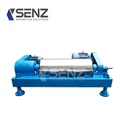

When it comes to using a decantador, also known as a decanter centrifuge, there are several common mistakes that users often make. As a decantador supplier, I've witnessed firsthand the consequences of these errors, which can lead to decreased efficiency, increased maintenance costs, and even premature equipment failure. In this blog post, I'll discuss some of the most prevalent mistakes and provide tips on how to avoid them.
1. Incorrect Installation
One of the most fundamental mistakes is improper installation of the decantador. A decantador needs to be installed on a stable and level surface to ensure optimal performance. If the installation surface is uneven, it can cause excessive vibration during operation, which not only affects the separation efficiency but also puts additional stress on the machine's components, leading to premature wear and tear.


To avoid this, before installation, thoroughly inspect the installation site. Use a spirit level to check the flatness of the surface. If necessary, make adjustments by using shims or leveling feet. Additionally, ensure that the decantador is properly aligned with the inlet and outlet pipes. Misaligned pipes can cause flow restrictions and uneven distribution of the feed material, reducing the decanter's effectiveness.
2. Overloading the Decantador
Another common error is overloading the decantador. Each decantador has a specific capacity rating, which indicates the maximum amount of material it can handle per unit of time. Exceeding this capacity can lead to poor separation results, as the machine may not have enough time to properly separate the different phases of the feed material.
For example, in a Wastewater Centrifuge, overloading can cause the sludge to not be dewatered effectively, resulting in higher moisture content in the discharged sludge. In an Avocado Oil Production Line Decanter, overloading may lead to incomplete separation of the oil from the pulp, reducing the oil yield.
To prevent overloading, carefully monitor the feed rate and adjust it according to the decantador's capacity. Use flow meters and control valves to regulate the amount of material entering the machine. Regularly check the performance of the decantador and look for signs of overloading, such as increased vibration, abnormal noise, or reduced separation efficiency.
3. Ignoring Maintenance
Maintenance is crucial for the long - term performance and reliability of a decantador. However, many users neglect regular maintenance tasks, such as lubrication, inspection of seals and bearings, and cleaning of the machine.
Lubrication is essential to reduce friction between moving parts and prevent premature wear. Failure to lubricate the decantador at the recommended intervals can lead to increased energy consumption, overheating, and even mechanical failure. Seals and bearings also need to be inspected regularly for signs of wear and damage. Worn seals can cause leakage of the feed material, while damaged bearings can lead to excessive vibration and misalignment.
In addition, the decantador should be cleaned regularly to remove any accumulated solids or debris. In an Oilfield Drilling Equipment decantador, for instance, the build - up of drilling mud solids can affect the separation performance. Develop a comprehensive maintenance schedule and follow it strictly to ensure the decantador operates at its best.
4. Improper Operating Speed
The operating speed of a decantador plays a vital role in its separation efficiency. Running the decantador at the wrong speed can result in suboptimal separation. If the speed is too low, the centrifugal force generated may not be sufficient to separate the different phases effectively. On the other hand, if the speed is too high, it can cause excessive turbulence and may even damage the machine's components.
Each decantador is designed to operate within a specific speed range. Refer to the manufacturer's manual to determine the appropriate operating speed for your specific application. Use speed controllers to adjust and maintain the correct speed. Regularly monitor the speed during operation and make adjustments as needed based on the characteristics of the feed material and the desired separation results.
5. Inadequate Feed Preparation
The quality of the feed material can significantly impact the performance of a decantador. Inadequate feed preparation, such as insufficient mixing or improper particle size distribution, can lead to poor separation.
For example, if the feed material is not well - mixed, the different components may not be evenly distributed in the decantador, resulting in uneven separation. In some cases, large particles in the feed can cause blockages in the machine, reducing its efficiency.
Before feeding the material into the decantador, ensure that it is properly prepared. Use appropriate mixing equipment to homogenize the feed. If necessary, use screening or grinding processes to adjust the particle size distribution. This will help the decantador operate more effectively and achieve better separation results.
6. Lack of Operator Training
Finally, a lack of proper operator training is a significant mistake. Operators need to have a good understanding of the decantador's operation, maintenance, and safety procedures. Without adequate training, they may not be able to operate the machine correctly, identify potential problems, or take appropriate actions in case of emergencies.
As a decantador supplier, we offer comprehensive training programs for our customers. These programs cover topics such as machine operation, maintenance, troubleshooting, and safety. By investing in operator training, you can ensure that your decantador is used to its full potential and that any issues are addressed promptly.
In conclusion, avoiding these common mistakes can significantly improve the performance and longevity of your decantador. By ensuring correct installation, proper loading, regular maintenance, appropriate operating speed, adequate feed preparation, and well - trained operators, you can achieve better separation results and reduce the overall cost of ownership.
If you're interested in learning more about our decantador products or have any questions regarding their use and maintenance, we encourage you to contact us for a detailed discussion. Our team of experts is ready to assist you in finding the best decantador solution for your specific needs and guiding you through the purchasing process.
References
- Manufacturer's manuals for decantador models
- Industry standards and guidelines for decanter centrifuge operation and maintenance
- Technical papers on separation processes using decantador