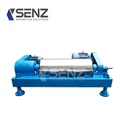

What is the maintenance cost of a manure decanter centrifuge over its lifespan?
As a supplier of manure decanter centrifuges, I often get asked about the maintenance costs associated with these machines over their lifespan. Understanding these costs is crucial for farmers and agricultural businesses looking to invest in efficient manure management solutions. In this blog post, I'll break down the various factors that contribute to the maintenance cost of a manure decanter centrifuge and provide some insights to help you make an informed decision.
Initial Investment and Depreciation
The first cost associated with a manure decanter centrifuge is the initial purchase price. The price can vary widely depending on the size, capacity, and features of the centrifuge. Larger, high - capacity centrifuges with advanced automation and control systems will generally cost more than smaller, basic models. However, it's important to view this as an investment rather than just a cost. A well - chosen centrifuge can significantly improve manure management efficiency, leading to long - term savings.


Depreciation is another factor to consider. Over time, the value of the centrifuge will decrease. This decrease in value is an important part of the overall cost of ownership. Most manure decanter centrifuges have a useful lifespan of 10 - 15 years, and the depreciation cost should be factored into your annual maintenance budget.
Routine Maintenance
Routine maintenance is essential to keep the manure decanter centrifuge running smoothly. This includes daily, weekly, and monthly checks and servicing.
Daily Checks: Operators should perform daily visual inspections of the centrifuge. This involves checking for any signs of leaks, unusual noises, or vibrations. They should also ensure that all safety guards are in place and that the control panel is functioning correctly. These daily checks are relatively quick and easy, but they are crucial for early detection of potential problems.
Weekly and Monthly Maintenance: Weekly maintenance may include lubricating moving parts, checking the tightness of bolts and nuts, and inspecting the belts and pulleys. Monthly maintenance tasks can be more in - depth, such as cleaning the centrifuge's interior to prevent the buildup of manure and debris. Regular cleaning is important because manure can be corrosive and can cause damage to the centrifuge's components over time.
The cost of routine maintenance includes the cost of lubricants, cleaning agents, and replacement parts such as belts and gaskets. While these costs are relatively small on a per - maintenance - task basis, they can add up over the lifespan of the centrifuge.
Major Overhauls
Every few years, a manure decanter centrifuge will require a major overhaul. A major overhaul typically involves disassembling the centrifuge, inspecting all components for wear and tear, and replacing any parts that are beyond repair.
The frequency of major overhauls depends on the usage of the centrifuge. A centrifuge that is used continuously at a high - capacity farm may need a major overhaul every 3 - 5 years, while a centrifuge used less intensively may only need one every 5 - 7 years.
The cost of a major overhaul can be significant. It includes the cost of labor (if you hire a professional technician), the cost of replacement parts such as bearings, seals, and impellers, and the cost of any necessary testing and calibration after the overhaul. However, a well - executed major overhaul can extend the lifespan of the centrifuge and prevent more costly breakdowns in the future.
Energy Consumption
Energy consumption is also an important part of the maintenance cost over the lifespan of a manure decanter centrifuge. These machines typically use a significant amount of electricity to operate. The energy cost depends on the power rating of the centrifuge and the number of hours it is in operation.
To reduce energy consumption, some modern manure decanter centrifuges are designed with energy - efficient motors and advanced control systems that adjust the speed and power consumption based on the load. While these energy - efficient models may have a higher initial purchase price, they can result in significant savings on energy costs over the long term.
Training and Technical Support
Proper training for operators is essential to ensure the efficient and safe operation of the manure decanter centrifuge. This training can be provided by the manufacturer or a third - party training provider. The cost of training includes the cost of the training program itself, as well as any travel and accommodation expenses if the training is conducted off - site.
In addition to training, technical support is also important. In case of breakdowns or technical problems, having access to reliable technical support can minimize downtime. Some manufacturers offer a technical support package as part of the purchase price, while others charge an additional fee for this service.
Comparison with Other Centrifuge Types
When considering the maintenance cost of a manure decanter centrifuge, it's also useful to compare it with other types of centrifuges. For example, Water Treatment Sludge Dewatering centrifuges and Separation Decanter Centrifuges may have different maintenance requirements and costs.
Water treatment sludge dewatering centrifuges are designed to handle different types of sludge, which may have different chemical properties compared to manure. This can affect the wear and tear on the centrifuge's components and the frequency of maintenance. Separation decanter centrifuges, on the other hand, are used for a wider range of separation applications, and their maintenance needs may vary depending on the specific application.
Wastewater Centrifuges also have their own unique maintenance requirements. These centrifuges are often used in industrial and municipal wastewater treatment plants, and they may need to be more robust and resistant to corrosion compared to manure decanter centrifuges.
Conclusion
The maintenance cost of a manure decanter centrifuge over its lifespan is a combination of initial investment, routine maintenance, major overhauls, energy consumption, training, and technical support. While the upfront cost and the cost of major overhauls can be significant, proper maintenance can extend the lifespan of the centrifuge and improve its efficiency.
If you're considering investing in a manure decanter centrifuge, it's important to carefully evaluate these costs and compare them with the potential benefits. A well - maintained centrifuge can help you manage your manure more efficiently, reduce environmental impact, and potentially save you money in the long run.
If you have any questions about the maintenance cost of our manure decanter centrifuges or would like to discuss your specific requirements, please don't hesitate to contact us. We're here to help you make the best decision for your agricultural business.
References
- "Centrifuge Technology Handbook" - A comprehensive guide on centrifuge technology and maintenance.
- Industry reports on manure management and centrifuge usage in agriculture.
- Manufacturer's manuals for manure decanter centrifuges.