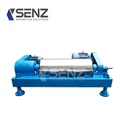

Wastewater treatment is a critical process in modern society, aiming to remove contaminants from water before it is released back into the environment or reused. One of the key pieces of equipment that has gained significant attention in this field is the sludge decanter centrifuge. As a supplier of sludge decanter centrifuges, I am often asked whether these machines can effectively be used for wastewater treatment. In this blog post, I will delve into the capabilities of sludge decanter centrifuges in wastewater treatment, exploring their working principles, advantages, applications, and limitations.
Working Principles of Sludge Decanter Centrifuges
A sludge decanter centrifuge operates on the principle of centrifugal force. It consists of a rotating bowl and a screw conveyor inside the bowl. When the centrifuge is in operation, the wastewater containing sludge is fed into the bowl through a feed pipe. As the bowl rotates at high speed, the centrifugal force separates the solid particles from the liquid phase. The denser solid particles are forced to the outer wall of the bowl, while the lighter liquid phase forms an inner layer.
The screw conveyor, which rotates at a slightly different speed from the bowl, continuously moves the separated solid particles towards the conical end of the bowl for discharge. Meanwhile, the clarified liquid is discharged through the opposite end of the bowl. This continuous process of separation and discharge allows for the efficient removal of sludge from wastewater.
Advantages of Using Sludge Decanter Centrifuges in Wastewater Treatment
High Separation Efficiency
Sludge decanter centrifuges can achieve high separation efficiency, effectively removing a large proportion of solid particles from wastewater. This is especially important in treating wastewater with high sludge content, as it can significantly reduce the volume of sludge and improve the quality of the treated water.
Continuous Operation
One of the major advantages of sludge decanter centrifuges is their ability to operate continuously. Unlike some other wastewater treatment methods that require batch processing, decanter centrifuges can handle a continuous flow of wastewater, which makes them suitable for large-scale wastewater treatment plants.
Compact Design
Sludge decanter centrifuges have a relatively compact design, which means they require less floor space compared to some other types of wastewater treatment equipment. This is particularly beneficial for facilities with limited space, allowing them to install the centrifuge without major modifications to their existing infrastructure.
Versatility
These centrifuges can be used to treat a wide variety of wastewater types, including industrial wastewater, municipal wastewater, and agricultural wastewater. They can handle different types of sludge, such as organic sludge, inorganic sludge, and mixed sludge, making them a versatile solution for wastewater treatment.
Applications of Sludge Decanter Centrifuges in Wastewater Treatment
Industrial Wastewater Treatment
In industrial settings, sludge decanter centrifuges are widely used to treat wastewater generated from various manufacturing processes. For example, in the food and beverage industry, they can be used to separate solids from wastewater containing food residues, oil, and grease. In the chemical industry, they can help remove heavy metals and other contaminants from wastewater. The Paper Pulp Wastewater Treatment application is also a prime example, where these centrifuges can effectively separate pulp fibers and other solids from the wastewater, reducing the environmental impact of the paper manufacturing process.


Municipal Wastewater Treatment
Municipal wastewater treatment plants often use sludge decanter centrifuges to treat the large volumes of wastewater generated by urban populations. These centrifuges can remove suspended solids, organic matter, and pathogens from the wastewater, helping to meet the strict environmental standards for water discharge. They are also used in the sludge dewatering process, reducing the volume of sludge for easier disposal or further treatment.
Agricultural Wastewater Treatment
In the agricultural sector, sludge decanter centrifuges can be used to treat wastewater from livestock farms, dairy farms, and crop processing facilities. They can separate manure, soil particles, and other organic matter from the wastewater, making it possible to reuse the treated water for irrigation or other non-potable purposes. The Kitchen Waste Disposal Centrifuge can also play a role in agricultural settings, especially in dealing with food waste from farm kitchens or processing facilities.
Limitations of Sludge Decanter Centrifuges
High Energy Consumption
One of the main limitations of sludge decanter centrifuges is their relatively high energy consumption. The high-speed rotation of the bowl and the screw conveyor requires a significant amount of power, which can increase the operating costs of the wastewater treatment process.
Maintenance Requirements
These centrifuges have moving parts that require regular maintenance to ensure their proper operation. The wear and tear of the bowl, screw conveyor, and other components can lead to reduced performance and increased downtime if not properly maintained. This requires skilled technicians and a well-planned maintenance schedule.
Cost
The initial investment cost of sludge decanter centrifuges can be relatively high, especially for larger models with higher processing capacities. This can be a barrier for some small-scale wastewater treatment facilities or those with limited budgets.
Conclusion
In conclusion, sludge decanter centrifuges can indeed be effectively used for wastewater treatment. Their high separation efficiency, continuous operation, compact design, and versatility make them a valuable asset in various wastewater treatment applications. However, it is important to consider their limitations, such as high energy consumption, maintenance requirements, and cost, when deciding whether to use them in a particular wastewater treatment project.
As a supplier of sludge decanter centrifuges, we understand the unique needs of different wastewater treatment facilities. We offer a range of centrifuge models with different capacities and features to meet the specific requirements of our customers. Our team of experts can provide technical support and advice on the selection, installation, and operation of our centrifuges.
If you are interested in learning more about our sludge decanter centrifuges or have a wastewater treatment project that you think our equipment could be suitable for, we encourage you to contact us for a consultation. We look forward to discussing how our products can help you achieve your wastewater treatment goals.
References
- Metcalf & Eddy. (2003). Wastewater Engineering: Treatment and Reuse (4th ed.). McGraw-Hill.
- Tchobanoglous, G., Burton, F. L., & Stensel, H. D. (2003). Wastewater Engineering: Treatment, Disposal, and Reuse (4th ed.). McGraw-Hill.
- Wang, Y., & Peng, Y. (2018). Centrifugal Separation Technology and Equipment. Chemical Industry Press.