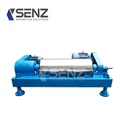

As a supplier of complete sets of equipment, I've had the privilege of being involved in numerous installation projects. The installation process of a complete set of equipment is a complex and systematic task that requires careful planning, precise execution, and strict quality control. In this blog, I'll walk you through the key steps of this process, sharing insights and experiences gained from my years in the industry.
Step 1: Pre - installation Preparation
Before any physical installation work begins, a comprehensive preparation phase is crucial. This involves several key aspects.
Site Inspection
The first step is to conduct a detailed site inspection. Our team visits the installation site to assess its physical conditions, such as the layout, dimensions, floor load - bearing capacity, and access points. We also check for the availability of utilities like power, water, and ventilation. For example, if we're installing a Screw Conveyor, we need to ensure that there is enough space for its proper installation and operation, and that the floor can support its weight.
Equipment Delivery and Storage
Once the site is inspected, the equipment is delivered to the location. It's essential to handle the equipment with care during transportation to prevent any damage. Upon arrival, the equipment should be stored in a safe and dry area. We conduct a thorough inventory check to ensure that all components are present and undamaged. This includes verifying the quantity, model numbers, and specifications of each part against the delivery list.
Documentation Review
We review all relevant documentation, including equipment manuals, installation drawings, and safety instructions. This helps our installation team understand the technical requirements and installation procedures of the equipment. For instance, the installation manual of a centrifuge provides detailed information on its assembly, alignment, and electrical connections. It also contains safety precautions that must be followed to avoid accidents during installation.
Step 2: Equipment Assembly
After the preparation phase, the actual assembly of the equipment begins.
Component Installation
The first step in assembly is to install the individual components according to the installation drawings. Each component has a specific location and orientation, and it's crucial to follow the instructions precisely. For example, when installing a Flocculant Auto Dosing System, we need to connect the storage tanks, pumps, and dosing valves in the correct sequence.
Alignment and Leveling
Proper alignment and leveling of the equipment are essential for its smooth operation. We use precision measuring tools such as laser levels and alignment gauges to ensure that the equipment is installed in a perfectly horizontal and vertical position. Incorrect alignment can lead to excessive wear and tear, vibration, and reduced efficiency. For example, in a centrifuge, misalignment can cause the rotor to imbalance, resulting in premature bearing failure.
Electrical and Piping Connections
Once the mechanical components are installed and aligned, we proceed with the electrical and piping connections. Electrical connections must be made in accordance with electrical codes and safety standards. We ensure that all wires are properly insulated, grounded, and labeled. Piping connections, on the other hand, require careful attention to prevent leaks. We use appropriate sealing materials and follow the recommended torque values when tightening the pipe joints.
Step 3: Testing and Commissioning
After the equipment is assembled, it's time to test and commission it.
Mechanical Testing
We start with mechanical testing to check the movement and functionality of the equipment. This includes running the motors, gears, and belts at low speeds to ensure that there are no abnormal noises or vibrations. For example, in a conveyor system, we test the movement of the belt to ensure that it runs smoothly and that there are no jams.
Electrical Testing
Electrical testing is conducted to verify the proper functioning of the electrical components. We check the voltage, current, and resistance of the circuits to ensure that they are within the specified range. We also test the control systems to ensure that they can accurately regulate the operation of the equipment. For instance, in an automated dosing system, we test the sensors and controllers to ensure that they can accurately measure and control the dosing rate.
Performance Testing
Once the mechanical and electrical tests are successful, we conduct performance testing. This involves running the equipment under normal operating conditions to evaluate its performance. We measure parameters such as flow rate, pressure, temperature, and efficiency. For example, in a centrifuge, we measure the separation efficiency and the throughput to ensure that it meets the design requirements.
Commissioning
If all the tests are successful, the equipment is commissioned. This means that it is ready for normal operation. We provide training to the end - users on how to operate and maintain the equipment. We also hand over all the relevant documentation, including the operation manual, maintenance schedule, and spare parts list.
Step 4: Post - installation Support
Our work doesn't end with the commissioning of the equipment. We provide comprehensive post - installation support to ensure the long - term reliability and performance of the equipment.
Maintenance Training
We offer maintenance training to the end - users to help them understand the basic maintenance procedures of the equipment. This includes topics such as lubrication, filter replacement, and inspection. For example, in Centrifuge Maintenance, we train the users on how to clean the rotor, replace the seals, and check the bearing condition.
Spare Parts Supply
We maintain a stock of spare parts to ensure quick replacement in case of any breakdown. Our spare parts are of high quality and are designed to be compatible with the equipment. We also provide technical support to help the users identify and order the correct spare parts.


Technical Support
Our technical support team is available 24/7 to answer any questions or solve any problems that the users may encounter. We can provide remote support through video conferencing or phone calls, or we can send our technicians to the site if necessary.
Conclusion
The installation process of a complete set of equipment is a complex and multi - step process that requires careful planning, precise execution, and continuous support. As a supplier, we are committed to providing our customers with high - quality equipment and professional installation services. We understand that the successful installation and operation of the equipment are crucial for our customers' business. If you are in the market for a complete set of equipment, we invite you to contact us for a detailed discussion. Our team of experts will be happy to assist you in choosing the right equipment and ensuring its smooth installation.
References
- Industry standards and guidelines for equipment installation
- Equipment manufacturers' installation manuals and technical documentation
- Experience and knowledge gained from past installation projects