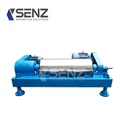

Hydraulic balance in a sewage decanter centrifuge is a crucial concept that significantly impacts the efficiency and performance of the equipment. As a supplier of sewage decanter centrifuges, I've witnessed firsthand how understanding and maintaining hydraulic balance can make a world of difference in wastewater treatment processes.
Understanding the Basics of a Sewage Decanter Centrifuge
Before delving into hydraulic balance, it's essential to understand what a sewage decanter centrifuge is and how it works. A sewage decanter centrifuge is a device used for separating solids from liquids in sewage and sludge. It operates on the principle of centrifugal force, which is generated by the rapid rotation of a cylindrical bowl. As the sewage mixture enters the centrifuge, the heavier solid particles are forced to the outer wall of the bowl, while the lighter liquid phase remains closer to the center. The separated solids are then conveyed out of the centrifuge by a screw conveyor, and the clarified liquid is discharged through an outlet.
What is Hydraulic Balance?
Hydraulic balance in a sewage decanter centrifuge refers to the equilibrium of fluid flow within the centrifuge. It involves the proper distribution of the incoming sewage mixture, the efficient separation of solids and liquids, and the smooth discharge of the separated phases. When a centrifuge is hydraulically balanced, the flow of the sewage mixture is uniform, and there are no significant fluctuations in pressure or flow rate within the centrifuge. This balance is essential for achieving optimal separation efficiency and preventing issues such as blockages, uneven wear, and reduced throughput.
Factors Affecting Hydraulic Balance
Several factors can affect the hydraulic balance in a sewage decanter centrifuge. One of the primary factors is the feed rate of the sewage mixture. If the feed rate is too high, the centrifuge may become overloaded, leading to poor separation and potential blockages. On the other hand, if the feed rate is too low, the centrifuge may not operate at its full capacity, resulting in inefficient use of resources.
The consistency and composition of the sewage mixture also play a crucial role in hydraulic balance. Sewage with a high concentration of solids or a high viscosity can pose challenges to the centrifuge's ability to separate the phases effectively. In such cases, the centrifuge may require adjustments to its operating parameters, such as the rotational speed or the differential speed of the screw conveyor, to maintain hydraulic balance.
Another factor that can affect hydraulic balance is the design and condition of the centrifuge itself. A well-designed centrifuge with proper internal components, such as the feed pipe, the screw conveyor, and the discharge ports, is more likely to maintain hydraulic balance. Additionally, regular maintenance and inspection of the centrifuge can help identify and address any issues that may affect its hydraulic performance, such as worn-out parts or blockages.
Importance of Hydraulic Balance
Maintaining hydraulic balance in a sewage decanter centrifuge is of utmost importance for several reasons. Firstly, it ensures efficient separation of solids and liquids. When the centrifuge is hydraulically balanced, the solids are effectively removed from the sewage mixture, resulting in a clarified liquid phase that can be further treated or discharged. This not only improves the quality of the treated water but also reduces the volume of sludge that needs to be disposed of.
Secondly, hydraulic balance helps to prevent damage to the centrifuge. Uneven flow or pressure within the centrifuge can cause excessive wear on the internal components, such as the screw conveyor and the bowl. This can lead to premature failure of the centrifuge and costly repairs or replacements. By maintaining hydraulic balance, the centrifuge can operate smoothly and reliably, reducing the risk of downtime and maintenance costs.
Finally, hydraulic balance is essential for meeting environmental regulations. Proper separation of solids and liquids in the centrifuge helps to reduce the amount of pollutants in the treated water, ensuring that it meets the required standards for discharge. This is particularly important in industries where wastewater treatment is subject to strict environmental regulations, such as the Sludge Dewatering Technologies.


Achieving and Maintaining Hydraulic Balance
To achieve and maintain hydraulic balance in a sewage decanter centrifuge, several steps can be taken. Firstly, it's important to carefully select the centrifuge based on the specific requirements of the wastewater treatment process. This includes considering factors such as the feed rate, the consistency and composition of the sewage mixture, and the desired separation efficiency.
Once the centrifuge is installed, it's essential to operate it within its recommended parameters. This includes adjusting the feed rate, the rotational speed, and the differential speed of the screw conveyor to ensure optimal performance. Regular monitoring of the centrifuge's operating parameters, such as the pressure, the flow rate, and the temperature, can also help to identify any issues that may affect hydraulic balance.
In addition to proper operation, regular maintenance and inspection of the centrifuge are crucial for maintaining hydraulic balance. This includes cleaning the internal components, checking for wear and tear, and replacing any damaged parts. By following a regular maintenance schedule, the centrifuge can operate at its best and avoid potential problems that may affect its hydraulic performance.
Applications of Sewage Decanter Centrifuges
Sewage decanter centrifuges are widely used in various industries for wastewater treatment and sludge dewatering. In the municipal wastewater treatment sector, they are used to separate solids from sewage, reducing the volume of sludge that needs to be disposed of and producing a clarified liquid that can be discharged into the environment. In the industrial sector, sewage decanter centrifuges are used in industries such as food and beverage, chemical, and pharmaceutical to treat wastewater and recover valuable resources. For example, in the Petrole Oil Sludge Dewatering Machine, decanter centrifuges are used to separate oil from sludge, allowing for the reuse of the oil and the proper disposal of the remaining sludge.
Conclusion
In conclusion, hydraulic balance in a sewage decanter centrifuge is a critical factor that affects the efficiency, performance, and reliability of the equipment. By understanding the concept of hydraulic balance, the factors that affect it, and the importance of maintaining it, wastewater treatment plants and industries can ensure optimal operation of their sewage decanter centrifuges. As a supplier of Sludge Decanter Centrifuge, we are committed to providing high-quality centrifuges and technical support to help our customers achieve and maintain hydraulic balance in their wastewater treatment processes. If you are interested in learning more about our sewage decanter centrifuges or have any questions regarding hydraulic balance, please feel free to contact us for a consultation and procurement discussion.
References
- Perry, R. H., & Green, D. W. (Eds.). (2007). Perry's Chemical Engineers' Handbook. McGraw-Hill.
- Metcalf & Eddy. (2014). Wastewater Engineering: Treatment and Resource Recovery. McGraw-Hill Education.