Hey there! As a supplier of laboratory centrifuges, I often get asked about the difference between manual and automatic laboratory centrifuges. So, I thought I'd take a few minutes to break it down for you.
1. Basic Definitions
First off, let's start with what each type is. A manual laboratory centrifuge is, well, manual. You've got to do a lot of the work yourself. You set the speed, the time, and you start and stop it by hand. It's like driving a stick - shift car; you're in full control of all the operations.
On the other hand, an automatic laboratory centrifuge is more like a self - driving car. It can be programmed to do a whole bunch of things on its own. You can set up a sequence of operations, and it'll run through them without you having to constantly monitor and adjust it.
2. Operation Process
Manual Centrifuges
Operating a manual centrifuge is a hands - on experience. You need to carefully load the samples into the rotor. Make sure they're balanced; otherwise, the centrifuge can vibrate like crazy and might even get damaged. Then, you turn the dial to set the speed. It's usually in revolutions per minute (RPM). You also have to set the timer. Once everything is set, you hit the start button. And during the run, you've got to keep an eye on it. If something seems off, like the vibration is too strong, you've got to stop it right away and re - check the balance.
For example, if you're working in a small research lab where you're only doing a few samples at a time, a manual centrifuge can be a great option. You can quickly adjust the settings based on the specific requirements of each sample.
Automatic Centrifuges
With an automatic centrifuge, the process is a bit different. You still load the samples, but then you use the control panel to program the run. You can set multiple steps, like different speeds and times for each step. For instance, you might want to start with a low - speed spin to gently separate some components, and then increase the speed for a more intense separation.
Once you've programmed it, you just hit the start button, and it'll do its thing. It can even save the programs for future use. This is super handy if you're doing the same type of separation over and over again. You don't have to keep re - entering the settings every time.
3. Precision and Consistency
Manual Centrifuges
When it comes to precision, manual centrifuges can be a bit tricky. It's hard to set the exact speed and time every single time. There's always a little bit of human error involved. For example, when you're turning the dial to set the speed, it might not land exactly on the number you want. And if you're in a hurry, you might not set the timer accurately.
However, if you're really experienced and take your time, you can get pretty good results. But the consistency from one run to another might not be as high as with an automatic centrifuge.
Automatic Centrifuges
Automatic centrifuges are much better at precision and consistency. They can accurately control the speed and time within a very small margin of error. Since the programs are saved, you can repeat the exact same separation process multiple times. This is crucial in large - scale production or in research where you need to have consistent results for statistical analysis.
4. Cost
Manual Centrifuges
Manual centrifuges are generally cheaper. They have a simpler design and fewer features, so the manufacturing cost is lower. If you're on a tight budget, especially in a startup lab or a teaching lab where you don't need all the fancy features, a manual centrifuge can be a cost - effective choice.
Automatic Centrifuges
Automatic centrifuges, on the other hand, are more expensive. The advanced control systems and the ability to save and run programs add to the cost. But if you consider the long - term benefits of precision and efficiency, the investment can be worth it, especially in a high - volume lab environment.
5. Safety
Manual Centrifuges
Safety with manual centrifuges depends a lot on the operator. Since you're doing everything by hand, there's a higher risk of making mistakes. For example, if you don't balance the samples properly, it can lead to dangerous vibrations. And if you're not paying attention during the run, you might not notice if something goes wrong.
Automatic Centrifuges
Automatic centrifuges usually come with more safety features. They can detect imbalances and automatically stop the run if the vibration exceeds a certain limit. Some also have sensors to detect overheating or other malfunctions. This makes them a safer option, especially in a busy lab where there might be multiple operators.
6. Applications
Manual Centrifuges
Manual centrifuges are great for small - scale applications. They're commonly used in teaching labs where students are learning the basics of centrifugation. They're also suitable for labs that have a limited budget or where the sample volume is low. For example, in a veterinary clinic, you might use a manual centrifuge to separate blood samples for basic tests.
Automatic Centrifuges
Automatic centrifuges are more commonly used in large - scale production and high - end research. In a pharmaceutical manufacturing plant, they can be used to separate different components of a drug. They're also used in genomics research, where precise and consistent separations are required for DNA and RNA analysis.
7. Our Product Range
As a laboratory centrifuge supplier, we offer both manual and automatic centrifuges. Our manual centrifuges are reliable and easy to use. They're built with high - quality materials to ensure long - term durability. And our automatic centrifuges come with advanced features like touch - screen control panels and a wide range of programmable options.


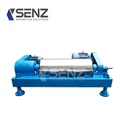
If you're interested in a Centrifuge Machine For Sludge Dewatering, we've got models that can handle different sludge volumes and types. Our Oil Sludge Decanter Centrifuge is designed to efficiently separate oil from sludge, which is crucial in the oil and gas industry. And our Decanter Centrifuge Separator can be used for a variety of separation tasks, from biological samples to industrial waste.
Conclusion
So, in summary, the main differences between manual and automatic laboratory centrifuges lie in the operation process, precision, cost, safety, and applications. Manual centrifuges are more hands - on, cheaper, and better for small - scale work. Automatic centrifuges are more precise, consistent, and suitable for large - scale and high - end applications.
If you're in the market for a laboratory centrifuge, think about your specific needs. Are you a small - scale researcher on a budget, or are you in a large - scale production facility that requires high precision and consistency? No matter what your needs are, we're here to help you find the right centrifuge for your lab. If you have any questions or want to discuss your requirements further, feel free to reach out to us for a detailed consultation. We're always happy to assist you in making the best choice for your laboratory.
References
- "Centrifuge Technology Handbook" - A comprehensive guide on centrifuge operation and technology.
- Journal of Laboratory Equipment: Various articles on the latest advancements in laboratory centrifuges.