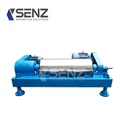

Surfactants, commonly known as surface - active agents, play a complex and significant role in the operation of an Oil Water Separator. As a supplier of Oil Water Separators, I have witnessed firsthand how these substances can either aid or impede the separation process. In this blog, I will delve into the mechanisms through which surfactants affect the performance of oil water separators and discuss the implications for various industries.
Understanding Surfactants
Surfactants are compounds that reduce the surface tension between two liquids or between a liquid and a solid. They have a unique molecular structure, consisting of a hydrophilic (water - loving) head and a hydrophobic (water - hating) tail. This dual nature allows surfactants to interact with both oil and water, making them extremely useful in a wide range of applications, from detergents to industrial processes.
In the context of oil - water mixtures, surfactants can be present either naturally or as additives. For example, in the oil and gas industry, crude oil may contain natural surfactants such as asphaltenes and resins. In other cases, surfactants are deliberately added to enhance the emulsification of oil in water for processes like oil extraction or cleaning.
Positive Effects of Surfactants on Oil Water Separators
Enhanced Emulsification for Pre - Treatment
In some cases, surfactants can be beneficial for the initial stages of the oil - water separation process. When oil and water form a stable emulsion, it can be difficult to separate them. However, by adding the right type and amount of surfactant, the emulsion can be broken down into smaller droplets. This is particularly useful in pre - treatment steps where the goal is to make the separation process more efficient.
For instance, in a Sunflower Seed Oil Decanter Centrifuge, surfactants can be used to break down the complex oil - water mixtures present in sunflower seed extracts. By reducing the surface tension between the oil and water droplets, the centrifuge can more easily separate the two phases, resulting in a higher - quality oil product.
Improved Wetting and Cleaning
Surfactants can also improve the wetting properties of the separator components. In an oil water separator, the internal surfaces need to be clean and free from oil residues to ensure optimal performance. Surfactants can lower the surface tension of the cleaning solution, allowing it to penetrate and remove stubborn oil deposits more effectively.
This is especially important in Waste Oil Processing Centrifuges, where the equipment is constantly exposed to highly viscous and contaminated oil. By using surfactant - based cleaning agents, the separator can be maintained in good working condition, reducing the risk of clogging and improving the overall separation efficiency.
Negative Effects of Surfactants on Oil Water Separators
Formation of Stable Emulsions
One of the most significant challenges posed by surfactants is the formation of stable emulsions. When surfactants are present in excessive amounts or the wrong type, they can cause oil and water to form a stable mixture that is extremely difficult to separate. The hydrophobic tails of the surfactants attach to the oil droplets, while the hydrophilic heads remain in the water phase, creating a protective layer around the oil droplets.
This stable emulsion can pass through the separator without being effectively separated, leading to poor separation efficiency and increased oil content in the effluent. In industrial settings, this can result in non - compliance with environmental regulations and increased operating costs due to the need for additional treatment steps.
Foaming and Entrainment
Surfactants can also cause foaming in the oil water separator. Foam is formed when air is trapped in the liquid phase, and surfactants can lower the surface tension of the liquid, making it easier for foam to form and more stable. Excessive foaming can lead to several problems, including reduced separator capacity, entrainment of oil droplets in the foam, and difficulty in monitoring the separation process.
The entrainment of oil droplets in the foam can result in oil being carried over into the water phase, reducing the quality of the separated water and increasing the oil content in the effluent. This can be a major issue in industries where strict water quality standards must be met.
Mitigating the Negative Effects of Surfactants
Surfactant Selection and Dosage Control
To minimize the negative effects of surfactants, it is crucial to carefully select the appropriate type and dosage of surfactant. Different surfactants have different properties, and some are more likely to cause emulsion formation or foaming than others. By understanding the characteristics of the oil - water mixture and the requirements of the separation process, the right surfactant can be chosen.
In addition, strict control of the surfactant dosage is essential. Even a small excess of surfactant can have a significant impact on the separation efficiency. Regular monitoring of the surfactant concentration in the system can help ensure that the dosage is within the optimal range.
Use of Demulsifiers
Demulsifiers are chemicals that are specifically designed to break down emulsions. They work by disrupting the surfactant layer around the oil droplets, allowing the droplets to coalesce and separate from the water phase. In an oil water separator, the addition of demulsifiers can be an effective way to counteract the negative effects of surfactants.


However, the selection of demulsifiers also requires careful consideration. Different demulsifiers are effective for different types of emulsions, and the dosage needs to be optimized to achieve the best results.
Implications for Different Industries
Oil and Gas Industry
In the oil and gas industry, the presence of surfactants in crude oil and produced water can have a major impact on the performance of oil water separators. The natural surfactants in crude oil can cause stable emulsions, making it difficult to separate the oil from the water. In addition, the use of surfactants in enhanced oil recovery processes can further complicate the separation process.
Oil and gas companies need to invest in advanced separation technologies and effective surfactant management strategies to ensure that the produced water meets the environmental discharge standards and that the recovered oil is of high quality. Our Oil Water Separator is designed to handle the complex oil - water mixtures commonly found in the oil and gas industry, providing reliable and efficient separation solutions.
Food and Beverage Industry
In the food and beverage industry, surfactants are often used in cleaning and processing operations. For example, in the production of sunflower seed oil, surfactants may be used to improve the extraction efficiency. However, the presence of surfactants in the oil - water mixtures can pose challenges for the separation process.
Food and beverage manufacturers need to ensure that the separated water is free from oil and surfactant residues to meet food safety standards. Our separators can be customized to meet the specific requirements of the food and beverage industry, providing high - quality separation solutions that ensure product safety and compliance.
Conclusion
The presence of surfactants in an oil water separator can have both positive and negative effects on the separation process. While surfactants can enhance emulsification and cleaning in some cases, they can also cause stable emulsion formation, foaming, and entrainment, which can reduce the separation efficiency and increase operating costs.
As a supplier of Oil Water Separators, we understand the importance of managing the effects of surfactants in the separation process. Our range of separators, including the Sunflower Seed Oil Decanter Centrifuge and Waste Oil Processing Centrifuge, are designed to provide efficient and reliable separation solutions, even in the presence of surfactants.
If you are facing challenges with oil - water separation in your industry, we invite you to contact us for a consultation. Our team of experts can help you select the right separator and develop a surfactant management strategy that meets your specific needs.
References
- Miller, C. A., & Neogi, P. (2005). Interfacial Phenomena: Equilibrium and Dynamic Effects. CRC Press.
- Schramm, L. L. (Ed.). (2005). Surfactants in Tribology. CRC Press.
- Trebbin, M., & Krämer, M. (2016). Surfactant - based separation processes. Chemical Engineering and Processing: Process Intensification, 105, 103 - 112.