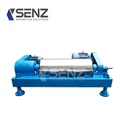

In the dynamic landscape of laboratory equipment, centrifuges stand as indispensable tools for a wide range of applications, from biological research and medical diagnostics to industrial quality control. As technology continues to evolve, the design and functionality of centrifuges have also undergone significant transformations, particularly in the area of user interfaces. Two primary types of interfaces are commonly found in modern centrifuges: touch - screen interfaces and traditional button - operated interfaces. In this blog, we, a leading Laboratory Centrifuge supplier, will explore the differences between these two types of interfaces to help you make an informed decision when selecting a centrifuge for your laboratory.
1. User Interface Design and Aesthetics
The most obvious difference between a centrifuge with a touch - screen interface and a traditional button - operated one lies in their physical appearance and design.
A traditional button - operated centrifuge typically features a panel of physical buttons and switches. These buttons are often tactile and provide a distinct click or feedback when pressed, which can be reassuring for users who are accustomed to a more hands - on approach. The layout of the buttons is usually fixed and designed to correspond to specific functions, such as speed control, time setting, and rotor selection. While the design may seem straightforward, it can sometimes be limited in terms of flexibility, especially when new functions need to be added.
On the other hand, a centrifuge with a touch - screen interface offers a sleek and modern look. The touch - screen display can be customized to show different screens and menus, allowing for a more intuitive and user - friendly experience. Icons, graphics, and text are used to represent various functions, making it easier for users to understand and operate the centrifuge. The touch - screen interface also provides the flexibility to update the software and add new features without the need for physical modifications to the control panel.
2. Ease of Use and Functionality
When it comes to ease of use, both touch - screen and button - operated centrifuges have their own advantages.


Traditional button - operated centrifuges are often favored by users who prefer a simple and straightforward operation. The physical buttons provide a clear and tactile way to input commands, and there is less of a learning curve, especially for users who are new to using centrifuges. For example, adjusting the speed or time settings is as simple as pressing the corresponding buttons. Additionally, in an environment where gloves are worn, physical buttons can be more easily operated compared to touch - screens.
However, touch - screen interfaces offer a higher level of functionality and flexibility. They can support multi - touch gestures, such as swiping, pinching, and tapping, which can make the operation more intuitive and efficient. For instance, a user can quickly navigate through different menus or adjust multiple settings simultaneously using a touch - screen. Moreover, touch - screen interfaces can display real - time data and graphs, providing users with more detailed information about the centrifuge's operation. This is particularly useful in research and clinical applications where precise monitoring is required.
3. Programming and Customization
In terms of programming and customization, touch - screen centrifuges have a clear edge.
Traditional button - operated centrifuges usually have limited programming capabilities. They may offer a few pre - set programs for common applications, but the ability to create and customize new programs is often restricted. Users may need to manually input each step of the program using the buttons, which can be time - consuming and error - prone.
In contrast, touch - screen centrifuges allow for more advanced programming and customization. Users can easily create, edit, and save multiple programs with different settings, such as speed, time, acceleration, and deceleration profiles. The touch - screen interface provides a visual and interactive way to design these programs, making it more convenient and accurate. Some touch - screen centrifuges also support remote programming and control via a computer or mobile device, which can enhance productivity and flexibility in the laboratory.
4. Maintenance and Durability
Maintenance and durability are important considerations when choosing a centrifuge.
Traditional button - operated centrifuges are generally more robust and less prone to damage from physical impacts. The physical buttons are made of durable materials and are less likely to malfunction compared to touch - screens. In addition, if a button fails, it can usually be easily replaced without affecting the entire control panel. However, over time, the mechanical components of the buttons may wear out, leading to decreased functionality.
Touch - screen centrifuges, on the other hand, require more careful handling. The touch - screen is a sensitive electronic component that can be easily damaged by scratches, spills, or excessive pressure. Repairing a touch - screen can be more complex and costly compared to replacing a button. However, modern touch - screens are designed with durable materials and protective layers to minimize the risk of damage. Additionally, software updates can often be used to fix minor issues or improve the performance of the touch - screen interface.
5. Cost
Cost is always a significant factor in any purchasing decision.
Traditional button - operated centrifuges are typically less expensive than those with touch - screen interfaces. The simplicity of the button - operated design results in lower manufacturing costs, which are then passed on to the customers. For budget - conscious laboratories or applications where advanced functionality is not required, a traditional button - operated centrifuge can be a cost - effective choice.
Touch - screen centrifuges, however, come with a higher price tag due to the more advanced technology and features they offer. The touch - screen display, software development, and additional functionality all contribute to the increased cost. But if your laboratory requires advanced programming, real - time data monitoring, and a more intuitive user experience, the investment in a touch - screen centrifuge may be well worth it.
6. Industry Applications
The choice between a touch - screen and a traditional button - operated centrifuge also depends on the specific industry applications.
In industrial settings where large - scale processing and continuous operation are common, traditional button - operated centrifuges may be preferred. Their simplicity and durability make them well - suited for harsh environments and repetitive tasks. For example, in the manure processing industry, Manure Decanter Centrifuge with button - operated interfaces are often used for separating solids from liquids in manure.
In research laboratories and clinical settings, touch - screen centrifuges are more popular. The advanced programming and customization capabilities, along with the real - time data display, are essential for conducting complex experiments and accurate diagnostics. For instance, in tea extraction processes, Tea Extraction Decanter Centrifuge with touch - screen interfaces can be precisely programmed to achieve the optimal separation of tea compounds. Similarly, in general separation processes, Decanter Machine with touch - screen controls offer more flexibility and accuracy.
Conclusion
In summary, the difference between a centrifuge with a touch - screen interface and a traditional button - operated one is significant in terms of design, ease of use, functionality, maintenance, cost, and industry applications. Each type has its own advantages and disadvantages, and the choice depends on your specific needs and budget.
As a Laboratory Centrifuge supplier, we understand the importance of providing the right equipment for your laboratory. Whether you are looking for a simple and cost - effective button - operated centrifuge or a high - tech touch - screen centrifuge with advanced features, we have a wide range of products to meet your requirements. If you are interested in learning more about our centrifuges or would like to discuss your specific needs, we encourage you to contact us. Our team of experts is ready to assist you in making the best decision for your laboratory.
References
- "Centrifuge Technology and Applications" - A comprehensive guide on centrifuge principles and uses.
- "Advancements in Laboratory Equipment Interfaces" - Research on the development of user interfaces in laboratory devices.