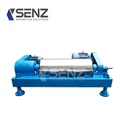

Hey everyone! I'm a supplier of dewatering press machines, and today I wanna talk about the dewatering performance of these machines in different temperatures. It's a topic that's super important for a lot of industries that rely on efficient dewatering processes.
How Temperature Affects Dewatering Performance
Let's start with the basics. Temperature can have a huge impact on the dewatering performance of a dewatering press machine. You see, the viscosity of the material being dewatered changes with temperature. When the temperature is low, the viscosity of many materials tends to increase. This means the liquid in the material is more resistant to flow, making it harder for the dewatering press to separate the liquid from the solid.
Take, for example, a sludge dewatering process. In cold conditions, the sludge can become thicker, like a thick paste. The dewatering press has to work much harder to squeeze out the water because the water molecules are more tightly held within the dense sludge structure. As a result, the dewatering efficiency drops, and it may take longer for the machine to achieve the desired dryness of the sludge.
On the other hand, when the temperature is high, the viscosity of the material generally decreases. The liquid can flow more freely, and the dewatering press can operate more smoothly. The water molecules can escape more easily from the solid particles, leading to a higher dewatering efficiency. But there are also some drawbacks to high - temperature dewatering.
High temperatures can sometimes cause the material to undergo chemical changes. For instance, in the case of food processing waste dewatering, high temperatures might cause the organic matter to start decomposing. This can not only affect the quality of the dewatered product but also potentially damage the dewatering press machine over time. Additionally, running the machine at high temperatures requires more energy, which can increase operational costs.
Ideal Temperature Ranges for Different Materials
When it comes to different materials, there are ideal temperature ranges for optimal dewatering performance.
1. Industrial Sludge
Industrial sludge often contains a complex mixture of heavy metals, chemicals, and organic matter. In general, a temperature between 20 - 30°C is considered ideal. At this temperature range, the sludge has a relatively low viscosity, allowing the dewatering press to separate the water effectively. The mechanical forces applied by the press can push the water out of the sludge pores with relative ease.
2. Food Processing Waste
Food processing waste usually has a high water content and is rich in organic matter. A temperature range of 15 - 25°C is often preferred. At these temperatures, the dewatering process can be carried out without causing significant spoilage or decomposition of the organic matter. It also helps in maintaining the quality of any by - products that might be recovered from the dewatering process.
Research on Temperature and Dewatering Efficiency
Over the years, there have been several research studies on this topic. Some researchers have conducted experiments using different types of dewatering press machines and various materials at different temperatures. These studies have consistently shown that there is a clear correlation between temperature and dewatering efficiency.


For example, a study published in a well - known engineering journal found that when dewatering sewage sludge in a belt press dewatering machine, increasing the temperature from 5°C to 25°C led to an increase in the dewatering rate by about 30%. This is a significant improvement and shows how much temperature can influence the performance of dewatering press machines.
Our Dewatering Press Machines and Temperature Adaptability
As a supplier of dewatering press machines, I'm proud to say that our machines are designed to handle a wide range of temperatures. We understand that different industries operate in different temperature environments, and our machines need to be adaptable.
Our machines are equipped with advanced temperature - sensing technology. This technology allows the machine to adjust its operating parameters automatically based on the temperature of the material being dewatered. For example, if the temperature is low, the machine can increase the pressure gradually to overcome the higher viscosity of the material and achieve better dewatering results.
In addition, we use high - quality materials in the construction of our machines that can withstand both high and low temperatures without significant wear and tear. This ensures the long - term reliability and performance of our dewatering press machines.
Other Related Products
In addition to our dewatering press machines, we also offer other related products that you might be interested in. Check out our Heparin Sodium Treatment Centrifuge, Fish Meal Dewatering Centrifuge, and Industrial Centrifuge Machine. These products can work in tandem with our dewatering press machines to provide a comprehensive solution for your dewatering and separation needs.
Conclusion and Call to Action
In conclusion, temperature plays a crucial role in the dewatering performance of a dewatering press machine. Whether you're dealing with industrial sludge, food processing waste, or other materials, understanding the impact of temperature on the dewatering process can help you optimize your operations, improve efficiency, and reduce costs.
If you're in the market for a dewatering press machine or any of our related products, don't hesitate to get in touch with us. We're here to answer your questions, provide you with detailed product information, and help you choose the right solution for your specific needs. A proper dewatering setup can make a huge difference in your business operations, so let's start the conversation today!
References
- Various engineering research papers on dewatering processes and temperature effects
- Industry - specific technical reports on the performance of dewatering equipment at different temperatures