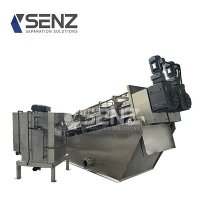

Hey there! As a supplier of sewage decanter centrifuges, I've seen firsthand how crucial it is to select the appropriate lubricant for these machines. A sewage decanter centrifuge is a workhorse in wastewater treatment, sludge dewatering, and other related processes. It operates under some tough conditions, with high speeds, heavy loads, and exposure to all sorts of contaminants in the sewage. So, picking the right lubricant isn't just a nice - to - have; it's a must - do for the centrifuge's performance and longevity.
Why Lubrication Matters
Let's start with the basics. Why is lubrication so important for a sewage decanter centrifuge? Well, first off, it reduces friction between the moving parts. The centrifuge has rotating bowls, scroll conveyors, and other components that are in constant motion. Without proper lubrication, the friction would generate a ton of heat. This heat can lead to premature wear and tear of the parts, and in the worst - case scenario, it could even cause the machine to break down.
Secondly, lubrication helps to prevent corrosion. Sewage is full of all kinds of corrosive substances like acids, alkalis, and salts. When these come into contact with the metal parts of the centrifuge, they can cause rust and other forms of corrosion. A good lubricant forms a protective barrier on the metal surfaces, keeping these corrosive agents at bay.
Factors to Consider When Selecting Lubricant
Viscosity
The viscosity of the lubricant is a key factor. It refers to the thickness or resistance to flow of the lubricant. For a sewage decanter centrifuge, you need to consider the operating temperature and the speed of the machine. At high speeds, a lubricant with lower viscosity is often preferred because it can flow more easily and quickly reach all the moving parts. But if the operating temperature is high, you might need a lubricant with higher viscosity to maintain its thickness and protect the parts.
If the viscosity is too low, the lubricant won't be able to form a thick enough film between the moving parts, and as a result, there'll be more metal - to - metal contact, increasing wear. On the other hand, if the viscosity is too high, the lubricant may not flow properly, leading to inefficient operation and potentially overheating.
Additives
Lubricants often come with additives that enhance their performance. In the case of sewage decanter centrifuges, anti - wear additives are super important. These additives form a protective layer on the metal surfaces, reducing the amount of wear caused by friction.
Corrosion inhibitors are another essential type of additive. As I mentioned earlier, sewage is corrosive, so a lubricant with good corrosion inhibitors will help protect the centrifuge from rust and other forms of corrosion. Anti - foam additives are also necessary because the presence of foam in the lubricant can reduce its effectiveness and may even cause problems with the machine's operation.
Compatibility
You've got to make sure the lubricant is compatible with the materials used in the centrifuge. For example, some seals and gaskets in the machine may be made of rubber or other polymers. Using an incompatible lubricant can cause these materials to swell, shrink, or degrade over time, leading to leaks and other issues.
It's also important to consider the compatibility with the sewage itself. Some lubricants may react with the substances in the sewage, which can not only reduce the lubricant's effectiveness but also cause problems with the treatment process. You can find more about sewage treatment processes associated with decanter centrifuges here: Decanter Centrifuge Separation Wastewater.
Operating Conditions
The specific operating conditions of the sewage decanter centrifuge play a huge role in lubricant selection. If the centrifuge is running continuously for long periods, you'll need a lubricant that can withstand extended use without breaking down. Also, consider the environmental conditions. If the centrifuge is located in a hot or humid environment, this will affect the performance of the lubricant, and you'll need to choose one that can handle these conditions.
Types of Lubricants Suitable for Sewage Decanter Centrifuges
Mineral Oils
Mineral oils are a common choice for many industrial applications, including sewage decanter centrifuges. They're relatively inexpensive and offer good lubrication properties. However, they may not have the same level of performance as some synthetic lubricants, especially in terms of their resistance to high temperatures and oxidation.
Mineral oils can be a good option for centrifuges that are operating under normal conditions and don't require extremely high - performance lubrication. But if your centrifuge is running at high speeds or in harsh environments, you might want to look at other options.
Synthetic Lubricants
Synthetic lubricants are designed to offer superior performance compared to mineral oils. They have better high - temperature stability, which means they can maintain their lubricating properties even when the centrifuge is running hot. Synthetic lubricants also have excellent oxidation resistance, so they last longer and don't break down as easily over time.
These lubricants are more expensive than mineral oils, but they can save you money in the long run by reducing wear on the centrifuge parts and extending the machine's lifespan. They're a great choice for high - performance sewage decanter centrifuges that operate under demanding conditions.
Greases
In some cases, greases can be used as lubricants for sewage decanter centrifuges. Greases are a semi - solid form of lubricant that can stay in place better than oils. They're often used in areas where it's difficult to keep an oil film intact, such as in bearings.
When choosing a grease, you need to consider its consistency, which is related to its ability to stay in place and provide proper lubrication. You also need to make sure it has the right additives for the application, such as anti - wear and anti - corrosion agents.
Maintenance and Lubricant Replacement
Once you've selected the appropriate lubricant for your sewage decanter centrifuge, proper maintenance and lubricant replacement are crucial. Regularly check the lubricant level in the machine. If the level is low, it could indicate a leak or that the lubricant is being consumed more quickly than normal.
Also, monitor the condition of the lubricant. Over time, the lubricant can become contaminated with dirt, debris, and wear particles from the centrifuge. You might notice changes in its color, smell, or viscosity. When these signs are present, it's time to replace the lubricant.
Don't forget to follow the manufacturer's recommendations for lubricant replacement intervals. These intervals are based on the type of lubricant, the operating conditions of the centrifuge, and other factors. By replacing the lubricant at the right time, you can ensure the continued smooth operation of the centrifuge.


Conclusion
In conclusion, selecting the appropriate lubricant for a sewage decanter centrifuge is a multi - faceted decision. You need to consider factors like viscosity, additives, compatibility, and operating conditions. Whether you choose a mineral oil, synthetic lubricant, or grease, make sure it's the right fit for your machine.
If you're in the market for a sewage decanter centrifuge or need more advice on lubricant selection, don't hesitate to reach out. We're here to help you make the best choices for your wastewater treatment needs. You can also learn more about related technologies such as Sludge Dewatering Technologies and Slaughterhouse Wastewater Treatment. Let's start a conversation and see how we can work together to keep your operations running smoothly.
References
- Industrial Lubrication Handbook: Selection and Application of Lubricants, Second Edition by George Totten
- Machinery's Handbook, 30th Edition by Industrial Press Inc.