
As a supplier of Mining Decanter Centrifuges, I've seen firsthand the importance of ensuring the smooth discharge of solids from these machines. It's not just about keeping the operation running; it's about maximizing efficiency, reducing downtime, and ultimately, saving costs. In this blog, I'll share some tips and tricks on how to achieve this.
Understanding the Basics of a Mining Decanter Centrifuge
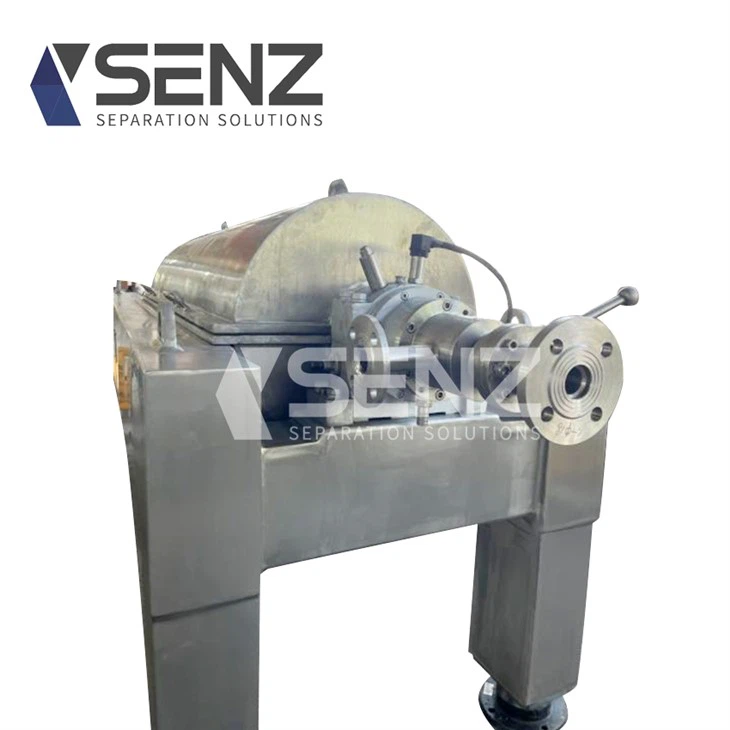
Before we dive into the details of ensuring smooth solid discharge, let's quickly go over how a mining decanter centrifuge works. A Solid Bowl Decanter Centrifuge is a type of centrifuge that uses centrifugal force to separate solids from liquids. The mixture is fed into the centrifuge, and as it spins, the heavier solids are forced to the outer wall of the bowl, while the lighter liquid phase remains in the center. The solids are then scraped off the wall by a conveyor and discharged from the centrifuge, while the liquid is removed through a separate outlet.
Factors Affecting Solid Discharge
Several factors can affect the smooth discharge of solids from a mining decanter centrifuge. Here are some of the most important ones:
Feed Characteristics
The characteristics of the feed, such as particle size, density, and concentration, can have a significant impact on solid discharge. For example, if the particles are too large or too dense, they may not be able to be separated effectively, leading to poor solid discharge. On the other hand, if the feed concentration is too high, it can cause the centrifuge to become overloaded, resulting in blockages and reduced efficiency.
Bowl Speed
The speed at which the centrifuge bowl rotates is another important factor. A higher bowl speed can increase the centrifugal force, which can help to separate the solids from the liquid more effectively. However, if the speed is too high, it can also cause the solids to become compacted, making them more difficult to discharge.
Conveyor Speed
The speed of the conveyor that scrapes the solids off the bowl wall is also crucial. If the conveyor speed is too slow, the solids may not be removed quickly enough, leading to a buildup of solids in the centrifuge. On the other hand, if the conveyor speed is too fast, it can cause the solids to be discharged too quickly, resulting in a loss of efficiency.
Bowl Design
The design of the centrifuge bowl can also affect solid discharge. For example, a bowl with a larger diameter can provide more surface area for the solids to settle, which can improve separation efficiency. Additionally, the shape of the bowl and the angle of the conveyor can also impact the flow of solids and liquids through the centrifuge.

Tips for Ensuring Smooth Solid Discharge
Now that we've discussed the factors that can affect solid discharge, let's look at some tips for ensuring that your mining decanter centrifuge operates smoothly:
Optimize Feed Conditions
To ensure smooth solid discharge, it's important to optimize the feed conditions. This includes controlling the particle size, density, and concentration of the feed. You can do this by using a pre-treatment process, such as screening or sedimentation, to remove any large particles or impurities from the feed. Additionally, you can adjust the feed rate to ensure that the centrifuge is not overloaded.
Adjust Bowl and Conveyor Speeds
The bowl and conveyor speeds should be adjusted based on the characteristics of the feed and the desired separation efficiency. You can start by setting the speeds to the manufacturer's recommended values and then make adjustments as needed. It's important to monitor the performance of the centrifuge and make adjustments gradually to avoid any sudden changes that could cause the centrifuge to malfunction.
Maintain the Centrifuge
Regular maintenance is essential for ensuring the smooth operation of your mining decanter centrifuge. This includes cleaning the centrifuge bowl and conveyor, checking the seals and bearings, and lubricating the moving parts. You should also inspect the centrifuge for any signs of wear or damage and replace any worn or damaged parts as needed.
Use the Right Flocculants
Flocculants are chemicals that can be added to the feed to help the solids agglomerate and settle more quickly. Using the right flocculant can improve the separation efficiency and reduce the amount of solids that are discharged with the liquid. You should choose a flocculant that is compatible with the feed and the centrifuge and follow the manufacturer's instructions for use.
Other Applications of Centrifuges
Centrifuges are not just used in the mining industry. They are also used in a variety of other applications, such as Olive Oil Separator and Waste Oil Processing Centrifuge. In these applications, the centrifuge is used to separate the oil from the water and other impurities. The same principles apply to these applications as they do to the mining industry, and the tips and tricks discussed in this blog can also be applied to ensure smooth solid discharge.
Conclusion
Ensuring the smooth discharge of solids from a mining decanter centrifuge is essential for maximizing efficiency, reducing downtime, and saving costs. By understanding the factors that affect solid discharge and following the tips and tricks discussed in this blog, you can ensure that your centrifuge operates smoothly and effectively. If you have any questions or need more information about our Mining Decanter Centrifuges, please don't hesitate to contact us. We'd be happy to help you find the right centrifuge for your needs and provide you with the support and service you need to keep it running smoothly.
References
- Smith, J. (2019). Centrifuge Technology: Principles and Applications. New York: Wiley.
- Jones, A. (2020). Mining Decanter Centrifuges: A Practical Guide. London: Elsevier