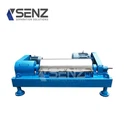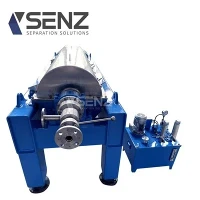

Hey there! I'm an oil water separator supplier, and today I wanna chat about the common design features of oil water separators. These nifty devices are super important in a bunch of industries, helping to keep our environment clean by getting rid of oil from water. So, let's dive right in!
Gravity Separation Design
One of the most basic and common design features is gravity separation. You see, oil and water have different densities. Oil is less dense than water, so it naturally rises to the surface. A lot of oil water separators use this principle. They're designed with a large chamber where the oil - water mixture can sit. As the mixture enters the chamber, the oil starts to float to the top, while the water stays at the bottom.
The chamber usually has a baffle system. These baffles slow down the flow of the mixture. This gives the oil more time to separate from the water. Once the oil has collected at the top, it can be skimmed off while the separated water is drained out from the bottom. It's a simple concept, but it works pretty well for separating large amounts of oil from water. This design is often used in industrial settings where the oil - water mixture has a relatively large differential in density between the oil and water components.
Coalescence Media
Another neat design feature is the use of coalescence media. Coalescence is the process where small oil droplets come together to form larger ones. The coalescence media in an oil water separator are made of special materials that attract oil droplets. When the oil - water mixture passes through this media, the small oil droplets stick to the media surface and combine with other droplets to form bigger droplets.
Once these droplets reach a certain size, they're heavy enough to break free from the media and rise to the surface of the water. This way, the separation process is more efficient, especially for separating fine oil droplets that are harder to remove through gravity alone. Coalescence media can be made from various materials like polypropylene or fiberglass, and they're often arranged in layers to maximize the contact between the oil - water mixture and the media.
Filtration
Filtration is also a key design feature in many oil water separators. Filters are used to trap any remaining oil particles and other contaminants in the water after the initial separation steps. There are different types of filters used, such as activated carbon filters and mesh filters.
Activated carbon filters are great because they can absorb oil and other organic compounds. They have a large surface area with lots of tiny pores that can trap the contaminants. Mesh filters, on the other hand, are used to physically block larger particles. They're often made of stainless steel or other durable materials and can be easily cleaned or replaced when they get clogged.
Monitoring and Control Systems
Modern oil water separators often come equipped with monitoring and control systems. These systems help to ensure that the separator is working properly. They can monitor things like the oil level in the separator, the flow rate of the oil - water mixture, and the quality of the separated water.
For example, if the oil level in the separator gets too high, the monitoring system can trigger an alarm to let the operator know that it's time to remove the collected oil. Some advanced systems can even adjust the operation of the separator automatically based on the data they collect. This helps to optimize the performance of the separator and reduce the risk of oil spills or other environmental problems.


Compact Design
In many industries, space is at a premium. That's why a lot of oil water separators are designed to be compact. These compact separators can fit into small spaces without sacrificing performance. They're often used in places like small workshops, garages, or mobile applications.
Despite their small size, they still incorporate all the essential design features like gravity separation, coalescence media, and filtration. The manufacturers use innovative engineering techniques to pack all these functions into a small footprint. This makes them a great option for businesses that need an oil water separator but don't have a lot of space to spare.
Customization
As a supplier, I know that different industries have different needs. That's why many oil water separators can be customized. For example, in the oilfield industry, the separators need to handle high - volume oil - water mixtures with a high concentration of oil. We can customize the separator to have a larger chamber and more efficient separation mechanisms.
On the other hand, in a food processing plant, the separator may need to be made of food - grade materials to ensure that the separated water is safe for reuse or disposal. We can work with our customers to understand their specific requirements and design a separator that meets their needs.
Related Equipment
If you're in the market for oil water separators, you might also be interested in some related equipment. For instance, the Heparin Sodium Treatment Centrifuge is used in the pharmaceutical industry for separating different components in the production of heparin sodium. It uses a centrifuge to separate substances based on their density.
The Oilfield Drilling Equipment is essential for the oil and gas industry. It helps in the process of drilling wells and separating oil and water from the drilling mud.
The Fish Oil Decanter Centrifuge is used in the fish oil production industry. It separates the oil from the fish solids and water, ensuring a high - quality fish oil product.
The Centrifuge For Oil Water Separation is specifically designed for separating oil and water. It uses centrifugal force to speed up the separation process, making it more efficient.
And the Wheat Starch Extraction equipment is used in the food industry to extract starch from wheat. It also involves the separation of different components, similar to how an oil water separator works.
Conclusion and Invitation
So, there you have it - the common design features of oil water separators. These features make the separators effective in separating oil from water, which is crucial for environmental protection and industrial processes.
If you're looking for an oil water separator for your business, don't hesitate to reach out. We have a wide range of products with different design features to suit your specific needs. Whether you need a compact separator for a small workshop or a customized one for a large - scale industrial application, we've got you covered. Let's start a conversation and find the perfect oil water separator for you!
References
- Cheremisinoff, N. P. (2002). Handbook of Industrial Water Conditioning. Butterworth - Heinemann.
- Shaw, L. (2006). Oil - Water Separation Handbook. Elsevier.