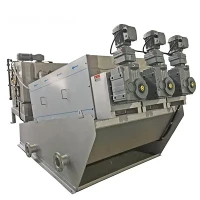



Quick Answer: The decanter centrifuge market is led by long-established European and Japanese makers such as Alfa Laval, GEA, Flottweg, ANDRITZ, Pieralisi, Hiller, and Tomoe, alongside a US wastewater specialist (Centrisys/CNP) and a growing group of Chinese manufacturers including GN Solids Control and Shenzhou. No single brand is best for every job: the right choice depends on your feed material, capacity, service coverage, and budget.
A note on how this list was built
There is no public, independently audited ranking of decanter centrifuge makers by sales or market share, so this is not a ranked list. The ten companies below are presented alphabetically. They are included because they are regularly named in market research as significant producers, have a visible installed base in industries such as wastewater, oil and gas, food, and chemicals, or are established regional suppliers.
Disclosure: this article is published by Jinhua Shenzhou Centrifuge Co., Ltd., which appears on the list. We have described every company, including ourselves, using publicly stated information and kept the descriptions deliberately plain. Please verify details directly with each manufacturer before you buy.
How to read the list
For each manufacturer you will see its home base, what it is best known for, and where it tends to fit. "Best known for" reflects each company's public positioning, not a performance guarantee.
1. Alfa Laval (Sweden)
Founded: 1883, headquartered in Lund, Sweden
Best known for: A very broad separation portfolio, including its ALDEC and NX decanter ranges, serving wastewater, food, chemical, marine, and energy customers. Global service network.
Fits when: You want a large international supplier with a wide product range and extensive service coverage, and your budget supports premium pricing.
2. ANDRITZ (Austria)
Founded: 1852, headquartered in Graz, Austria
Best known for: A broad technology group with a separation business covering decanters, filter presses, and dryers. Strong in municipal and industrial sludge treatment, and can supply an integrated dewatering line.
Fits when: You need dewatering as part of a larger process or sludge-handling system and want one supplier for multiple stages.
3. Centrisys/CNP (United States)
Headquarters: Kenosha, Wisconsin, USA
Best known for: Decanter centrifuges for wastewater and biosolids management, with US-based service and repair facilities.
Fits when: You are a North American municipality or utility that values local service and a supplier focused on wastewater.
4. Flottweg (Germany)
Headquarters: Vilsbiburg, Germany
Best known for: A company built around decanters and separation technology, with equipment used in wastewater, food and beverage, chemicals, and other industries.
Fits when: You want a decanter specialist and a German-engineered machine, particularly for demanding or continuous duty.
5. GEA (Germany)
Headquarters: Düsseldorf, Germany; separation technology rooted in the Westfalia brand
Best known for: Decanters and separators for food, dairy, beverages, marine, and pharma, with strong hygienic design experience.
Fits when: Your process is hygiene-sensitive, such as dairy, juice, or plant-based ingredients.
6. GN Solids Control (China)
Headquarters: Beijing, China
Best known for: Solids control equipment for drilling fluids, including decanter centrifuges, vibrating screens, and mud systems, alongside wider industrial applications.
Fits when: You operate in oil and gas drilling or fluid management and want a supplier focused on that sector.
7. Hiller (Germany)
Headquarters: Vilsbiburg, Germany
Best known for: Decanters for sludge and other solid-liquid separation tasks, including mobile dewatering systems.
Fits when: You need compact or mobile dewatering for sludge, or a German decanter specialist.
8. Pieralisi (Italy)
Founded: 1888, based in Jesi, Italy
Best known for: Decanters and complete extraction lines for olive oil, with additional ranges for wastewater and other industries.
Fits when: You run an olive mill or edible oil process and want a supplier with deep experience in that specific application.
9. Shenzhou (China)
Company: Jinhua Shenzhou Centrifuge Co., Ltd., founded 1980, Zhejiang, China
Best known for: Horizontal decanter centrifuges, 2-phase and 3-phase machines, disc separators, and sludge dewatering systems, including truck-mounted mobile units. The company states that it holds ISO 9001 and CE certification and supplies customers in more than 70 countries.
Fits when: You are comparing quotes and want a cost-competitive alternative to benchmark against established brands, and you are prepared to verify references, spare-parts support, and local compliance requirements.
10. Tomoe Engineering (Japan)
Headquarters: Tokyo, Japan
Best known for: Centrifuges and separators for industrial, chemical, and wastewater applications, with strong presence in Asia.
Fits when: You need Japanese engineering and support, particularly in Asian markets.
Side-by-Side Overview
| Manufacturer | Home Base | Known For | Typical Fit |
|---|---|---|---|
| Alfa Laval | Sweden | Broad separation range, global service | Wide industries, premium budgets |
| ANDRITZ | Austria | Integrated sludge and dewatering lines | Municipal and industrial plants |
| Centrisys/CNP | USA | Wastewater and biosolids decanters | North American utilities |
| Flottweg | Germany | Decanter specialist | Continuous, demanding duty |
| GEA | Germany | Hygienic design, food and dairy | Food, beverage, pharma |
| GN Solids Control | China | Drilling fluid solids control | Oil and gas |
| Hiller | Germany | Sludge decanters, mobile systems | Sludge dewatering |
| Pieralisi | Italy | Olive oil extraction | Olive mills, edible oil |
| Shenzhou | China | 2- and 3-phase decanters, mobile dewatering | Cost-competitive alternative |
| Tomoe Engineering | Japan | Industrial and chemical centrifuges | Asian markets |
How to Shortlist a Decanter Centrifuge Supplier
Brand reputation is a starting point, not a decision. Use the same checklist for every vendor:
- Application fit. Ask for installed references in your industry and with a similar feed, capacity, and phase configuration.
- Test on your material. Request bench or pilot testing, and compare measured cake dryness, liquid clarity, and capture rate rather than catalog values.
- Total cost of ownership. Compare purchase price, polymer or chemical use, power, wear parts, and downtime, not just the quotation.
- Service and spare parts. Confirm local technicians, parts lead times, and what is stocked in your region.
- Materials and certifications. Check materials of construction, ISO and CE status, and whatever local electrical, safety, or domestic-content rules apply to your project.
- Warranty and performance guarantees. Make sure guarantees are tied to test results and cover the bowl, conveyor, and gearbox.
- Customization. If you need special materials, explosion-proof design, or mobile mounting, confirm the supplier can deliver them.
Getting quotes from both an established OEM and a newer or lower-cost supplier often improves the terms from every bidder, as long as each one is evaluated on the same evidence.
FAQ
Who is the largest decanter centrifuge manufacturer in the world?
There is no public, audited ranking by decanter sales. Alfa Laval, GEA, Flottweg, ANDRITZ, and Pieralisi are commonly named in market research as leading producers, but size alone does not make a brand the right fit for your process.
Which manufacturer is best for wastewater sludge dewatering?
Several are strong in this field, including Alfa Laval, ANDRITZ, Flottweg, Hiller, and Centrisys/CNP. The best choice depends on sludge type, capacity, polymer program, and local service, so test on your own sludge before deciding.
Are Chinese decanter centrifuges reliable?
Quality varies widely by manufacturer, as it does anywhere. Judge a supplier on verifiable factors: references, test results, certifications, materials, spare-parts support, and warranty terms, rather than on country of origin.
How much does a decanter centrifuge cost?
Price depends on bowl size, materials, phase configuration, control system, and options, and ranges from small-scale units to large industrial systems. Ask for a detailed quotation based on your feed data.
Should I buy new or used?
Used machines can lower the upfront price but carry risks around remaining wear-part life, bowl condition, and parts availability. Have any used unit inspected and balance-tested before purchase.
What information do I need to request a quote?
Feed type, solids concentration, flow rate, particle characteristics, target cake dryness, materials requirements, and any hazardous-area or hygiene requirements.
If you would like a side-by-side quotation for your application, send us your feed data and our application engineers will prepare a sizing recommendation you can benchmark against other suppliers.