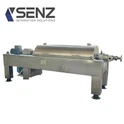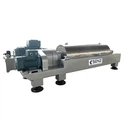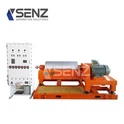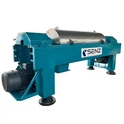


When using sludge dewatering machines to treat sewage and sludge, it is often necessary to use some flocculants to achieve better treatment results. When selecting suitable flocculants, the following four aspects are generally considered.
1、 Sludge characteristics
For sludge with high organic content, the most effective flocculant is cation. The higher the organic content, the better to choose a cationic flocculant with higher polymerization degree. For sludge mainly containing inorganic compound, anions can be considered. The different properties of sludge directly affect the conditioning effect, while scum and residual activated sludge are more difficult to dehydrate, and the dewatering performance of mixed sludge is between the two.
Generally speaking, the more difficult it is to dehydrate sludge, the larger the amount of coagulant, and the smaller the sludge particles, which will lead to an increase in flocculant consumption. The high organic matter content and alkalinity in the sludge will also lead to an increase in flocculant dosage. In addition, the solid content of sludge also affects the dosage of flocculants. Generally, the higher the solid content of sludge, the greater the dosage of flocculants when using a sludge dewatering machine.
2、 Sludge pH
The hydrolysis product form determined by the acidity and alkalinity of sludge, and the treatment effect of the same flocculant on sludge with different acidity and alkalinity is also greatly different. The hydrolysis reaction of aluminum salts is greatly influenced by their acidity and alkalinity, and the optimal acidity and alkalinity range for their coagulation reaction is 5-7. High iron salt conditioners are less affected by pH, and the optimal pH range is 6-11. In sludge with a pH of 8-10, the hydrolysis products with higher solubility of ferrous salts can be oxidized into flocs with lower solubility.
Therefore, when selecting inorganic salt flocculants, the specific pH of the dehydrated sludge should be considered first. If the pH deviates from the optimal range of its coagulation reaction, it is best to switch to another type. Otherwise, it is necessary to consider adding acid or alkali to adjust the pH of the sludge before adjusting it.
3、 Flocculant concentration
The concentration of flocculants not only affects the conditioning effect, but also affects the consumption of reagents and the output rate of sludge cake from the sludge dewatering machine, with organic polymer flocculants having a more significant impact. Generally speaking, the lower the concentration of organic polymer flocculants, the lower the consumption of reagents, and the better the conditioning effect.
But if the preparation concentration is too high or too low, it will reduce the mud cake yield. The conditioning effect of inorganic polymer flocculants is almost unaffected by the preparation concentration. The concentration of organic polymer conditioner is relatively suitable between 0.05% and 0.1%, with a concentration of 10% for ferric chloride preparation and 4% to 5% for aluminum salt preparation.
4、 Temperature of mixed treatment solution
The temperature of sludge directly affects the hydrolysis of flocculant. When the temperature is low, hydrolysis will slow down. If the temperature is below 10 ℃, the flocculation effect of the sludge dewatering machine will significantly deteriorate. The conditioning effect can be improved by appropriately extending the flocculation time. When the temperature is low in winter, attention should be paid to the insulation process of the sludge dewatering machine, which should not be lower than 15 ℃, to minimize the loss of heat during the sludge transportation process.