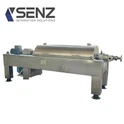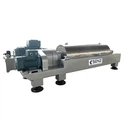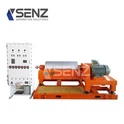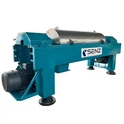


As we all know, the harm of corrosion is extremely huge, there are many cases in the world can be explained, centrifuges as a high-speed rotating equipment, especially high-speed centrifuges, as well as ultra-high-speed centrifuges, its safety requirements and pressure vessels are equally important. Most companies and units after the purchase of centrifuges, but not good at maintenance, leading to some serious consequences. Not only the parts have a corrosion tendency, but also pollute the separated materials; More serious even caused the plane to be destroyed and people died. To this end, centrifuge experts will comprehensively analyze the centrifuge environment, corrosion phenomena, causes and protective measures in this article.
A. Centrifuge environment
Centrifuges are divided into different types of equipment according to function and structure, but they all have common characteristics:
- 1. drum for high-speed rotating parts;
- 2. with the drum as the main body to form a separation space;
- 3. the drum is shaped structure;
- 4. there are other connections or accessories in the drum.
These characteristics of the drum show that the core part of the centrifuge is a stress part, and its special-shaped geometry leads to the stress distribution of the parts in multiple areas, the coordination of multiple parts, and the opportunity to form a electric pair is possible, which is worth noting.
B. Possible corrosion
Metal corrosion forms are mainly divided into uniform corrosion and local corrosion two categories, the former because the apparent phenomenon is easy to find, and in most manual data are more clearly expressed, here will not be detailed, only some discussion of the latter.
Local corrosion only occurs in the local area, is an extremely serious and harmful damage, such as pitting corrosion, crevice corrosion, intergranular corrosion, stress corrosion, wear corrosion, etc., in centrifuges, local corrosion is widespread, should focus on its formation mechanism to be analyzed, take measures to overcome.
- 1. pore corrosion is a highly corrosive phenomenon, mainly in the easily passivated metal, such as stainless steel, due to the possible defects of the local surface, the solution and the active ions that can destroy the passivated film (such as halogen ions), the passivated film is locally destroyed, resulting in the formation of electric pairs, resulting in pore corrosion. After the formation of pitting, due to the role of centrifugal force, the dynamic process of the electric couple in the hole will be accelerated, so as to ensure the continuity of the hole corrosion until the perforation, which is different from the static pitting phenomenon.
- 2. Intergranular corrosion will cause parts to lose strength and extensibility, causing parts brittle, it is a kind of from the surface along the grain boundary to develop inward, the outer surface no signs of corrosion harmful damage.
- 3. Wear corrosion means that the surface of the part suffers wear and corrosion damage at the same time.
- 4. Stress corrosion is in a corrosive environment, due to a certain tensile stress caused by damage. It has the following characteristics: residual tensile stress, external stress, corrosive penetration environment, local defects.
The above four types of corrosion are extremely serious to the centrifuge and may lead to serious consequences.
C. Measures
- 1. different materials and separation requirements, need to choose different models. After the model and the main parameters are determined, the strength parts material is determined from the basic surface according to the corrosion resistance of different materials in different environments, comprehensive physical and chemical characteristics, cost performance and many other factors. From the point of view of the material itself, it is safe for the target material, therefore, the selection of materials should follow the following principles:
- a, There is no absolute universal anticorrosive material, we must fully understand the application environment, targeted material selection, such as stainless steel is not suitable for concentrated sulfuric acid carbon steel is suitable.
- b. Stainless steel is not stainless, only in the air and other adaptive environment.
- c. In the same environment, as far as possible to choose the same material or balance potential similar materials, to avoid causing a pair environment.
- d. Comprehensive cost performance, special attention should be paid to the impact of processing technology.
- 2. Structural design
- An excellent design can extend the service life of the equipment and ensure the safety of the equipment. For structural design, the design defects that are most likely to accelerate corrosion are stress concentration tendency and gap environment, sometimes although the metal immersion solution, the corrosion rate is small; However, the formation of gaps, due to the chemical and electrochemical state of the internal solution has changed (PH and potential decline), will cause serious gap corrosion, so the design should pay attention to:
- a. Try to avoid the generation of gaps;
- b. in the same environment, try to use the same material;
- c. ensure the uniformity of the parts or increase the compressive stress;
- d. avoid the formation of dead corners to ensure smooth flow of fluid.
- 3. surface protection measures
- A basic idea of corrosion control is to isolate the corrosive environment. In centrifuge design, surface treatment methods are often used, such as flanges, zinc plating, chromium plating, chemical plating, etc. These methods are effective in many environments, but for rotating parts, you must pay attention to an important phenomenon: The matrix material and the coating are two kinds of materials, and their linear expansion coefficient is different, which will produce different deformation amount during the elastic deformation of rotating parts, resulting in a large number of micro-cracks. If the above phenomenon exists, it will accelerate the formation of corrosion. Therefore, the surface protection method for rotating parts should be carefully adopted.
4. Corrosion inhibitor
Centrifuge itself involves a variety of disciplines, to use centrifuge, in addition to some of the above measures, should also pay attention to the study of its application environment. The application of corrosion inhibitors is also widely used in practical applications. For some harsh environments, the use of appropriate corrosion inhibitors can make the parts to the extent of application, as long as the process permits, the use of corrosion inhibitors should be an effective way for centrifuge applications.
5. The correct process design is correct, the material selection is reasonable, but the prerequisite for solving the centrifuge corrosion; The correct application of the processing technology also affects the corrosion resistance of the centrifuge to a certain extent. Processing methods usually leave many defects on parts or equipment, such as dislocation, local stress, etc., dislocation may cause gaps, unreasonable clamping positioning methods may lead to eccentric parts, unreasonable cutting may produce surface roughness, as well as improper assembly, welding, unreasonable heat treatment, uneven fastening bolt force, etc., resulting in local stress concentration. Therefore, finding the correct processing method is also an effective way to prevent corrosion.