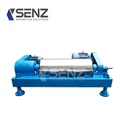

Hey there! As a supplier of Gluten Wheat Flour Separators, I often get asked about the separation accuracy of these machines. So, I thought I'd take some time to break it down for you.
First off, let's understand what a Gluten Wheat Flour Separator does. It's a crucial piece of equipment in the wheat processing industry. Its main job is to separate gluten from wheat flour, which is super important because gluten has a wide range of applications in the food industry, like in bread-making to give that nice chewy texture.


The separation accuracy of a Gluten Wheat Flour Separator is a measure of how well it can separate the gluten from the flour. In an ideal world, we'd want 100% separation, but in reality, it's a bit more complicated. There are several factors that can affect this accuracy.
One of the key factors is the quality of the raw wheat. Different types of wheat have different gluten contents, and their physical and chemical properties can vary. For example, hard wheat generally has a higher gluten content than soft wheat. If the wheat has a lot of impurities or if it's been damaged during storage or transportation, it can make the separation process more difficult and reduce the accuracy.
The design and technology of the separator itself also play a huge role. Modern separators are equipped with advanced features that can improve accuracy. For instance, some use centrifugal force to separate the gluten from the flour. The Separation Decanter Centrifuge is a great example of this technology. It spins at high speeds, and the difference in density between the gluten and the flour causes them to separate. The better the design of the centrifuge, the more accurate the separation will be.
Another important aspect is the operating conditions. The speed at which the separator runs, the temperature, and the moisture content of the wheat flour all need to be carefully controlled. If the speed is too high or too low, it can lead to incomplete separation. Similarly, if the temperature is not right, it can affect the properties of the gluten and the flour, making it harder to separate them.
Now, let's talk about how we measure the separation accuracy. There are a few different methods. One common way is to analyze the gluten content in the separated products. We can use chemical analysis techniques to determine how much gluten is left in the flour and how much flour is mixed with the gluten. A high-quality separator should be able to achieve a very low level of gluten in the flour and a high purity of gluten in the separated product.
In general, a good Gluten Wheat Flour Separator can achieve a separation accuracy of around 90 - 95%. This means that 90 - 95% of the gluten is successfully separated from the flour. However, this can vary depending on the factors we mentioned earlier.
But why is high separation accuracy so important? Well, for one thing, it affects the quality of the final products. In the food industry, the quality of gluten and flour is crucial. If the separation is not accurate, the flour might have too much gluten, which can affect its baking properties. On the other hand, if the gluten contains too much flour, it won't have the desired functionality in applications like meat substitutes or processed foods.
It also has an impact on the efficiency of the production process. A more accurate separator means less waste. We don't have to spend extra time and resources trying to re - separate the mixed products. This can save a lot of money for the manufacturers in the long run.
As a supplier, we're constantly working on improving the separation accuracy of our Gluten Wheat Flour Separators. We invest in research and development to come up with better designs and technologies. We also provide training and support to our customers to help them operate the machines correctly and get the best results.
If you're in the wheat processing industry and are looking for a reliable Gluten Wheat Flour Separator, I'd highly recommend considering our products. We have a wide range of separators to suit different production scales and requirements. Whether you're a small - scale bakery or a large - scale food processing plant, we've got you covered.
And it's not just about the Gluten Wheat Flour Separators. We also offer other types of centrifuges, like the Black Diesel Oil Centrifuge and the Mining Decanter Centrifuge. These are used in different industries for various separation tasks.
If you're interested in learning more about our products or want to discuss your specific needs, don't hesitate to reach out. We're always happy to have a chat and help you find the best solution for your business.
In conclusion, the separation accuracy of a Gluten Wheat Flour Separator is a complex but important aspect. It's affected by many factors, and achieving high accuracy requires a combination of good raw materials, advanced technology, and proper operating conditions. As a supplier, we're committed to providing high - quality separators that can meet the needs of our customers and help them succeed in their industries.
References
- Wheat Processing Handbook: A comprehensive guide on wheat processing techniques and equipment.
- Journal of Food Science and Technology: Articles on the latest research in food separation technologies.