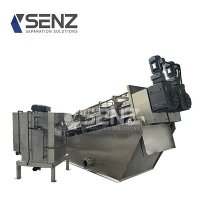

In the realm of yeast production, the yeast separator stands as a pivotal piece of equipment. It is designed to efficiently separate yeast cells from the fermentation broth, ensuring high - quality yeast products. A crucial component within the yeast separator is the sensor, which plays multiple and indispensable roles.
1. Monitoring Physical Parameters
Temperature
Temperature is a critical factor in yeast separation. Yeast cells are sensitive to temperature changes. If the temperature is too high, it can damage the yeast cells, leading to a decrease in yeast viability and quality. On the other hand, if the temperature is too low, the separation efficiency may be affected. Sensors are used to continuously monitor the temperature inside the yeast separator. For example, thermocouple sensors can accurately measure the temperature at different points within the separator. The data collected by these sensors is then sent to a control system. If the temperature deviates from the optimal range, the control system can adjust the heating or cooling devices accordingly. This ensures that the separation process occurs at the most suitable temperature, maximizing the quality and quantity of the separated yeast.
Pressure
Pressure also has a significant impact on the yeast separation process. In some yeast separators, a certain pressure is required to drive the flow of the fermentation broth through the separation channels. Pressure sensors are installed to monitor the pressure levels. If the pressure is too high, it may cause damage to the separator components or lead to an uneven separation. Conversely, if the pressure is too low, the separation efficiency will be reduced. By constantly monitoring the pressure, the control system can make real - time adjustments, such as adjusting the pump speed or valve opening, to maintain the optimal pressure for yeast separation.
2. Detecting Yeast Concentration
One of the primary goals of a yeast separator is to separate yeast cells from the fermentation broth and obtain a high - concentration yeast product. Sensors can be used to detect the yeast concentration in the broth before and after separation. Optical sensors, for instance, work based on the principle of light absorption or scattering. Yeast cells in the broth will affect the way light passes through the liquid. By measuring the changes in light intensity, the sensor can estimate the yeast concentration. This information is crucial for determining the efficiency of the separation process. If the yeast concentration in the separated product is not up to the standard, the separator can be adjusted, such as increasing the separation time or changing the separation parameters.
3. Ensuring Separation Efficiency
Flow Rate
The flow rate of the fermentation broth through the yeast separator is another important parameter. Sensors can be used to measure the flow rate of the liquid. If the flow rate is too high, the yeast cells may not have enough time to be properly separated, resulting in a lower separation efficiency. If the flow rate is too low, the production capacity of the separator will be reduced. Flow sensors, such as electromagnetic flow meters or ultrasonic flow meters, can accurately measure the flow rate. The control system can then adjust the flow rate according to the sensor data to achieve the best balance between separation efficiency and production capacity.
Separation Quality
In addition to the above parameters, sensors can also be used to directly assess the quality of the separation. For example, particle size sensors can analyze the size distribution of the separated yeast cells. A good separation should result in a relatively uniform size distribution of yeast cells. If the size distribution is too wide, it may indicate that the separation process is not working properly. By detecting such issues in real - time, the separator can be optimized to improve the separation quality.


4. Maintaining Equipment Safety
Vibration
Excessive vibration in the yeast separator can be a sign of mechanical problems, such as unbalanced rotating parts or loose components. Vibration sensors are installed to monitor the vibration levels of the separator. If the vibration exceeds a certain threshold, it may cause damage to the equipment and affect the separation process. Once the vibration sensor detects abnormal vibration, an alarm can be triggered, and the separator can be shut down for maintenance to prevent further damage.
Leakage
Leakage of the fermentation broth or other fluids in the yeast separator is a serious issue. It can not only lead to product loss but also pose a safety hazard. Leak sensors can be used to detect any leakage in the separator. These sensors can be based on different principles, such as detecting changes in electrical conductivity or fluid level. If a leakage is detected, the separator can be quickly shut down, and the leakage point can be repaired to ensure the normal operation of the equipment.
5. Integration with Other Systems
Sensors in the yeast separator can be integrated with other systems in the yeast production plant. For example, they can be connected to the plant's central control system. The data collected by the sensors can be shared with other departments, such as the quality control department and the production planning department. This integration allows for better overall management of the yeast production process. The quality control department can use the sensor data to ensure that the yeast products meet the quality standards, while the production planning department can adjust the production schedule based on the separator's performance.
As a yeast separator supplier, we understand the importance of sensors in the yeast separation process. Our yeast separators are equipped with high - quality sensors that can provide accurate and reliable data. We also offer comprehensive after - sales service to ensure that the sensors and the entire separator system operate smoothly.
If you are interested in our yeast separators or have any questions about the role of sensors in the yeast separation process, please feel free to contact us for further discussion and potential procurement. We are committed to providing you with the best solutions for your yeast production needs.
In addition to yeast separators, we also offer other related products such as Decanter Centrifuge Separation Wastewater, Wastewater Centrifuge, and Avocado Oil Production Line Decanter. These products also rely on advanced sensor technology to ensure high - performance operation.
References
- Smith, J. (2018). Principles of Industrial Separation Processes. New York: Wiley.
- Johnson, A. (2020). Sensor Technology in Food and Beverage Production. London: Elsevier.
- Brown, C. (2019). Yeast Production and Processing. Chicago: CRC Press.